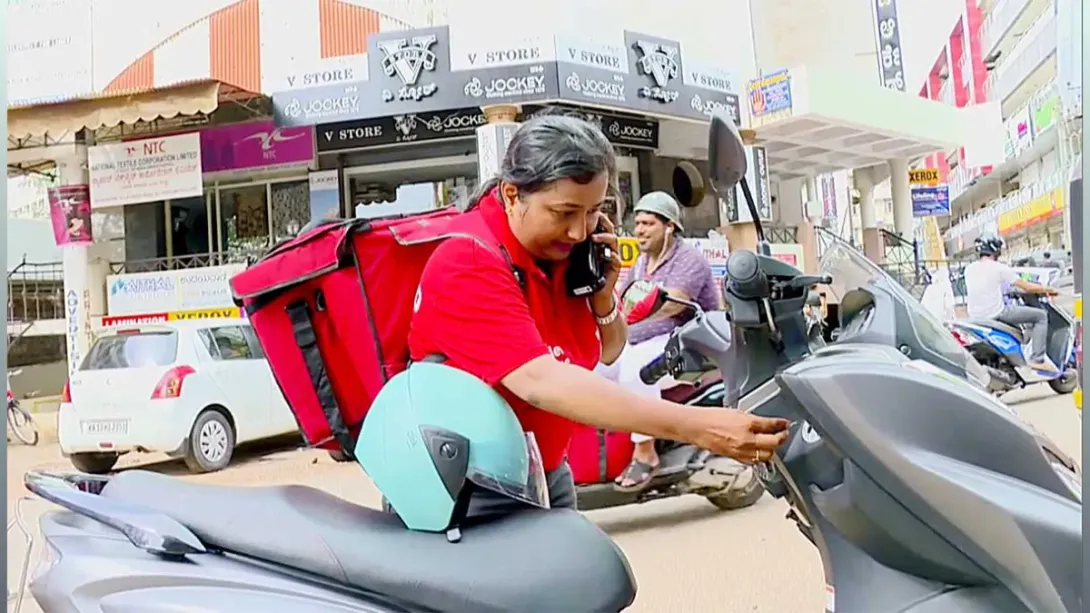
India’s restaurant industry is pushing for a fairer revenue-sharing model with food delivery aggregators such as Swiggy and Zomato, citing unsustainable commission rates that squeeze profit margins. The National Restaurant Association of India (NRAI) is reportedly in discussions with the platforms to establish a new framework that ensures greater transparency, equitable treatment, and long-term sustainability for both parties. With online food delivery now a cornerstone of India’s dining economy, the ongoing debate underscores a larger shift—balancing digital convenience with operational viability in one of the fastest-growing consumer markets in the world.
The Tipping Point: Calls for Fairer Commission Structure
Over the past few years, food delivery platforms have revolutionized India’s dining landscape, offering unparalleled convenience to millions of consumers. However, this growth has come at a cost for many restaurants, especially small and mid-sized operators, who argue that commission fees ranging from 18% to 30% per order are eroding already thin profit margins.
The National Restaurant Association of India (NRAI), which represents over 500,000 dining establishments, has initiated renewed talks with food aggregators to develop a “sustainable commission model” that balances the interests of restaurants, platforms, and consumers. Industry insiders note that the discussions are centered on issues such as commission transparency, data sharing, discount policies, and fair listing practices on aggregator apps.
Restaurant owners have long argued that current commission structures are disproportionately high and often coupled with marketing fees, promotional discounts, and delivery costs that further burden operators. As a result, many restaurants are now exploring hybrid strategies, combining direct ordering systems with aggregator partnerships to regain some control over margins and customer relationships.
Industry Dynamics: Aggregators’ Dominance and Market Pressures
Food delivery platforms like Zomato and Swiggy have achieved massive scale in recent years, with combined order volumes exceeding 6 million daily deliveries across India. Their algorithms, convenience-driven interfaces, and aggressive marketing have cemented their dominance in the online food delivery ecosystem.
However, this dominance has also led to an imbalance in bargaining power. Smaller restaurants, particularly standalone establishments, often find themselves dependent on aggregators for visibility and customer access, while larger chains are able to negotiate preferential commission rates.
Analysts note that the ongoing debate reflects the maturing phase of India’s digital economy, where the initial phase of aggressive customer acquisition is giving way to conversations around profitability, equity, and operational sustainability.
New Proposals: Toward a Collaborative Model
According to industry sources, the NRAI’s proposed model seeks a tiered commission structure—one that differentiates between order volumes, restaurant size, and delivery distances. The association has also recommended greater data transparency, enabling restaurants to access consumer insights such as repeat order rates, location trends, and customer preferences, which are currently held exclusively by aggregators.
In addition, restaurants are advocating for flexibility in discounting practices, where platforms often impose blanket promotional schemes that eat into restaurant margins. The proposed framework also encourages neutral search algorithms, ensuring that visibility on aggregator apps is based on consumer preferences rather than paid promotions.
For aggregators, however, commissions form a critical revenue source needed to cover logistics, technology infrastructure, and delivery personnel expenses. Any revision to the current system would therefore require careful calibration to maintain platform viability while easing financial stress on partner restaurants.
Economic and Consumer Implications
The outcome of these negotiations will have significant implications for India’s Rs 4.5 lakh crore food services industry, which has been recovering steadily after the pandemic. The rapid adoption of digital platforms has driven online delivery to account for nearly 25% of total restaurant sales, a figure expected to rise further with increasing smartphone penetration and urbanization.
A revised commission framework could reshape pricing dynamics across the sector. While restaurants hope to regain margin stability, aggregators may need to adjust delivery charges or subscription models to sustain revenue. Consumers, too, could see modest pricing shifts, though both sides have emphasized minimizing the impact on end-users.
Experts believe that collaborative regulation—potentially under the purview of the Competition Commission of India (CCI) or the Department for Promotion of Industry and Internal Trade (DPIIT)—may be necessary to ensure balanced growth.
The Road Ahead: Building a Sustainable Digital Ecosystem
The ongoing dialogue between the NRAI and food aggregators marks a crucial inflection point for India’s restaurant economy. Both sides recognize that long-term success depends on mutual sustainability rather than short-term profit optimization.
Industry analysts suggest that an industry-wide code of conduct—covering commission caps, algorithmic fairness, and data-sharing norms—could set the tone for a more transparent ecosystem. In the broader picture, the move aligns with India’s evolving digital commerce framework, which increasingly emphasizes platform accountability, competition fairness, and small business empowerment.
As food delivery continues to grow into a multi-billion-rupee segment, the real test lies not in how fast the ecosystem scales, but in how equitably it grows. The push for a balanced commission model, if successful, could become a blueprint for other sectors navigating the intersection of technology and traditional enterprise.
Comments