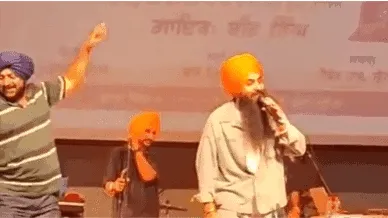
A cultural program organized by the Punjab government has sparked intense backlash from the Sikh clergy, following the inclusion of celebratory song-and-dance performances on a day that marks the martyrdom of Guru Arjan Dev, the fifth Sikh Guru. The Akal Takht, the highest authority in Sikhism, has issued a summons to senior officials involved, prompting a public apology from Punjab Education Minister Harjot Singh Bains. This incident has raised significant questions about cultural sensitivity, administrative oversight, and the responsibilities of state institutions in observing religious occasions with due reverence.
---
Clerical Outrage Over Government’s Misstep
The controversy centers around an event held by the Punjab government to commemorate the martyrdom of Guru Arjan Dev, a figure deeply venerated in Sikh history for his sacrifice in the face of persecution. Instead of somber reflection, the government program featured musical and dance performances—a move that Sikh religious leaders have labeled deeply disrespectful.
The Akal Takht, considered the supreme temporal authority of Sikhism, responded swiftly and sternly. In a clear message underscoring the seriousness of the misjudgment, the Takht issued a formal summons to Punjab Education Minister Harjot Singh Bains and the head of the state's language and culture department. For many within the community, the incident reflects a recurring issue—officialdom’s failure to adequately understand or respect the cultural and spiritual nuances of Sikh religious events.
---
Public Apology Follows Clergy Summons
In response to the backlash, Minister Harjot Singh Bains issued a public apology, acknowledging the insensitivity of the programming and pledging to prevent such occurrences in the future. While the apology may help deescalate immediate tensions, it also reveals a broader administrative gap—one where cultural programming is sometimes conducted without consultation with religious authorities or community elders.
The Punjab government has not issued an official explanation for how the program was curated or who approved the final schedule, but pressure is now mounting for an internal review of event planning protocols, especially those that involve religious observances.
---
Cultural Programming and the Importance of Context
India’s multicultural fabric necessitates extreme care in the planning of public events that intersect with religious sentiment. In this case, while music and dance may be seen as expressions of culture, their inclusion on a martyrdom day came across as tone-deaf to many observers. For Sikhism, days of martyrdom are solemn observances that commemorate sacrifice, not occasions for festivity.
This episode serves as a reminder that cultural literacy should be central to public administration. Government departments tasked with language, art, and heritage must ensure they understand the context and gravity of the religious events they engage with. Seeking guidance from religious scholars or advisory panels could be a practical step toward fostering greater harmony and respect in future programming.
---
Institutional Reflection and the Role of Religious Oversight
The Akal Takht’s intervention reflects the enduring influence of faith-based institutions in Punjab’s socio-political ecosystem. Beyond acting as a moral authority, the Takht serves as a custodian of Sikh tradition, and its proactive response underscores the importance of protecting the community’s spiritual heritage from dilution or misrepresentation.
For the state government, this summons is more than a symbolic reprimand—it’s a call to institutional introspection. Going forward, adherence to protocol, cultural sensitivity, and inter-institutional collaboration will be crucial in restoring trust and ensuring that future observances respect the religious and emotional weight they carry.
---
A Lesson in Governance and Cultural Sensitivity
The controversy surrounding the martyrdom event should serve as a turning point, both for the Punjab government and for other public bodies involved in organizing culturally significant functions. As India continues to evolve as a democracy rooted in diversity, such incidents highlight the fine balance that must be maintained between state-sponsored celebration and sacred commemoration.
Ultimately, the incident is not just about one event gone wrong—it is about learning to govern with empathy, respect, and deep awareness of the cultural and spiritual values that define Indian society.
Comments