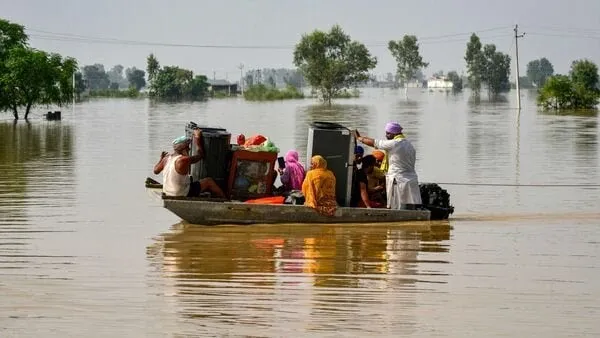
Flood-ravaged communities in Punjab have accused authorities of neglect, claiming they have been left without food, medical aid, or adequate shelter. Torrential rains and overflowing rivers have displaced thousands, submerging farmlands and destroying homes. While officials insist that relief measures are underway, affected families argue that assistance has been slow, insufficient, and poorly coordinated. The crisis has amplified frustrations over disaster preparedness, highlighting gaps in infrastructure, communication, and governance. For many survivors, the immediate concern is survival, but broader questions remain over how Punjab will manage the economic, agricultural, and humanitarian consequences of yet another devastating monsoon season.
Human Toll of the Disaster
Entire villages in flood-hit districts remain waterlogged, forcing families to take refuge on rooftops, school buildings, and raised platforms. Survivors recount harrowing experiences of going days without food or clean water. Many have reported relying on neighbors or volunteer groups for basic sustenance, accusing the administration of failing to deliver timely relief. Children and the elderly, particularly vulnerable to disease, face the greatest risks as stagnant water heightens the threat of infections.
Agriculture and Livelihoods in Ruins
Punjab’s fertile farmlands, a backbone of India’s agricultural economy, have been severely impacted. Thousands of acres of standing crops lie submerged, threatening both farmer incomes and food supply chains. Preliminary estimates suggest that losses run into hundreds of crores, with wheat, paddy, and vegetable growers facing long-term financial instability. For small-scale farmers already burdened with debt, the destruction poses existential challenges that relief packages alone may not be able to resolve.
Government Response Under Scrutiny
State officials have maintained that disaster response teams, food supplies, and medical camps are in operation. However, widespread accounts from flood victims paint a different picture—one of inadequate coordination, delayed supply distribution, and overstretched resources. Critics argue that Punjab’s disaster management framework, despite repeated warnings, remains reactive rather than preventive, with limited investment in flood-control infrastructure such as embankments, drainage channels, and early-warning systems.
Economic and Social Implications
Beyond immediate humanitarian concerns, the floods carry significant economic and social consequences. Damage to rural infrastructure, including roads, schools, and healthcare centers, threatens to deepen poverty cycles in affected regions. Migration pressures may increase as families seek stability elsewhere, straining urban centers. Meanwhile, the economic burden on the state is expected to rise sharply, with demands for central assistance likely to intensify.
Outlook
The outcry from flood-affected families underscores an urgent need for systemic reforms in disaster preparedness and relief delivery. Punjab’s experience reflects a broader challenge across India—how to balance short-term relief with long-term resilience in the face of increasingly volatile monsoons. For survivors who continue to endure hunger and displacement, the call is simple yet profound: timely help, dignified living, and a promise that such neglect will not repeat in the future.
Comments