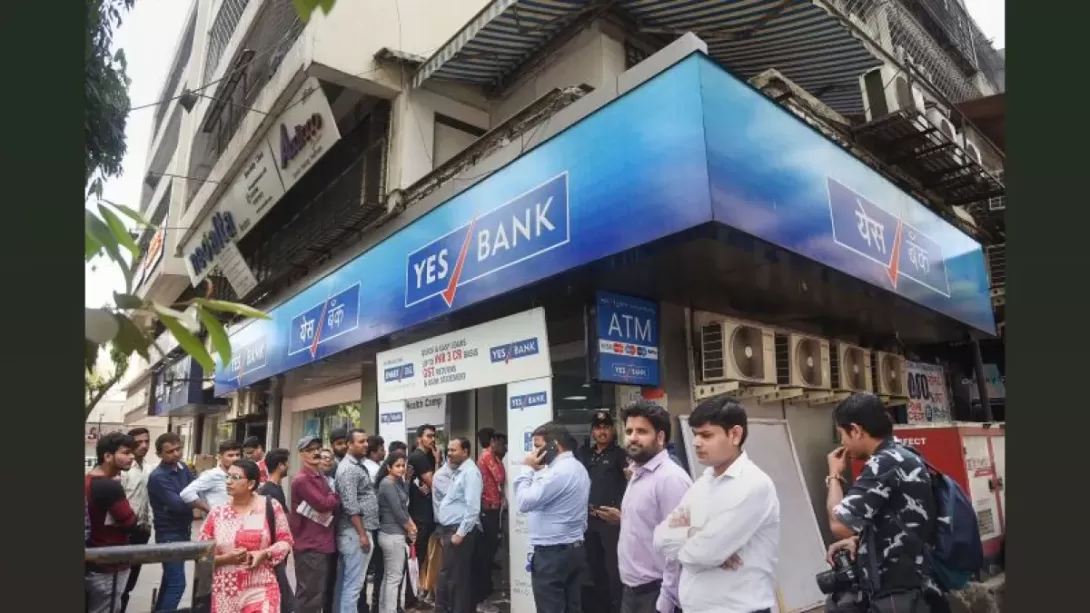
Yes Bank delivered a strong financial performance in the final quarter of FY25, posting a 63% year-on-year increase in net profit to Rs. 738 crore, primarily driven by a significant decline in provisions. For the full fiscal year, net profit surged 92.3% to Rs. 2,406 crore. The bank also reported moderate growth in net interest income and deposit base, while maintaining a cautious approach to retail lending. Despite trimming savings account interest rates, the CASA ratio improved. With plans to expand its branch network and focus on safer retail assets, Yes Bank is positioning itself for sustainable, risk-adjusted growth in FY26.
Quarterly and Annual Financial Performance
Yes Bank capped FY25 with a robust 63% rise in Q4 net profit, totaling Rs. 738 crore, compared to the same period last year. For the full fiscal year, net profit grew by an impressive 92.3% to Rs. 2,406 crore, marking a significant turnaround in the bank’s earnings trajectory.
The core net interest income (NII) increased 5.7% to Rs. 2,276 crore, aided by 8.1% growth in advances and a marginal improvement in the net interest margin (NIM), which stood at 2.5%, up by 0.1 percentage point.
Standalone total income rose to Rs. 9,355.39 crore in Q4, up from Rs. 9,015.77 crore in the year-ago period, signaling steady revenue growth despite a challenging operating environment.
Provisioning Decline Drives Bottom Line Growth
A key contributor to Yes Bank’s profit growth was the sharp 32.5% reduction in provisions, which fell to Rs. 318 crore in the March quarter. This decline reflects improving asset quality management and prudent risk containment, particularly in the post-pandemic credit landscape.
According to CEO Prashant Kumar, retail asset contraction was a deliberate strategy, with the bank pulling back from certain high-risk loan segments such as home and car loans to focus instead on better-yielding and lower-risk retail products, including loans against property, business loans, and used car financing.
Deposit and CASA Ratio Dynamics
Yes Bank’s deposit base expanded 6.8% year-on-year, an encouraging sign amid concerns over deposit mobilization in the broader sector. The CASA (current and savings account) ratio also improved, rising to 34.3% from 30.9% last year.
Despite cutting savings account interest rates by up to 2%, bringing the minimum rate to 3%, the bank remains confident that this adjustment will not adversely affect CASA performance. Kumar cited strong customer relationships and service quality as offsetting factors.
Retail Credit Slippages and Asset Quality Trends
While asset quality improved overall, retail loan slippages emerged as a concern. Out of the total Rs. 1,348 crore in fresh slippages, a substantial Rs. 1,115 crore came from retail lending. The breakdown included:
- Rs. 780 crore from other retail assets (evenly split between secured and unsecured)
- Rs. 184 crore from credit cards
- Rs. 93 crore from small business loans
- Rs. 57 crore from rural credit
Notably, credit card portfolio stress appears to have plateaued, and management expects credit costs to decline in the coming 2–3 quarters.
Strategic Growth Plans and Outlook
Looking ahead, Yes Bank aims to grow its loan book by 12–15% in FY26, contingent on broader macroeconomic conditions. Importantly, deposit growth is expected to outpace credit growth, helping to reduce the credit-deposit ratio, which currently stands at 86.5%, down from over 88%.
The bank plans to open 80 new branches annually over the next five years, building on the 37 branches launched in FY25. This physical network expansion is aligned with the bank’s strategy to deepen its reach in emerging and underpenetrated markets.
With a capital adequacy ratio (CAR) of 15.6% and a core Tier-1 capital buffer of 13.5%, Yes Bank maintains a healthy capital position. CEO Kumar has confirmed that the bank does not anticipate the need for fresh capital in the near term.
Conclusion: A Balanced, Forward-Looking Rebuild
Yes Bank’s FY25 performance underscores its continued progress in strengthening financial fundamentals while pursuing measured growth. A disciplined reduction in provisioning, improved CASA metrics, and a recalibrated retail lending strategy suggest a bank that has emerged from its troubled past and is now executing a more conservative, yet scalable, business model.
Investors and market watchers will be keen to observe how the bank balances asset growth with quality, particularly in the retail segment, and how successfully it leverages branch expansion and product diversification to reclaim a competitive edge.
Comments