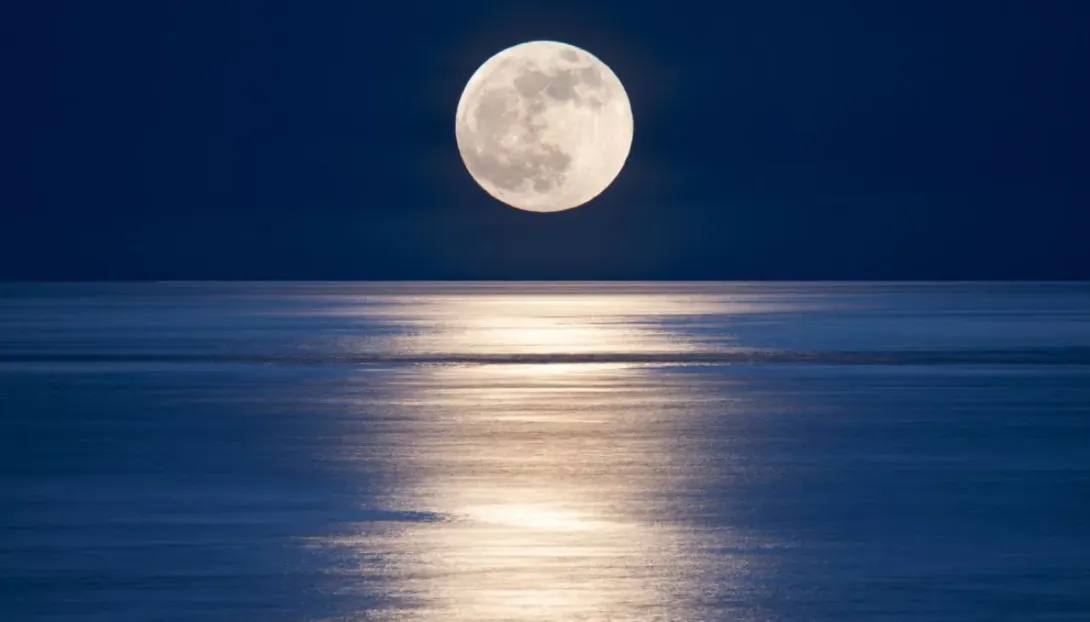
Skywatchers around the world will have a reason to look up early in 2026, as the first full moon of the year—the Wolf Moon—is expected to appear on January 3. Traditionally associated with midwinter in the Northern Hemisphere, the Wolf Moon marks a significant moment in the lunar calendar. Astronomers note that the event offers both cultural resonance and scientific interest, as lunar cycles continue to inform observations of Earth’s tides, climate patterns and night-sky visibility. With clear conditions, the Wolf Moon is expected to be visible across large parts of the globe.
What Is the Wolf Moon?
The Wolf Moon is the traditional name given to January’s full moon, a term rooted in Indigenous and early European folklore. The name is believed to reference the heightened howling of wolves during winter months, when food scarcity drove animals closer to human settlements. While the name is symbolic, the lunar event itself follows well-established astronomical cycles.
Astronomical Significance
From a scientific perspective, the Wolf Moon represents the first complete lunar phase of the calendar year. Astronomers use such events to refine long-term lunar models and study subtle variations in the Moon’s orbit and brightness. These observations contribute to broader research on Earth-Moon dynamics and tidal behavior.
Viewing Conditions and Timing
The Wolf Moon on January 3, 2026, is expected to reach peak illumination during local nighttime hours across many regions, offering favorable viewing conditions. Experts recommend finding areas with minimal light pollution to fully appreciate the Moon’s brightness and surface detail.
Cultural and Educational Value
Lunar events like the Wolf Moon continue to play an important role in public engagement with science. Planetariums, schools and astronomy groups often use such occasions to promote awareness of celestial mechanics and observational astronomy.
A Celestial Start to the Year
As the first full moon of 2026, the Wolf Moon serves as a symbolic and scientific marker, blending tradition with astronomy. For enthusiasts and casual observers alike, it offers a reminder of the enduring connection between natural cycles and human curiosity.
Comments