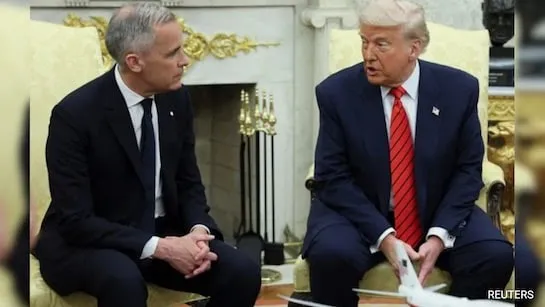
In a striking move that risks unsettling North America’s economic balance, former U.S. President Donald Trump has formally announced a 35% tariff on all Canadian exports to the United States through a direct letter to Prime Minister Justin Trudeau. Trump argues the measure is essential to safeguard American jobs and industries, reigniting debates over protectionism and trade fairness. This development threatens to disrupt integrated supply chains across key sectors such as automotive, agriculture, and consumer goods, while raising the specter of retaliatory action from Canada that could further strain bilateral economic relations.
A Sharp Turn Toward Protectionism
The newly imposed tariff marks one of the most aggressive trade measures ever aimed at a longstanding U.S. ally. In his letter, Trump contended that Canada has historically benefited from favorable trade dynamics at the expense of American workers, pointing to persistent trade deficits and what he termed “market-distorting subsidies” by Ottawa.
By levying a flat 35% tariff on all Canadian goods entering the U.S., Trump signaled a willingness to overhaul the norms of cross-border commerce that have long underpinned prosperity across North America. His declaration underscores a return to hardline economic nationalism, with domestic manufacturing revival taking clear priority over established multilateral agreements.
Supply Chains and Industry Under Pressure
The tariff’s impact is expected to be immediate and far-reaching. Canada and the United States maintain one of the world’s most interconnected economic partnerships, with industries on both sides deeply reliant on cross-border supply chains.
Automobile manufacturing stands out as particularly vulnerable. Plants in Ontario and Michigan often share production responsibilities, with components crossing the border multiple times before final assembly. A 35% duty on Canadian exports will sharply raise input costs, likely resulting in higher consumer prices and potential disruptions in production schedules.
Agricultural exporters in Canada will also face a steep competitive disadvantage in U.S. markets, as the new tariff erodes price parity and could force producers to seek alternative buyers, risking significant revenue losses.
Investor Caution and Market Ripples
Financial markets reacted with apprehension following the announcement. Shares of logistics firms, automakers, and companies heavily exposed to North American trade experienced heightened volatility, as investors recalibrated forecasts in light of probable cost escalations and shifting demand dynamics.
Economic analysts warned that such protectionist measures, while politically resonant among segments of the American electorate, often produce unintended downstream effects. Higher tariffs can dampen consumer spending by pushing up prices, while retaliatory tariffs from Canada may hurt American farmers and manufacturers trying to maintain footholds in Canadian markets.
Canadian Response and Diplomatic Undercurrents
While Ottawa has yet to issue a formal countermeasure, senior Canadian officials have indicated that reciprocal tariffs are on the table to defend national interests. The imposition of such a sweeping tariff also strains diplomatic ties that have traditionally been characterized by pragmatic cooperation and mutual benefit under agreements like the United States–Mexico–Canada Agreement (USMCA).
This escalation risks unraveling years of carefully negotiated trade frameworks, introducing fresh uncertainty into an economic corridor that supports millions of jobs across both nations.
Conclusion: A Critical Juncture for Bilateral Trade
Trump’s decision to impose a broad 35% tariff on Canadian exports, conveyed pointedly through direct communication with Prime Minister Trudeau, represents a major inflection point in U.S.-Canada economic relations. While intended to bolster domestic industries, the move could disrupt intricate supply networks, elevate consumer costs, and invite retaliatory measures that further unsettle the regional economy. As stakeholders brace for the fallout, this development serves as a stark reminder of how swiftly protectionist policy shifts can ripple through global trade systems, reshaping economic landscapes with profound and lasting consequences.
Comments