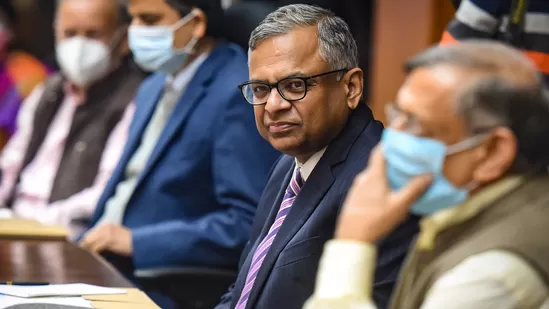
In a recent address, Tata Sons Chairman N. Chandrasekaran discussed the implications of global tariffs, particularly those imposed by the United States, noting that some of these measures are likely to persist in the long term. He emphasized that the challenge at hand is not just the tariffs themselves, but the disruption of a six-decade-old global economic model. Chandrasekaran also shed light on the Tata Group's ambitious growth plans, which include the establishment of seven new factories focused on electric vehicles, batteries, and semiconductors by 2027. These factories are expected to create significant employment opportunities, reinforcing the group’s commitment to long-term industrial growth.
Global Tariffs and Their Long-Term Impact on Trade
N. Chandrasekaran, Chairman of Tata Sons, recently shared his perspective on the evolving global tariff landscape, particularly the measures introduced by the United States. While acknowledging the impact of these tariffs, he expressed the belief that some form of tariffs will likely remain in place moving forward. This acknowledgment underscores the complexity of the current trade environment and the shifting dynamics of global commerce. Chandrasekaran explained that the real issue is not the tariffs themselves, but the broader disruption of an economic framework that has been in place for over six decades. For decades, globalization facilitated the efficient production of goods in countries with low labor or production costs, with finished products being sold in markets where demand was high. This model, which has been integral to global trade, is now being challenged as nations recalibrate their economic strategies.
Challenges in Supply Chain Adjustments
The current challenges surrounding trade tariffs are part of a much larger puzzle involving global supply chains. Chandrasekaran highlighted that supply chains are deeply integrated, and any attempt to reconfigure them requires time and significant adjustments. Countries are grappling with various issues such as the sourcing of raw materials, securing talent, and managing logistical complexities. These elements cannot be changed overnight, and their realignment will be a slow process. The impact of these adjustments is far-reaching, affecting not only the movement of goods across borders but also global labor markets and the flow of capital. As nations rethink their trade policies, they will need to balance national interests with the realities of the deeply intertwined global economy.
The Future of Global Tariffs: A Permanent Fixture?
In his remarks, Chandrasekaran also speculated on the future of tariffs, suggesting that global tariffs may never return to pre-implementation levels. Once introduced, such measures often leave lasting effects. Even if there are adjustments, some part of the tariff system is likely to remain, creating a new normal for global trade. This is particularly relevant for multinational corporations that operate in multiple markets, as they must adapt to a more fragmented trade environment. Chandrasekaran also pointed out that the resolution of these issues may not be uniform across all countries. Rather, the trade environment could be shaped by a series of bilateral agreements, where countries negotiate directly to address specific concerns rather than through broad multilateral frameworks. The future of these tariffs, he suggested, will likely depend on how nations work together—or independently—to resolve their trade differences.
Tata Group’s Vision for Future Growth: Diversification and Innovation
Amid the challenges posed by global tariffs and supply chain disruptions, the Tata Group remains focused on its long-term growth strategy. Chandrasekaran shared that the group is investing heavily in new industries, with the development of seven new factories set to be completed by 2027. These factories will be spread across emerging sectors such as electric vehicles (EVs), batteries, and semiconductors, all of which are integral to the global shift toward more sustainable and technology-driven industries. The new factories will not only contribute to Tata's diversification efforts but are also expected to create significant employment opportunities. Chandrasekaran revealed that the group’s new ventures will create jobs for approximately five lakh (500,000) people, further cementing Tata Group’s commitment to job creation and economic growth in India. This expansion into cutting-edge industries reflects the group’s adaptability and resilience, even amid a shifting global trade landscape.
Conclusion: Adapting to New Realities
The statements by N. Chandrasekaran shed light on the complexities of the current global trade environment and the long-term effects of the tariff policies. While acknowledging the challenges posed by these changes, he also provided an optimistic outlook, particularly in regard to Tata Group's growth and diversification plans. By investing in the future of emerging technologies and industries, Tata is positioning itself as a key player in sectors crucial to global sustainability and technological advancement. Despite the uncertainties surrounding trade tariffs and the evolving global economic framework, Tata Group’s strategy underscores the importance of innovation and adaptability in navigating the changing tides of global business. With its forward-looking investments and commitment to creating thousands of jobs, Tata Group is poised to contribute significantly to India’s economic growth in the years ahead.
Comments