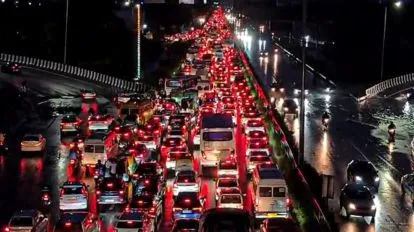
The contrast between Gurgaon and Noida during heavy monsoons has once again highlighted the stark differences in urban planning, infrastructure, and governance. While even moderate showers bring Gurgaon to a grinding halt—submerging arterial roads, choking traffic, and flooding upscale neighborhoods—Noida typically weathers the same downpour with far fewer disruptions. The divergence lies not in geography but in decades of planning choices, drainage systems, and civic management. This recurring pattern has sparked debate about the sustainability of India’s booming satellite cities, raising critical questions about how rapid urbanization should balance growth with resilience against extreme weather.
Gurgaon: Growth Outpacing Planning
Gurgaon, often celebrated as India’s corporate capital, has expanded at a breakneck pace over the past two decades. Shimmering high-rises, luxury apartments, and sprawling office complexes define its skyline. Yet, beneath the glitter lies a fragile infrastructure network.
The city’s stormwater drains are limited, poorly interconnected, and often clogged due to encroachments and unregulated construction. Natural water bodies that once absorbed excess rainwater have been filled up for real estate projects, leaving the city vulnerable to flash floods. Consequently, when rain lashes the region, waterlogging on key roads brings traffic to a standstill and exposes the cracks in Gurgaon’s urban model.
Noida: Planned Infrastructure Pays Off
In contrast, Noida—developed under a more structured master plan—has demonstrated greater resilience to heavy rainfall. Wider roads, a grid-based layout, and relatively well-maintained drainage systems allow water to recede faster. Planned green belts and open spaces also act as natural buffers, absorbing runoff during peak showers.
Officials credit Noida’s foresight in preserving parts of its natural topography and integrating stormwater management into its urban design. Although not immune to flooding, the city’s ability to recover quickly after downpours has set it apart from Gurgaon, despite both sharing similar climatic conditions.
Governance and Maintenance Gap
The divergence between the two cities also reflects differences in governance structures. Gurgaon, governed by multiple overlapping authorities, often suffers from bureaucratic delays and lack of accountability in civic upkeep. Drain desilting, road maintenance, and sewage management are frequently neglected until a crisis unfolds.
Noida, on the other hand, benefits from more centralized planning under its development authority, which has enabled consistent investment in drainage networks and infrastructure upgrades. The result is a more coordinated response to weather-related challenges, minimizing public inconvenience.
Economic and Social Implications
For Gurgaon, recurring floods have significant economic consequences. Traffic paralysis disrupts corporate productivity, supply chain logistics, and day-to-day commerce. Property owners also face recurrent damage and reduced real estate valuations in flood-prone zones.
In contrast, Noida’s ability to maintain smoother functioning during monsoon enhances its appeal for investors and residents alike. The city’s infrastructure resilience not only protects property values but also builds confidence among businesses considering long-term commitments.
Lessons for Urban India
The contrasting fortunes of Gurgaon and Noida underscore an urgent lesson for India’s urban future: rapid growth without foundational planning invites recurrent crises. Cities cannot afford to compromise natural ecosystems for unchecked expansion, nor can they rely on reactive responses to predictable seasonal events like monsoons.
Experts suggest that Gurgaon must urgently invest in reviving water bodies, expanding drainage capacity, and streamlining its governance framework. Failure to act risks not only reputational damage but also long-term economic losses.
Comments