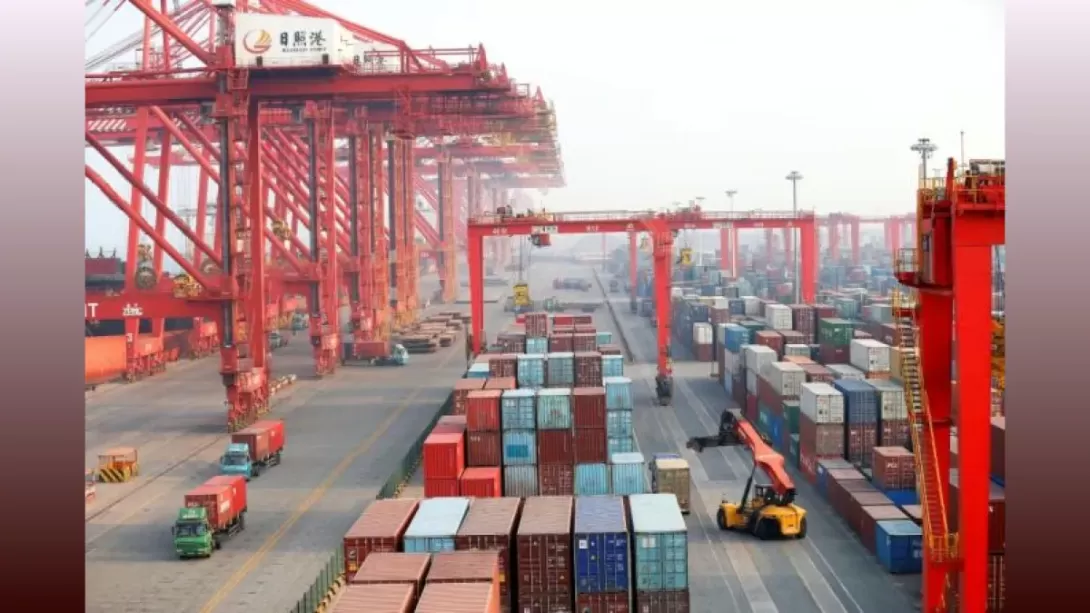
Singapore has downgraded its 2025 GDP growth forecast to a modest 0-2% following the heightened risks posed by escalating trade wars, particularly between the United States and China. In response, the Monetary Authority of Singapore (MAS) has further loosened its monetary policy to mitigate economic pressures. The growing uncertainty around global trade, exacerbated by U.S. tariffs and China's retaliatory measures, has dampened business confidence, and the effects are now being felt across Singapore’s key sectors, particularly manufacturing and finance. This article delves into the underlying causes of these revisions and the potential long-term impacts on Singapore's economy.
Singapore’s 2025 GDP Growth Forecast: A Major Downgrade
In a significant revision to its economic outlook, Singapore has lowered its 2025 GDP growth forecast to a modest range of 0-2%, down from an earlier prediction of 1-3%. The Ministry of Trade and Industry (MTI) attributes this pessimistic adjustment to a series of challenges, primarily stemming from the ongoing trade war between the United States and China, as well as the broader geopolitical tensions in global trade.
The impact of U.S. President Donald Trump’s tariffs, which have been levied across a wide range of imports from numerous countries, including Singapore, has significantly disrupted global supply chains. With the United States imposing a 10% baseline tariff on all countries, the knock-on effects on trade partners, especially those with large trade surpluses like China, have been profound. The trade war’s continued escalation has made it increasingly difficult for global economies to maintain growth momentum, leaving Singapore’s export-dependent economy particularly vulnerable.
MAS Loosens Monetary Policy Amid Rising Economic Fears
In line with its cautious economic forecast, the Monetary Authority of Singapore (MAS) has once again loosened its monetary policy. This marks the second consecutive time MAS has adjusted its policy in response to the evolving economic environment. The central bank’s move is aimed at alleviating some of the pressure on domestic economic activity, as lower inflation expectations and weaker global demand threaten to slow consumption and investment within Singapore.
MAS’s decision follows a period of heightened uncertainty regarding the direction of global trade. With business sentiment soured due to the trade tensions and the resultant tariff measures, both domestic consumption and investments in Singapore have started to feel the pinch. This has further dampened growth prospects for the year.
Sectoral Performance: Manufacturing and Services Struggle
The first-quarter results for 2025 have highlighted the economic strain, as Singapore’s economy grew at a slower pace of 3.8%, down from 5% in the previous quarter. Notably, on a quarter-on-quarter seasonally adjusted basis, the economy contracted by 0.8%, signaling a potential stagnation in growth. The contraction was particularly visible in the manufacturing sector, which saw sequential declines in output. This was further compounded by weakness in services, including finance and insurance, both of which are pivotal components of the Singaporean economy.
The persistent downturn in these sectors is indicative of the broader structural challenges posed by the trade war and the resulting tariffs. With global demand weakening, particularly in key markets like the U.S. and China, Singapore’s traditionally export-driven industries are bearing the brunt of this economic turmoil.
Tariff Escalation and Regional Economic Impact
The global trade environment has become even more complex, as the U.S. has imposed higher tariffs on Chinese goods, and in return, China has escalated its duties on American imports to an eye-watering 125%. This tit-for-tat tariff war has led to a noticeable deterioration in both U.S. and Chinese economic forecasts. As the world’s two largest economies continue to battle over trade imbalances, the ripple effects are being felt far beyond their borders.
China’s weakening growth outlook, exacerbated by the stalling of export growth, directly impacts the broader Asia-Pacific region. For Singapore, a country with strong trade ties to both the U.S. and China, the fallout from this trade dispute is evident. The fall in external demand has not only led to reduced business confidence but has also hampered domestic consumption, which is a critical engine of growth.
Strategic Implications and Future Prospects
Looking ahead, Singapore's business environment remains clouded by uncertainty. While the temporary 90-day tariff pause called by President Trump may offer a short-term respite, the broader dynamics of the trade war, along with China’s retaliatory measures, are likely to continue to exert significant pressure on Singapore’s economic prospects.
Singapore’s ability to pivot and adapt in these turbulent times will be crucial. The government’s fiscal policies, along with MAS's ongoing efforts to loosen monetary policy, will likely play a pivotal role in managing the fallout. However, without a resolution to the ongoing trade tensions, Singapore’s economy could face prolonged stagnation, particularly in the export and manufacturing sectors.
Conclusion
In conclusion, the downgrade of Singapore’s GDP growth forecast to 0-2% for 2025 is a stark reminder of the mounting challenges in the global trade landscape. With U.S. tariffs and China’s retaliatory measures continuing to reshape the global economic order, Singapore is caught in the crossfire of a broader geopolitical struggle. While there are steps that can be taken at the domestic level to mitigate these pressures, the long-term economic outlook remains uncertain, dependent largely on the resolution of global trade disputes and the recovery of external demand.
Comments