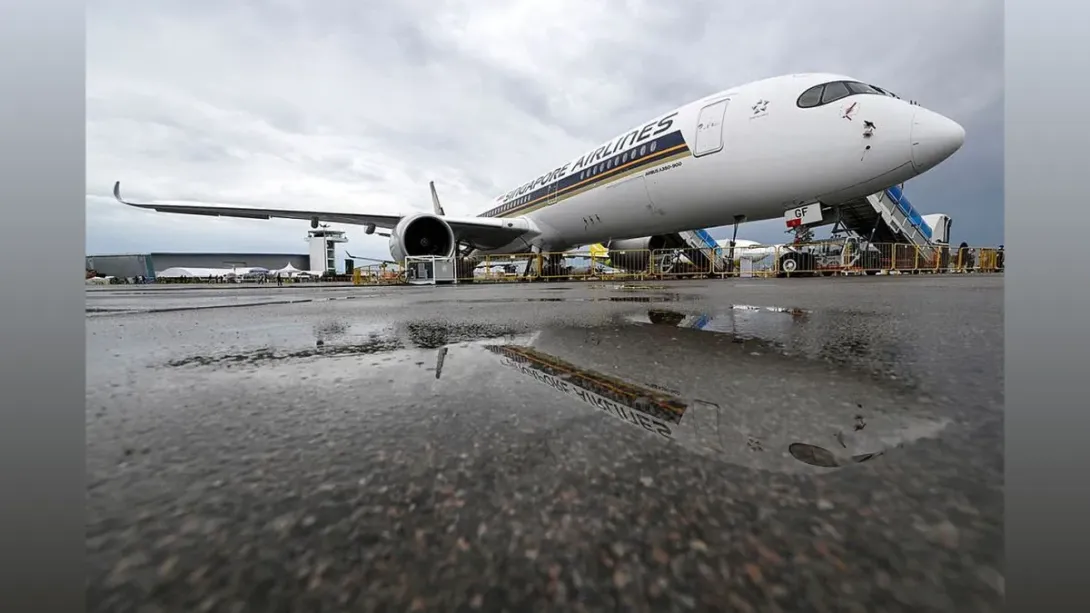
Singapore Airlines (SIA) posted a significant 59% drop in its net profit for the fiscal second quarter, as rising operational expenses and a high base from the previous year weighed on earnings. Despite strong passenger demand and increased capacity, the carrier’s bottom line was impacted by elevated fuel costs and increased expenditure linked to fleet and manpower expansion. While the airline remains fundamentally strong, its performance reflects the normalization of post-pandemic travel dynamics and the pressures of sustaining profitability amid global economic headwinds and intense industry competition.
---
Sharp Decline Reflects Base Effect and Rising Costs
Singapore Airlines reported a net profit of SGD 514 million (approximately Rs. 3,170 crore) for the April–June quarter, marking a steep 59% drop from SGD 1.25 billion during the same period last year. This sharp decline was anticipated, given the exceptional performance in Q2 FY2023, which benefited from a post-pandemic surge in travel demand and one-off gains.
The comparative weakness also reflects a normalization in travel patterns and an uptick in cost structures, especially as the airline increases capacity and resumes more routes globally.
---
Passenger Volumes Remain Robust
Despite the earnings decline, passenger demand remained a bright spot for the carrier. SIA and its low-cost subsidiary Scoot carried 9.5 million passengers in the second quarter, up 21.9% year-on-year. The group’s passenger load factor stood at a healthy 88.8%, reflecting solid utilization of seat capacity across its global network.
This momentum is in line with the global aviation recovery, particularly in the Asia-Pacific region, where travel restrictions have been lifted and leisure as well as business travel has regained strength.
---
Revenue Grows, But Margins Tighten
Operating revenue rose by 8.9% to SGD 4.48 billion (approximately Rs. 27,650 crore), driven largely by higher passenger carriage and increased flight frequencies. However, operating expenditure grew at a faster pace—rising 16.3% year-on-year to SGD 3.93 billion—primarily due to a 10% increase in fuel costs and higher expenses linked to staff and maintenance.
The mismatch between revenue growth and expenditure expansion squeezed operating margins, which fell to 12.2% from 20.4% a year earlier.
---
Cargo Performance Dips as Global Freight Slows
The airline’s cargo segment saw continued pressure, with cargo revenue declining 41.2% year-on-year to SGD 511 million (around Rs. 3,150 crore). This fall aligns with the broader industry trend of freight normalization following pandemic-era highs. Lower global shipping rates and increased bellyhold capacity from restored passenger services contributed to the reduced yields.
Nonetheless, management expressed confidence that the cargo division would remain strategically important as part of the group’s diversified revenue mix.
---
Forward Outlook and Strategic Positioning
Looking ahead, Singapore Airlines remains cautiously optimistic. Forward bookings for the rest of the financial year are reportedly strong, supported by resilient travel appetite and the group’s agile network strategy. However, management warned of continued cost pressures and macroeconomic uncertainties, including volatile fuel prices and currency fluctuations.
To counter these risks, the airline plans to continue investing in fleet modernization, digital transformation, and customer experience. Its upcoming integration with budget carrier Vistara, pending regulatory approvals, is also expected to enhance network synergies and operational efficiency.
---
Conclusion
Singapore Airlines’ second-quarter results underscore the challenges faced by global carriers in sustaining profitability in a post-pandemic environment marked by rising costs and shifting demand patterns. While the steep decline in net profit may raise concerns, the airline’s robust passenger growth, strong load factors, and forward-focused investments signal long-term resilience. As the aviation sector adapts to a more normalized, competitive era, SIA’s disciplined strategy and premium service positioning will be key to maintaining its leadership in the region.
Comments