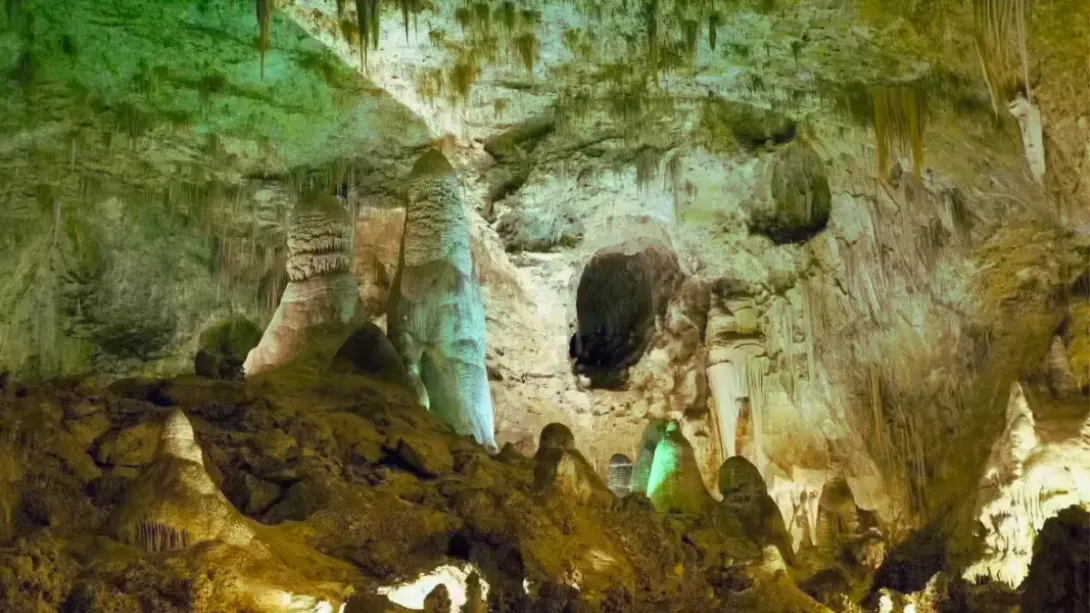
Scientists have identified a previously unknown biological process—described as “dark photosynthesis”—inside a cave system in New Mexico, challenging long-held assumptions about how life sustains itself. The discovery reveals that certain microorganisms can produce energy in complete darkness by using chemical reactions instead of sunlight. This breakthrough reshapes scientific understanding of photosynthesis, expands the known limits of life on Earth and carries profound implications for climate science, evolutionary biology and the search for life beyond our planet. Researchers say the finding could alter how scientists define habitable environments.
A Discovery Beneath the Surface
The discovery was made deep inside a New Mexico cave, an environment entirely devoid of sunlight and isolated from surface ecosystems. Researchers studying microbial life found communities thriving under conditions previously thought incompatible with photosynthesis. Detailed analysis revealed that these organisms convert chemical energy—derived from sulfur and other compounds—into organic matter, bypassing the need for solar energy altogether.
Rethinking Photosynthesis
Traditional photosynthesis depends on sunlight to convert carbon dioxide and water into energy-rich compounds. The newly identified process, however, operates in total darkness, relying on chemical reactions to drive carbon fixation. Scientists describe this as a fundamentally different pathway, one that expands the definition of photosynthetic activity and challenges textbook biological models.
Implications for Earth Science
The finding has far-reaching consequences. Dark photosynthesis may play an unrecognized role in underground carbon cycles, influencing how carbon is stored and transformed beneath Earth’s surface. Researchers suggest this process could help explain how life persisted during periods of Earth’s history when sunlight was limited or environmental conditions were extreme.
Clues for Life Beyond Earth
Perhaps most significantly, the discovery strengthens the case for life in environments previously considered uninhabitable—such as subsurface regions of Mars or the icy moons of Jupiter and Saturn. If organisms can generate energy without sunlight on Earth, similar mechanisms could exist elsewhere in the solar system.
Scientific and Strategic Value
Beyond its academic importance, the research may eventually inform biotechnology and sustainability studies, offering insights into alternative energy pathways and microbial resilience. While practical applications remain speculative, the conceptual impact is already substantial.
Outlook
The discovery of dark photosynthesis marks a pivotal moment in modern biology, reminding scientists that Earth still holds fundamental secrets. As research continues, what began in a quiet New Mexico cave may ultimately reshape humanity’s understanding of life—on this planet and beyond.
Comments