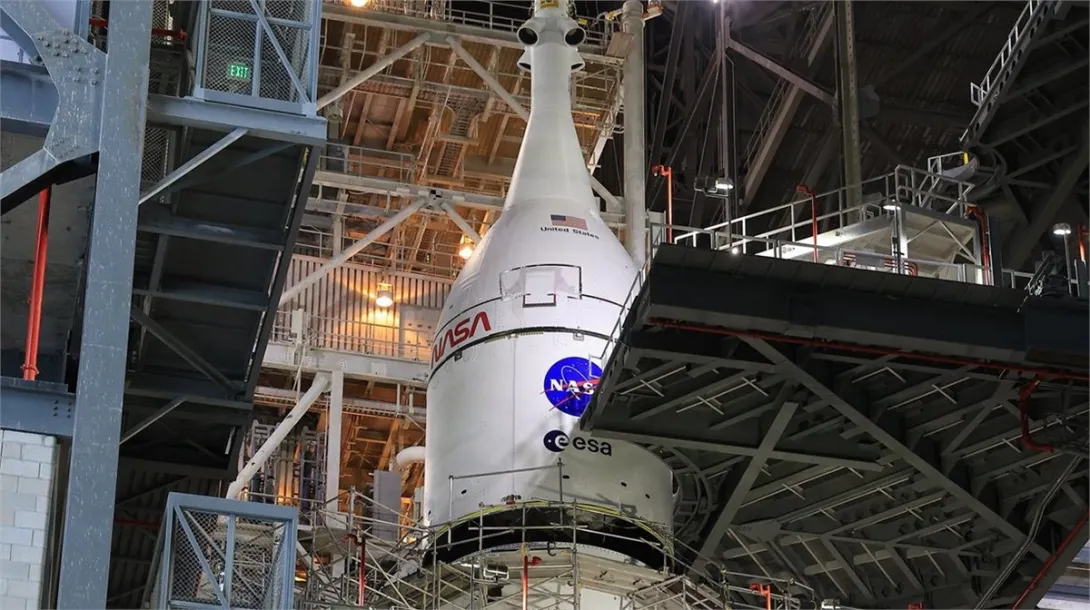
NASA’s Artemis 2 mission, the first crewed flight of the Artemis program, is progressing steadily toward its scheduled launch, marking a pivotal moment in humanity’s return to the Moon. The mission will carry astronauts on a multi-day journey around the lunar orbit, testing critical systems, life-support mechanisms, and deep-space operations in preparation for future lunar landings. Artemis 2 represents a collaboration of cutting-edge aerospace technology, international partnerships, and rigorous safety protocols. Its success will pave the way for Artemis 3, which aims to land astronauts on the Moon, reaffirming NASA’s commitment to sustainable lunar exploration and long-term scientific research.
Mission Objectives and Significance
Artemis 2 is designed to validate spacecraft systems under real conditions with a crew aboard, including life-support systems, navigation, and communication technologies. The mission serves as a critical precursor to the Artemis 3 lunar landing, ensuring that astronauts can operate safely in the Moon’s vicinity. By demonstrating sustainable deep-space operations, Artemis 2 reinforces NASA’s long-term strategy for lunar exploration and serves as a stepping stone toward eventual crewed missions to Mars.
Spacecraft and Crew
The mission will utilize the Orion spacecraft atop the Space Launch System (SLS) rocket, NASA’s most powerful launch vehicle. The crew comprises highly trained astronauts who will conduct operational tests, perform trajectory maneuvers, and monitor onboard systems to ensure readiness for extended lunar missions. Orion’s modular design allows for rigorous testing of life-support, propulsion, and communication systems in deep space, vital for mission success and crew safety.
Technological and Scientific Preparations
NASA has conducted extensive simulations, hardware tests, and emergency scenario drills to guarantee mission readiness. Artemis 2 will also test radiation shielding and spacecraft resilience against the harsh space environment. Additionally, the mission is expected to carry scientific payloads to study space weather, microgravity effects on human physiology, and other phenomena critical to future lunar settlements.
Strategic and International Implications
The Artemis program embodies international collaboration, with partners contributing scientific instruments, technology, and expertise. Artemis 2 reinforces global space exploration ambitions, promoting shared knowledge and innovation. Its successful execution will demonstrate the feasibility of long-duration missions and foster confidence among stakeholders, paving the way for future collaborations and joint scientific initiatives.
Timeline and Next Steps
With launch preparations on schedule, NASA plans a rigorous countdown sequence, system checks, and crew rehearsals in the coming months. Continuous monitoring and mission simulations ensure that Artemis 2 meets all safety and operational benchmarks before liftoff. The data collected will inform Artemis 3 planning and broader objectives for sustainable human presence on the Moon.
Comments