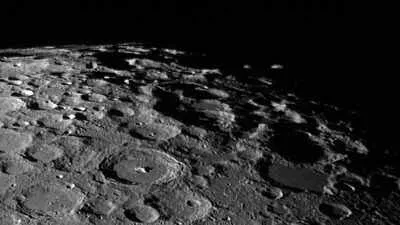
NASA’s Artemis mission aims to explore the Moon’s south pole, a region believed to hold 4-billion-year-old geological secrets that could illuminate the early history of the solar system. Scientists anticipate that the south polar craters, shielded from sunlight, contain ancient rock and ice deposits, potentially preserving a record of the Moon’s formation and Earth-Moon evolution. These discoveries could provide insights into planetary processes, volatile compounds, and the origins of water in the inner solar system. Artemis astronauts and robotic probes are expected to collect samples and data, offering unprecedented opportunities to study primordial materials and advance lunar science.
The Moon’s South Pole: A Window into Ancient History
The lunar south pole is of extraordinary scientific interest due to its permanently shadowed regions, where sunlight barely penetrates. These craters are believed to harbor ice, minerals, and rock formations that have remained largely unchanged for billions of years. By investigating these areas, Artemis aims to unlock information about the Moon’s early geological history and its role in the evolution of the Earth-Moon system.
Scientific Objectives of Artemis
Key objectives include sampling ancient rock formations, analyzing volatile compounds, and studying ice deposits that may contain trapped gases and organic materials. These investigations are expected to shed light on the Moon’s internal structure, its impact history, and the broader dynamics of early solar system formation. Data collected could also inform models of planetary evolution and the origins of water and other volatiles on terrestrial planets.
Implications for Space Exploration and Science
Uncovering 4-billion-year-old lunar material could revolutionize our understanding of planetary processes, offering clues about the formation of Earth and the Moon. Insights from Artemis could enhance our knowledge of resource utilization for long-term space missions, including potential use of lunar ice for life support and fuel production. The mission represents a milestone in humanity’s return to the Moon and the pursuit of deep-space exploration.
Future Prospects
NASA’s Artemis mission is expected to pave the way for sustained lunar exploration, international collaboration, and preparatory studies for human missions to Mars. By investigating the Moon’s most ancient terrains, scientists hope to piece together the solar system’s formative history, providing a foundation for understanding Earth’s early environment and the evolution of other rocky planets.
Comments