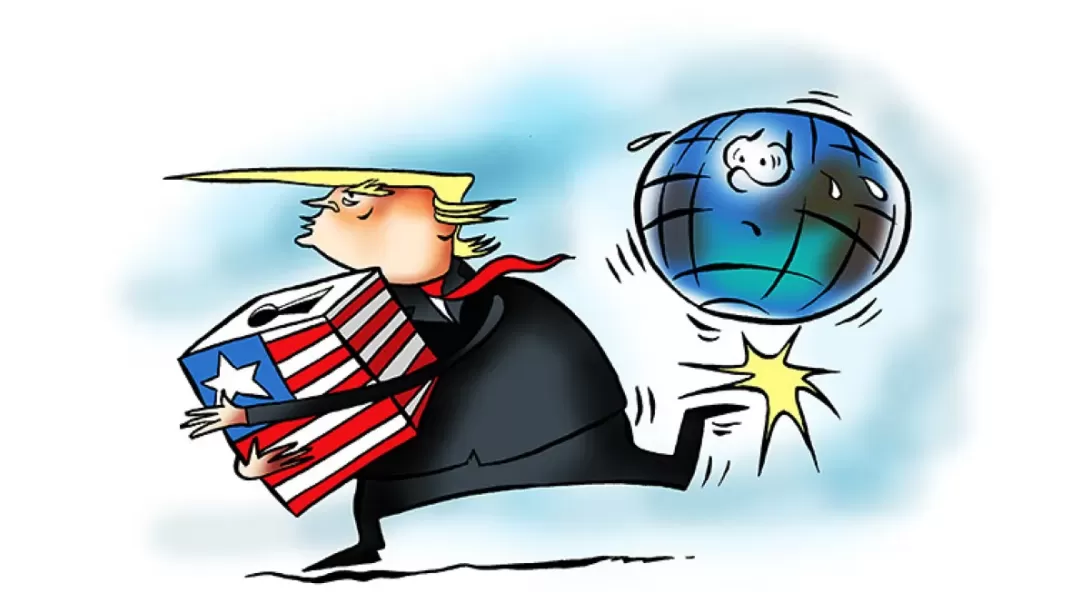
Singapore has established a national task force to mitigate the effects of sweeping US tariffs, which Prime Minister Lawrence Wong warned could disrupt economic growth, jobs, and wages. The tariffs, set to go into effect in April 2025, impose a universal 10% duty on all imports into the US, with higher rates for countries viewed as treating the US unfairly. The task force, led by Deputy Prime Minister Gan Kim Yong, will help Singapore’s businesses and workers adjust to these new global challenges. This article explores the potential economic consequences of these tariffs and Singapore’s strategic responses.
US Tariffs: A Challenge to Global Trade
On April 2, 2025, US President Donald Trump announced a new wave of tariffs targeting imports from various countries, including Singapore. The 10% tariff applies universally, with higher rates for nations deemed to have unfair trade practices. Singapore, which currently imposes no tariffs on US goods, is especially impacted, as the country runs a trade deficit with the US. Prime Minister Wong expressed disappointment with the move, particularly given the longstanding trade relationship between the two nations. He emphasized that the tariffs were unnecessary, highlighting that a trade deficit does not inherently signal economic imbalance.
Economic Impact: Affected Sectors
The new tariffs are expected to have a significant impact on Singapore’s economy, which relies heavily on exports. Sectors such as manufacturing and wholesale trade will face a reduction in demand due to global growth stagnation. Additionally, service industries like finance and insurance may experience a slowdown, reflecting a broader global sentiment dampened by the uncertainty surrounding these tariffs. As the US moves away from rules-based globalization, Singapore’s export-driven economy is at risk of facing heightened economic volatility and slower growth.
Government's Response: A National Task Force
In response to the economic uncertainty, the Singapore government has swiftly mobilized a national task force, which will focus on supporting businesses and workers. The task force, led by Deputy Prime Minister Gan Kim Yong, is designed to provide immediate assistance to firms, especially in navigating the complexities of the newly introduced tariffs. Wong mentioned that the task force would also prioritize improving economic resilience and helping businesses adapt to the evolving global trade landscape. This initiative aims to shield Singapore from the full impact of the tariff-driven disruptions.
Slower Growth and Job Losses
Prime Minister Wong has warned that the tariffs could lead to slower growth in Singapore, potentially revising its 2025 GDP growth forecast downward from 1% to 3%. The expected economic slowdown would have cascading effects on employment, with fewer job opportunities and slower wage growth. Additionally, businesses could face heightened retrenchment rates if they struggle to cope with the tariffs or decide to relocate operations back to the US. The combination of rising costs and shifting demand may force companies to downsize, exacerbating the risk of job losses in the coming months.
Global Trade Norms Under Threat
Prime Minister Wong also pointed out that the US’s move represents a rejection of established global trade principles, such as the Most Favoured Nation (MFN) rule under the World Trade Organization (WTO). The MFN rule ensures that trade relationships between countries are fair and equitable, meaning no nation is favored over another. Wong’s critique of the US’s protectionist approach highlights the growing fragmentation of the global trade system, which could lead to bilateral trade negotiations replacing multilateral frameworks, ultimately destabilizing the global market.
The Future of Global Trade: A Deteriorating US-China Relationship
Wong expressed deep concern over the deterioration of US-China relations, warning that escalating tensions between these two major powers could have disastrous global consequences. With fewer avenues for dialogue, the risks of conflict and economic instability are higher, potentially leading to trade wars that could significantly affect smaller nations like Singapore. Furthermore, protectionism may spread, with other countries, including those in Europe, adopting similar tariffs to safeguard their industries from foreign competition.
Singapore's Strategy: Regional Cooperation and Business Support
To safeguard its economic interests, Singapore is looking to strengthen its regional ties, particularly through ASEAN (Association of Southeast Asian Nations). Economic ministers from ASEAN are set to meet to explore ways to enhance intra-ASEAN trade and deepen regional economic integration. Singapore also plans to assist businesses through corporate income tax rebates, productivity enhancement schemes, and initiatives to pivot into new markets. This approach reflects Singapore’s proactive strategy of regional cooperation and local support to cushion the impact of global trade tensions.
Looking Forward: A Challenging Global Landscape
While Singapore remains committed to navigating these challenges with strategic foresight, the task force's ability to support businesses in the short term will be pivotal. The trade tariffs have already shaken global markets, reducing consumer and business confidence, and this uncertainty could hinder global trade flows and investment. In this volatile environment, Singapore’s focus on building economic resilience and reinforcing its role as a regional hub will be critical to ensuring its long-term economic stability.
Conclusion: A Critical Juncture for Global Trade
The imposition of US tariffs marks a defining moment in global trade dynamics, signaling the end of the era of rules-based globalization. Singapore’s swift response, through a national task force and proactive support for businesses, underscores the city-state’s commitment to maintaining its economic strength amid increasing protectionism. As the global landscape shifts, the coming months will be critical in determining whether countries can negotiate their way out of a trade war or if further tariffs will continue to erode the foundations of global cooperation. For Singapore, navigating this transition will require agility, strategic partnerships, and a focus on regional economic integration.
Comments