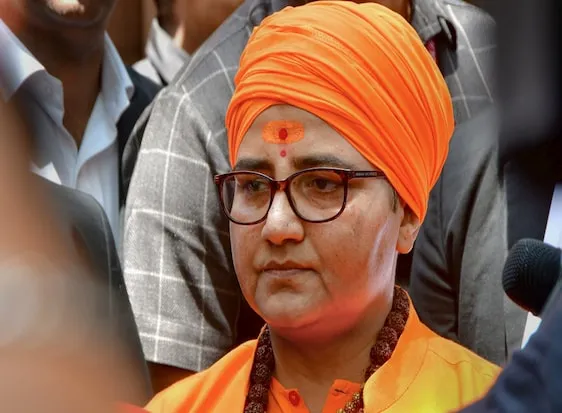
Bharatiya Janata Party (BJP) MP Pragya Singh Thakur has claimed she was coerced into naming Prime Minister Narendra Modi during the investigation into the 2008 Malegaon blast case. The statement comes amid ongoing court proceedings and revives public discourse around the controversial case that once cast a shadow over national security, politics, and religious narratives. Thakur's allegation raises serious questions about the investigative practices deployed during the initial probe, as well as the broader implications for due process and political accountability in high-profile terror investigations in India.
---
Background: The Malegaon Blast Case
The Malegaon blast occurred on September 29, 2008, killing six people and injuring over 100 in the communally sensitive town of Malegaon, Maharashtra. The attack, allegedly carried out using a motorcycle laden with explosives, was initially attributed to Islamic extremist groups. However, subsequent investigations by the Maharashtra Anti-Terrorism Squad (ATS) shifted the focus to individuals linked to right-wing organizations.
Among the key accused was Pragya Thakur, then an obscure figure, who later emerged as a controversial public persona and politician. Her arrest and the framing of charges marked a turning point in the narrative around so-called "saffron terror," a term that generated significant political friction.
---
Thakur's Latest Allegation
During a recent court appearance, Thakur alleged that she had been "forced under duress" to take the name of Prime Minister Narendra Modi and other political figures during custodial interrogation. She claimed that investigating officers subjected her to physical and psychological coercion, including threats and mistreatment, to extract a politically motivated statement.
Thakur did not provide specific evidence during the hearing to corroborate the allegation, but her statement has reignited debate over the integrity of investigative procedures in politically sensitive cases. The court has recorded her submission, though it remains to be seen whether it will trigger a judicial inquiry or lead to further scrutiny of past actions by law enforcement agencies.
---
Political and Legal Implications
Thakur’s assertion is not only a personal defense strategy—it also holds significant political weight. If her claims of coercion are validated, it could call into question the foundational basis of earlier accusations and tarnish the credibility of agencies that conducted the probe under previous governments.
Opposition leaders have often accused investigating agencies of being politically influenced. Conversely, critics of Thakur argue that her statements are part of an effort to politicize the trial and garner public sympathy by invoking the name of the Prime Minister.
Legal experts note that any investigation into such coercion would require a separate proceeding or a court-monitored probe, especially given the elapsed time and changes in the political landscape since the initial inquiry.
---
Broader Questions on Justice and Due Process
The Malegaon case has long been emblematic of the tensions between national security, communal politics, and judicial fairness. Allegations of custodial torture, delayed trials, and shifting narratives have raised concerns about the treatment of suspects in terror cases and the reliability of confessional statements made under duress.
The latest development once again highlights the need for robust safeguards against investigative overreach, including judicial oversight, legal representation during interrogation, and accountability mechanisms for human rights violations.
---
Conclusion
Pragya Thakur's claim that she was compelled to name Prime Minister Modi during the early stages of the Malegaon investigation adds another layer of complexity to an already contentious legal battle. Whether viewed as a political maneuver or a cry for justice, her statement underscores the enduring fragility of trust in the investigative process when power, religion, and national security intersect. As the trial proceeds, it is imperative that the judicial system uphold transparency, impartiality, and the rule of law—principles that remain the cornerstone of a functioning democracy.
Comments