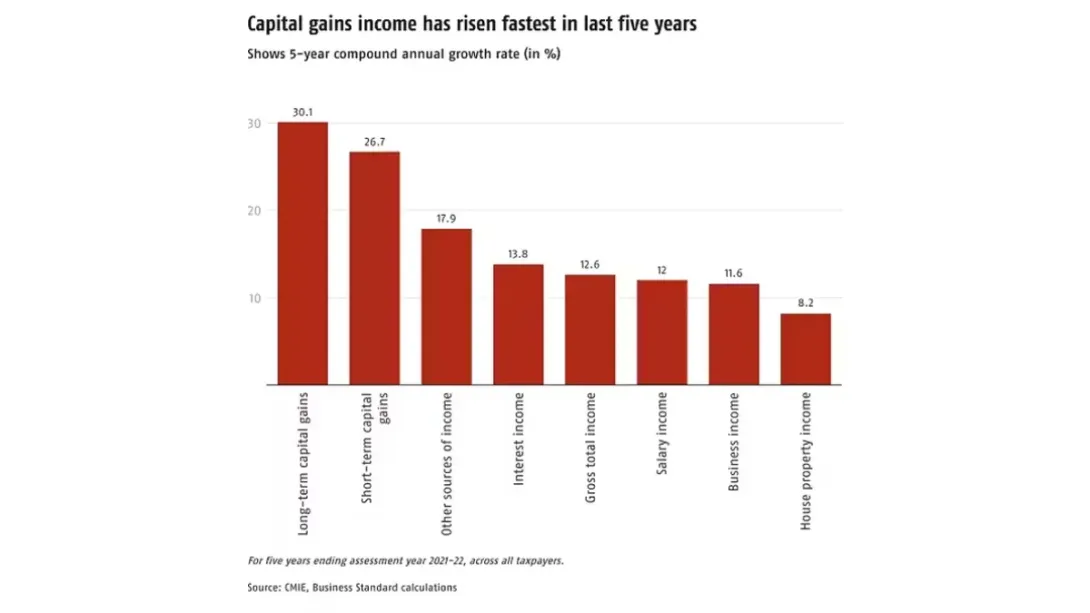
The Income Tax Department has officially enabled online filing for ITR-2 for the assessment year 2024–25, providing a streamlined avenue for individuals and Hindu Undivided Families (HUFs) with income from sources beyond salary or pension. This development marks a key milestone in the ongoing digitization of India’s tax infrastructure, making it more convenient for taxpayers with capital gains, multiple properties, or foreign assets to file returns efficiently. With the July 31 deadline approaching for non-audit cases, the availability of ITR-2 on the e-filing portal is expected to ease compliance while promoting voluntary tax adherence.
---
ITR-2: Who Should File?
ITR-2 is specifically designed for individuals and HUFs who do not earn income from business or profession but report other complex income categories. These include:
Capital gains from the sale of assets such as stocks, mutual funds, or real estate
Income from more than one residential property
Foreign income or ownership of foreign assets
Agricultural income exceeding Rs. 5,000
Dividend income above the exemption threshold
The form does not apply to salaried individuals with no other significant income streams, for whom ITR-1 remains more appropriate.
---
Online Filing Process Simplified
The Income Tax Department’s e-filing portal now supports full online submission of ITR-2, both via pre-filled forms and manual entry. Taxpayers can log in using their PAN credentials, access pre-filled data such as salary, interest income, and capital gains, and make edits where necessary.
The integrated platform offers smart assistance, in-built validation, and real-time error detection, reducing the chances of incorrect disclosures. The portal also supports Aadhaar-based e-verification, ensuring a seamless filing experience.
Additionally, taxpayers can import data from demat accounts or mutual fund platforms through authorized integrations, simplifying the declaration of capital market transactions.
---
Deadline Reminder and Compliance Guidelines
The due date for filing income tax returns for individuals not requiring audit is July 31, 2024. Missing this deadline can attract penalties of up to Rs. 5,000, and late filing may result in the loss of certain deductions or interest on tax payable.
To avoid last-minute errors or technical bottlenecks, taxpayers are encouraged to file well before the deadline. Furthermore, those with long-term capital gains must ensure accurate cost inflation indexing and apply correct exemptions under Sections 54, 54F, or 54EC, if applicable.
---
Key Enhancements and Data Security Measures
This year, the tax filing portal has introduced enhanced user interfaces, more intuitive dashboards, and increased compatibility across devices. Significant strides have also been made in data security, with multi-factor authentication, encrypted document uploads, and session-level alerts to protect sensitive financial data.
Moreover, the department has ensured cross-verification with Form 26AS and AIS (Annual Information Statement), helping taxpayers avoid discrepancies between self-declared income and reported income.
---
Implications for High Net-Worth Individuals and NRI Filers
The availability of ITR-2 is especially relevant for high-income individuals, non-resident Indians (NRIs), and taxpayers with international holdings. It facilitates accurate disclosure of foreign assets, foreign income, and tax relief claims under the Double Taxation Avoidance Agreements (DTAA), ensuring regulatory compliance and reducing the risk of scrutiny.
The portal’s multi-currency reporting feature has been upgraded to include automated exchange rate calculations as per RBI’s reference rate, offering convenience for global taxpayers.
---
Final Thoughts
The rollout of online filing for ITR-2 reflects the Income Tax Department’s continued commitment to transparency, taxpayer empowerment, and digital innovation. As India moves steadily toward a self-compliant tax regime, timely filings—especially for those with complex financial footprints—are not just a legal obligation but a step toward fiscal responsibility.
Taxpayers are urged to review their financial statements, reconcile Form 16, 26AS, and AIS data, and consult professionals where necessary to ensure a smooth and accurate filing process.
Comments