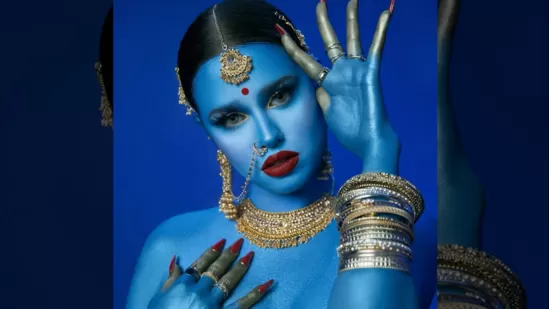
Canadian rapper and model Tommy Genesis has stirred significant controversy with the release of her latest music video, True Blue, in which she appears dressed as the Hindu goddess Kali. The video—featuring religious imagery, including a crucifix and sacred Hindu symbols—has ignited criticism across social media platforms, particularly from Hindu and Christian communities. Critics have accused the artist of cultural appropriation and religious insensitivity, calling the portrayal both blasphemous and tone-deaf. The video’s release has once again reignited the ongoing debate over where the line lies between creative freedom and cultural respect.
The Controversial Imagery Behind 'True Blue'
In the True Blue music video, Tommy Genesis appears with her body painted in blue—an aesthetic closely associated with the Hindu goddess Kali, a powerful symbol of time, destruction, and rebirth. Complementing the look, she wears gold jewelry, including a maang tikka, bangles, and a necklace, along with a red bindi on her forehead. The ensemble is topped off with a gold bikini and stilettos, which many critics viewed as a sexualized distortion of a deeply revered deity.
What further intensified the backlash was the juxtaposition of Hindu symbols with Christian imagery. One scene in particular—where Genesis is seen licking a crucifix—has been flagged as highly offensive by both religious communities.
Public Reaction: Accusations of Cultural Appropriation and Blasphemy
Within hours of the video's release, social media platforms exploded with backlash. Many users expressed outrage over what they saw as a pattern of Western artists trivializing or commodifying sacred symbols from Eastern traditions for aesthetic value or viral reach.
One viewer noted, “Somehow you've managed to offend Christians and Hindus in the same video. Achievement.” Another added, “This is blasphemy. It has become fashionable to hurt Hindu sentiments.”
Instagram was no kinder. Comments poured in accusing the artist of exploiting centuries-old religious traditions for personal branding. “Appropriating Hindu culture is a new trend for these so-called Westerners,” wrote one user, while another criticized the fusion of religious imagery as "pathetic" and "shameless."
Religious Sensitivities and Artistic Freedom: An Ongoing Tension
Tommy Genesis, born Genesis Yasmine Mohanraj, is of Tamil and Swedish descent and has previously been lauded as “the internet’s most rebellious underground rap queen” by Dazed magazine. Her body of work often blends provocativeness with social commentary—but this particular project may have misfired.
The duality of using religious iconography in art—especially when interpreted through the lens of Western pop culture—remains a contentious issue. Artists often defend their work under the umbrella of creative freedom, yet critics argue that there’s a responsibility to respect cultural and religious boundaries, especially when addressing historically marginalized communities.
What makes this case especially complex is Genesis’s Tamil heritage, which could imply an insider’s right to reinterpret her own cultural motifs. However, many in the Indian and Hindu diaspora feel that the execution lacked the nuance and reverence such symbols deserve.
No Official Apology or Clarification Yet
As of now, Tommy Genesis has not issued any formal statement or apology regarding the controversy. The video remains live on her social media platforms, continuing to draw both criticism and support. Some fans have defended her right to self-expression, arguing that the visual narrative is meant to be metaphorical rather than literal. Others, however, maintain that the combination of sacred symbols from multiple religions in a provocative context crosses the line of decency and respect.
Conclusion: A Fine Line Between Provocation and Insult
The True Blue controversy underscores a growing challenge in global entertainment—navigating cultural representation in an interconnected yet divided digital age. While artists like Tommy Genesis may seek to challenge norms or provoke thought through symbolic visuals, the backlash reflects the very real emotional and spiritual ties people have to their traditions.
As public figures and entertainers continue to draw from diverse cultures for creative inspiration, the need for cultural literacy, sensitivity, and informed collaboration becomes increasingly vital. Without it, artistic risk may come at the cost of alienating entire communities—and igniting global backlash in the process.
Comments