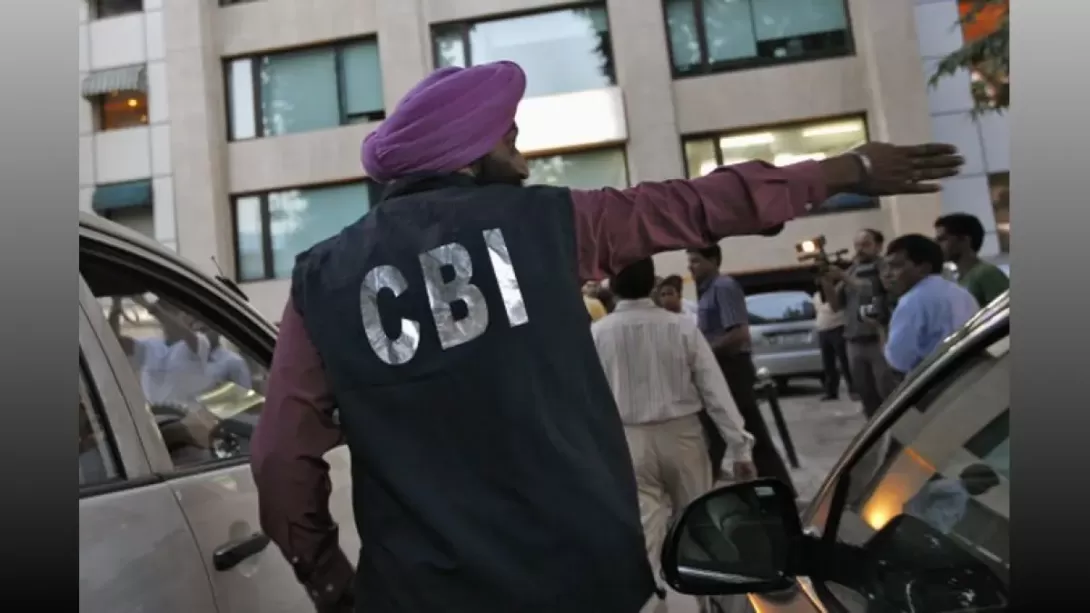
A special CBI court in Mumbai has rejected the discharge plea of industrialist Abhay Lodha in a Rs. 74.82 crore bank fraud case involving UCO Bank, citing his pivotal role in the alleged conspiracy. Lodha, the managing director of Topworth Steels and Power Private Limited and promoter of the Topworth Group, is accused of orchestrating a fraudulent scheme using letters of credit (LCs) via a group entity, Akshata Mercantile Pvt. Ltd. Despite claiming no involvement, the court found substantial evidence of his direct control over the implicated firms, calling the charges far from groundless.
Court Finds Prima Facie Evidence Against Lodha
In a significant development in the ongoing bank fraud investigation, a special CBI court in Mumbai has refused to discharge Abhay Lodha, promoter of Topworth Group, from a criminal case related to an alleged Rs. 74.82 crore scam involving UCO Bank.
The ruling, delivered last week by Special CBI Judge V. P. Desai, determined that Lodha played a central role in the conspiracy. The judge emphasized that his “positive involvement” was evident at every critical stage of the fraudulent transaction and that without his indulgence, “the crime could not have been committed.”
The Allegations: Diversion of Funds Through Letters of Credit
The case stems from a complaint filed by UCO Bank, which accused Lodha and others of defrauding the bank by manipulating letters of credit through a Topworth-linked company named Akshata Mercantile Pvt. Ltd. (AMPL). According to the Central Bureau of Investigation (CBI), funds obtained through these LCs were diverted to other Topworth Group companies, violating the intended use of the credit.
Of the total Rs. 74.82 crore allegedly misappropriated, Rs. 43 lakh was reportedly utilized to pay the EMIs of a personal home loan held by Abhay Lodha and Ashwin Lodha, further pointing to misuse of corporate credit facilities for personal benefit.
Lodha’s Defense: Denial of Direct Involvement
In his discharge petition, Lodha denied any wrongdoing, claiming he was “innocent and falsely implicated”. He argued that he was neither a director of AMPL nor involved in its day-to-day operations. Additionally, his legal team stated that UCO Bank had been negotiating a one-time settlement (OTS) with AMPL—suggesting the issue was more commercial than criminal.
However, the court found these arguments insufficient. Judge Desai’s order cited investigative material confirming that AMPL was a subsidiary of the Topworth Group, over which Lodha exercised substantial control, regardless of his official designation within the company.
CBI’s Position: A Pattern of Fraudulent Activity
Opposing the discharge plea, CBI Special Public Prosecutor Anoop Yadav presented evidence that Lodha had a recurring pattern of obtaining fraudulent LC facilities from multiple banks. In fact, Lodha has been charge-sheeted in six similar cases, according to the prosecution.
The court gave weight to these submissions and concluded that the charges were not groundless, validating the CBI’s claim of a systematic banking fraud engineered under Lodha’s leadership.
Judicial Observations: Not Just a Figurehead
Although Lodha was not officially listed as a director of AMPL, the court noted that the Topworth Group’s internal structure and financial controls placed Lodha at the helm of decision-making across its subsidiaries. The judge stressed that the presence of criminal intent was clearly established through the material presented, nullifying Lodha’s assertion of being a passive or unaware participant.
The court’s order stated:
“At all material stages of the crime there is positive involvement of Lodha. The material placed on record shows that there is criminal intent.”
Implications for Financial Governance and Legal Accountability
This case underscores the increasing scrutiny of corporate governance practices, especially in promoter-driven businesses that leverage complex structures to secure financial instruments. With Lodha’s involvement in multiple cases of similar nature, the ruling reinforces the judiciary’s stance on holding top executives accountable, even when they seek to shield themselves through indirect shareholding or technical non-designations.
For financial institutions, the judgment reiterates the importance of due diligence and monitoring of LC-linked transactions, particularly when group companies are involved in interlinked financial arrangements.
Conclusion:
The refusal to discharge Abhay Lodha in the Rs. 74.82 crore UCO Bank fraud case sends a clear message that promoter liability cannot be evaded through corporate veils. As investigations proceed and trial stages commence, the case will serve as a test of India’s legal system’s capacity to confront complex financial crimes involving high-profile individuals. It also underscores the CBI's expanding efforts to crack down on fraudulent financial practices that exploit institutional credit for personal or cross-company gain.
Comments