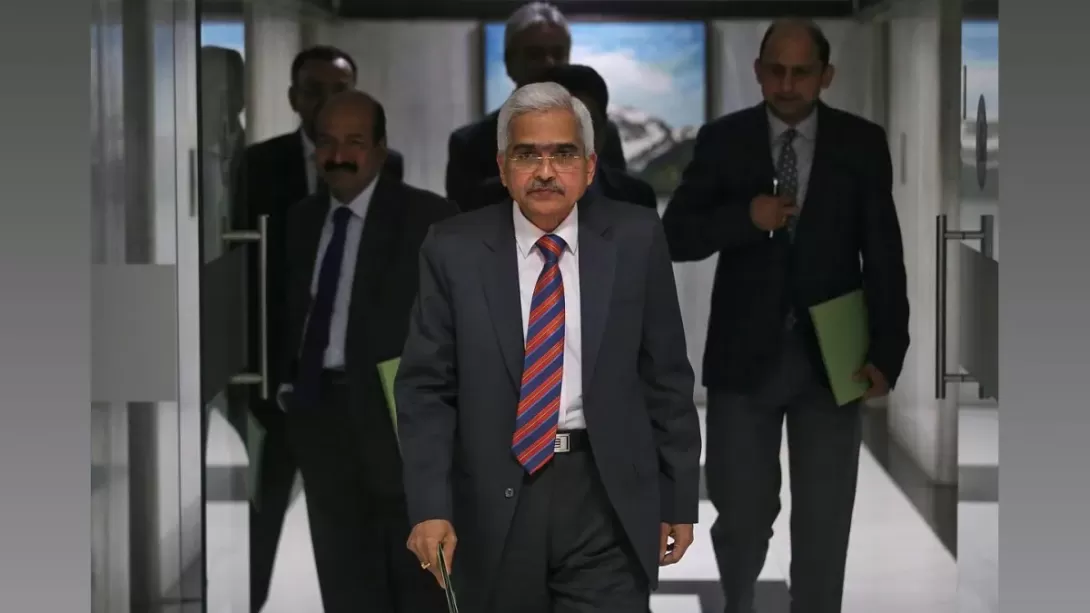
Reserve Bank of India Governor Sanjay Malhotra has reiterated the central bank’s apprehensions regarding cryptocurrencies, emphasizing potential threats to financial stability and monetary policy efficacy. Speaking after the recent monetary policy announcement, Malhotra highlighted that while the government’s inter-ministerial committee continues to deliberate on cryptocurrency regulation, no new regulatory measures have been introduced. The Supreme Court’s recent remarks on crypto trading, likening it to illicit “hawala” activities, underscore the urgent need for a comprehensive framework. India’s current regulatory stance remains ambiguous, with cryptocurrencies taxed but not yet explicitly legalized, leaving the market under considerable scrutiny.
RBI’s Continued Vigilance on Cryptocurrency Risks
In a candid exchange following the RBI’s monetary policy declaration, Governor Sanjay Malhotra voiced ongoing concerns about the destabilizing potential of cryptocurrencies within India’s financial ecosystem. He reaffirmed that the Reserve Bank remains cautious, citing the challenge these digital assets pose to the nation’s financial stability and the effective conduct of monetary policy.
Malhotra noted that regulatory developments have been stagnant recently, with a government committee spearheading the evaluation and formulation of future policies. “There is no new development as far as crypto is concerned,” he clarified, pointing to the ongoing deliberations without concrete legislative outcomes thus far.
Supreme Court’s Position on Cryptocurrency Trading
The judiciary has recently intensified scrutiny of cryptocurrency activities. Last month, a Supreme Court bench explicitly compared Bitcoin trading to illicit hawala transactions, a term associated with unregulated money transfer systems that facilitate money laundering and tax evasion. The court urged the Centre to devise a “clear-cut” regulatory framework addressing the multifaceted economic impacts of cryptocurrencies.
This stern judicial perspective reflects the deep-seated concerns about the risks digital currencies may impose on India’s formal financial system, including vulnerabilities to fraud, market volatility, and undermining of regulatory oversight.
Current Regulatory Landscape in India
At present, cryptocurrencies operate in a largely unregulated environment in India. While digital assets are not outlawed, the absence of explicit legal recognition creates a gray zone for stakeholders. The government and regulatory agencies, including the RBI, Securities and Exchange Board of India (SEBI), and the Ministry of Finance, have formed an inter-ministerial group (IMG) tasked with reviewing international regulatory frameworks to shape India’s future approach.
The government issued a discussion paper inviting stakeholder feedback to facilitate a transparent and inclusive policy formulation process. Until final regulations are enacted, India maintains a cautious but non-prohibitive stance towards cryptocurrencies.
Taxation and Compliance Measures
Despite regulatory ambiguity, the Indian government has instituted fiscal measures targeting cryptocurrency transactions. Since 2022, profits derived from digital asset trading attract a flat income tax rate of 30 percent. However, taxation does not equate to legalization; it merely reflects an attempt to monitor and monetize this emerging sector.
In addition, cryptocurrencies are subject to anti-money laundering (AML) regulations, with the enforcement of income tax withholding at source (TDS) and Goods and Services Tax (GST) on crypto exchanges. These measures aim to enhance transparency and reduce illicit financial flows linked to digital currencies.
Historical Context: The 2021 Supreme Court Ruling
In a landmark 2021 judgment, the Supreme Court struck down the RBI’s 2018 circular that had barred banks and regulated entities from facilitating transactions involving virtual currencies. This decision effectively reopened the gates for cryptocurrency trading and banking services, contributing to the sector’s explosive growth in India.
However, the ruling did not resolve the regulatory vacuum, leaving policymakers to grapple with how to balance innovation with systemic risk management in a rapidly evolving market.
Conclusion: Awaiting a Cohesive Regulatory Framework
India’s approach to cryptocurrency regulation remains in flux, underscored by central bank caution, judicial scrutiny, and nascent government initiatives. The RBI’s expressed concerns about financial stability highlight the inherent risks of unregulated digital assets, while ongoing policy discussions indicate a measured and consultative path forward.
As the government prepares to finalize its position, stakeholders across the financial and technological spectrum await clarity on how India will regulate cryptocurrencies—balancing innovation incentives with safeguarding economic stability and investor protection.
Comments