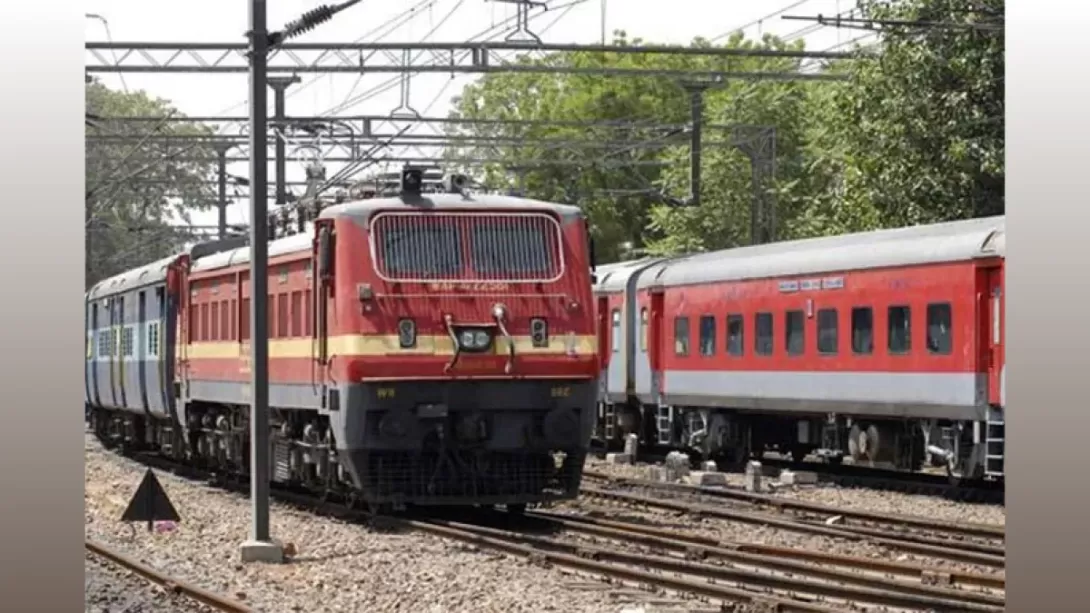
India has taken a significant step toward revolutionizing its freight transportation landscape with the introduction of a 9000-horsepower electric locomotive, a landmark development inaugurated by Prime Minister Narendra Modi. Manufactured through a strategic partnership with Siemens Ltd, the locomotive is part of a larger initiative aimed at increasing the share of railways in national freight movement from the current 27% to 45%. With an investment exceeding Rs. 21,000 crore and the production of 1,200 such locomotives underway, this endeavor marks a pivotal moment in India’s journey toward sustainable and high-capacity rail logistics.
Strategic Leap Toward Freight Modernization
The Indian Railways has embarked on a transformative freight modernization journey, underscored by the launch of the country’s first 9000 HP electric locomotive. Inaugurated by Prime Minister Narendra Modi at Dahod, Gujarat, this initiative reflects a robust commitment to decarbonization, operational efficiency, and infrastructure enhancement.
This high-horsepower locomotive is central to the government's broader ambition of increasing the railways’ share in the freight transport sector to 45%, up from the current 27%. As India grapples with the dual imperatives of economic growth and environmental sustainability, such advanced infrastructure projects are being positioned as cornerstones of the nation’s future mobility.
Siemens: Engineered for the Future
German engineering major Siemens Ltd. has been entrusted with the design, manufacturing, and maintenance of 1,200 high-capacity electric locomotives under this flagship project. The company’s manufacturing facilities in Nashik, Aurangabad, and Mumbai have been actively producing critical components, while the final assembly and commissioning are being carried out at the Indian Railways' new facility in Dahod.
Sunil Mathur, Managing Director and CEO of Siemens Ltd., hailed the milestone as a major stride in public-private collaboration. “The introduction of these advanced locomotives is crucial to realizing the Government of India’s aspiration to elevate the railways’ share in freight movement,” he said. Mathur emphasized Siemens’ longstanding commitment to supporting India’s rail modernization through localized engineering and global technology integration.
Technical Capabilities and Economic Impact
Each 9000 HP locomotive has a top operational speed of 120 km/h and a haulage capacity of 5,800 tonnes—enabling it to efficiently transport heavy freight across India’s vast and diverse railway corridors. These capabilities are especially vital in decongesting road transport, lowering emissions, and improving turnaround times across critical logistics routes.
The total investment in building the Dahod locomotive factory and associated rolling stock infrastructure stands at approximately Rs. 21,405 crore. This not only signifies a major capital injection into India’s manufacturing sector but also generates employment and skill development opportunities in the regions involved.
A Vision Aligned with Sustainability and Growth
The 9000 HP electric locomotive aligns with India’s broader climate goals, including its commitment to achieving net-zero emissions. By shifting a greater volume of freight from road to rail—one of the most energy-efficient transport modes—this initiative reduces dependence on fossil fuels and mitigates the environmental toll of logistics.
Moreover, such large-scale rail electrification and equipment upgrades are expected to boost India’s competitiveness in global supply chains by reducing logistics costs, enhancing reliability, and promoting Make in India manufacturing excellence.
Conclusion: Paving the Track for a Greener Tomorrow
India’s introduction of the 9000 HP electric locomotive is more than just a technological upgrade—it is a strategic inflection point in the country’s freight logistics narrative. With Siemens’ expertise and Indian Railways’ infrastructure, this partnership sets a precedent for future-ready transport solutions. As the country marches toward a greener, faster, and more efficient transportation ecosystem, the groundwork laid today is poised to define the economic trajectory of tomorrow.
Comments