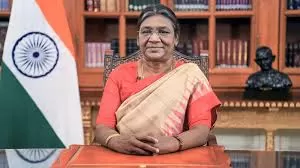
President Droupadi Murmu’s four-day State Visit to Portugal and Slovakia marks a historic occasion, with significant diplomatic and economic implications for India. This visit is the first of its kind in nearly three decades and is happening against the backdrop of changing global trade dynamics, including the recent trade tariffs imposed by the United States. The visit aims to reinforce India’s growing engagement with Europe, particularly within the context of the India-EU free trade agreement discussions, as well as to celebrate the 50th anniversary of diplomatic relations between India and Portugal.
A Landmark Visit: Portugal's Warm Reception
President Murmu's arrival in Lisbon on Sunday marked the beginning of this high-profile visit. She was warmly received at the military airbase of Figo Maduro by India’s Ambassador to Portugal, Puneet R Kundal, and the Ambassador of Portugal to India, Joao Ribeiro de Almedia. The visit to Portugal is especially symbolic, coming on the 50th anniversary of diplomatic relations between the two nations and the first such visit in 27 years by an Indian president.
On Monday, the President will be given a Guard of Honour and engage in important meetings with top leadership figures, including Portugal’s President Marcelo Rebelo de Sousa, Prime Minister Luís Montenegro, and Assembly Speaker Dr. Jose Pedro Aguiar-Branco. Later, Lisbon's Mayor, Carlos Manuel Felix Moedas, will host a special event, followed by a banquet with President Rebelo de Sousa. These engagements are designed to underscore the long-standing relationship between India and Portugal while promoting further cooperation across various sectors.
Strong Economic Ties and Future Prospects
Trade between India and Portugal is valued at USD 1.5 billion, showing consistent growth, with a 50% increase over the last five years. According to Tanmaya Lal, Secretary (West) at the Ministry of External Affairs, the economic cooperation between the two countries spans multiple sectors, including renewable energy, IT, pharmaceuticals, education, tourism, and defence. This growth in bilateral trade is indicative of the increasing economic partnership that both nations are keen to expand further.
The India-EU free trade agreement (FTA) is another key area of focus during this visit. The European Commission has already laid the groundwork for this agreement, and India is optimistic about its completion in 2025. President Murmu’s engagement in Portugal is expected to facilitate discussions on mutual trade interests, especially in light of the ongoing developments between the European Union and India.
Engaging with the Indian Community in Portugal
A key component of President Murmu's visit will be her interaction with the Indian community in Portugal, which comprises approximately 125,000 members—including over 35,000 Indian nationals and more than 90,000 people of Indian origin. The community is spread across major Portuguese cities such as Lisbon, Algarve, and Porto, playing a vital role in the social and economic landscape of the country.
The President will engage with community members, particularly Indian researchers working in various Portuguese institutions. She will also pay tribute to Mahatma Gandhi by offering floral tributes at the statue of Gandhi located at Alameda Mahatma Gandhi (Avenue), a significant gesture that reflects the cultural and historical ties between India and Portugal.
Moving Ahead: Slovakia and Strengthening Industrial Relations
After her engagement in Portugal, President Murmu will head to Slovakia for the second leg of her diplomatic tour, where she will hold delegation-level talks with Slovak President Peter Pellegrini, Prime Minister Robert Fico, and National Council Speaker Richard Rasi. This visit is significant due to the longstanding cultural and academic exchanges between the two nations, especially in Sanskrit studies, as well as the translation of Mahatma Gandhi’s works into the Slovak language.
One of the highlights of the Slovak leg of her visit will be her tour of the Tata Motors Jaguar Land Rover (JLR) facility in Nitra, which underscores the strong industrial relations between India and Slovakia. The JLR plant, inaugurated in 2018, has a production capacity of 150,000 vehicles annually and represents a significant investment of 1.4 billion Euros. This visit is a testament to the growing industrial collaboration between the two nations, particularly in the automotive sector.
Additionally, President Murmu will participate in the traditional Slovak bread and salt ceremony, a cultural symbol of life and health, and engage with members of the Indian community in Slovakia, further strengthening the people-to-people ties between the two countries.
Conclusion: A New Era of India-Europe Relations
President Murmu’s state visit to Portugal and Slovakia signals a new era of diplomatic engagement between India and Europe. With a focus on enhancing economic cooperation, advancing trade agreements, and deepening cultural and people-to-people ties, her visit is poised to strengthen India’s presence in Europe. This diplomatic tour not only highlights the historical relationship between India and its European partners but also paves the way for future growth in bilateral trade, cultural exchanges, and industrial collaborations.
Comments