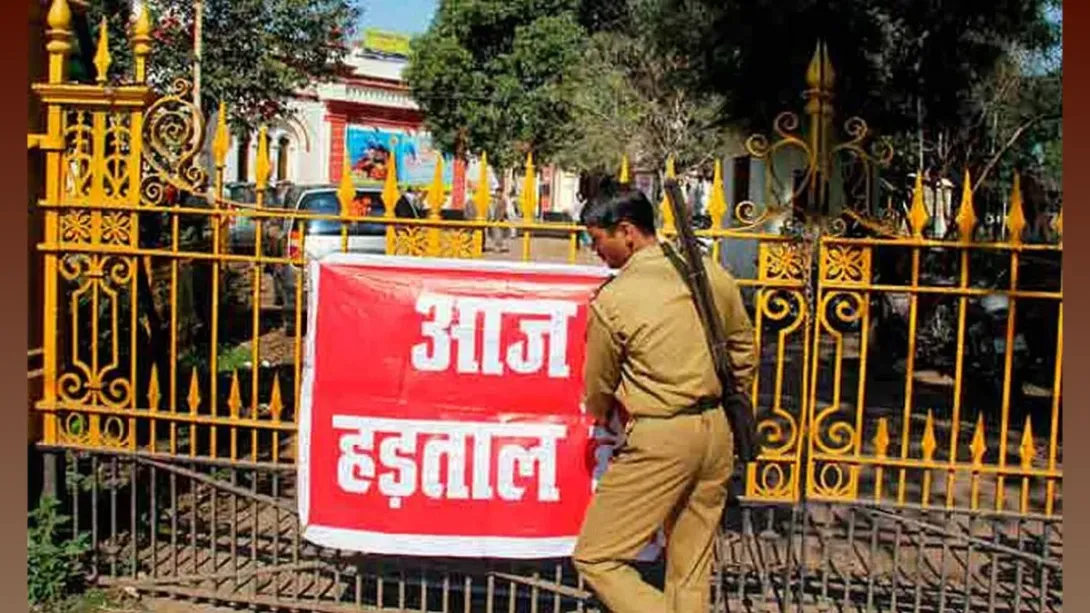
Banking services across the country were disrupted after employee unions staged a strike to press for long-standing demands, including the implementation of a five-day workweek. The protest affected branch operations, cash transactions and customer-facing services, prompting inconvenience for individuals and businesses alike. Union leaders said the action was aimed at accelerating negotiations with authorities and bank management, citing workload pressures and the need for improved work-life balance. While digital channels remained largely functional, the strike highlighted ongoing labor tensions in the banking sector and raised questions about service continuity during industrial action.
Strike Brings Banking Operations to a Halt
Normal banking activity was partially suspended as employees across public and private sector banks participated in the strike. Several branches remained shut or operated with skeletal staff, disrupting over-the-counter services such as cash deposits, withdrawals and cheque clearances. Customers reported delays in routine transactions, particularly in semi-urban and rural areas where digital penetration is relatively lower.
Core Demands Center on Five-Day Workweek
At the heart of the protest is the demand for a standardized five-day workweek, a proposal unions argue is long overdue. Employee representatives said banking staff continue to work extended hours under increasing compliance and business targets, making the case for parity with other financial institutions that already operate on a five-day schedule.
Unions Cite Workload and Staffing Concerns
Union leaders emphasized that the strike was not limited to workweek demands alone. They also highlighted issues related to staff shortages, rising operational pressures and delayed recruitment. According to them, prolonged negotiations have yielded limited progress, leaving industrial action as the only means to draw attention to their concerns.
Impact on Customers and Businesses
The strike had a direct impact on customers, particularly small businesses dependent on branch-based services. Trade bodies noted temporary disruptions in payments and collections, while retail customers faced challenges accessing cash and processing documentation. Banks advised customers to rely on digital platforms where possible to mitigate the impact.
Management and Government Response
Bank management and government authorities acknowledged the disruption but urged unions to return to the negotiating table. Officials reiterated that discussions on operational reforms, including work schedules, are ongoing and must balance employee welfare with service obligations to the public.
Digital Channels Provide Partial Relief
Despite branch-level disruptions, online banking, mobile applications and ATM networks remained largely operational. However, experts noted that digital resilience cannot fully substitute for physical banking, especially for senior citizens and small enterprises, underscoring the need for long-term resolution.
Outlook: Negotiations in Focus
The strike has once again brought labor relations in the banking sector into sharp focus. Analysts believe a constructive dialogue is essential to prevent recurring disruptions and ensure operational stability. The outcome of ongoing talks is expected to shape future workforce policies, including the feasibility of a five-day banking week, with implications for both employees and customers.
Comments