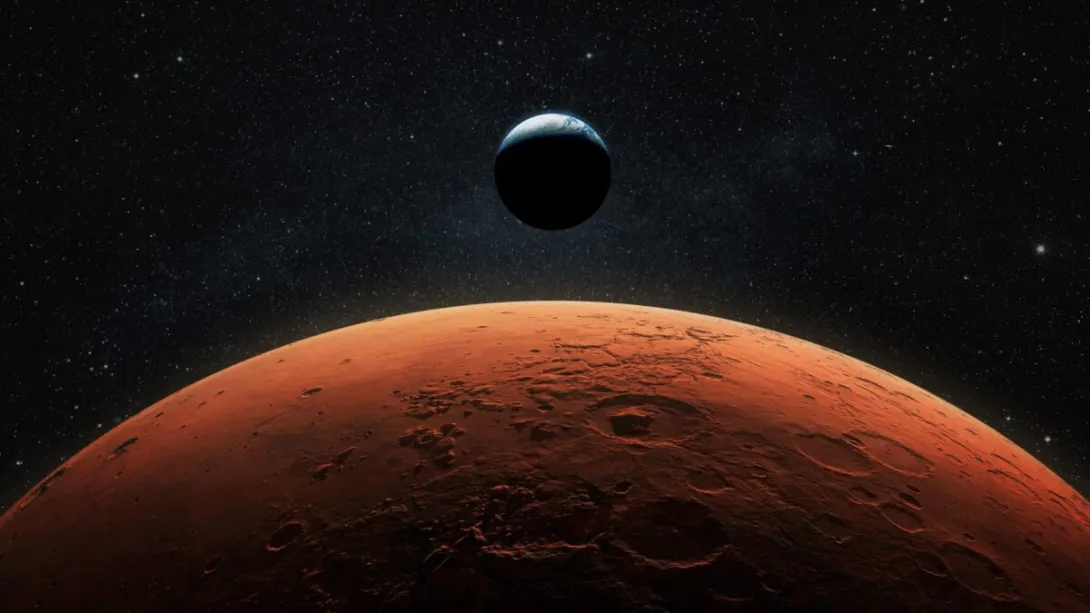
A team of planetary scientists has employed advanced simulations to investigate how Mars’ atmospheric and orbital variations influence its climate, offering new perspectives on the Red Planet’s past, present, and potential future environmental conditions. The models integrate data on solar radiation, dust storms, topography, and seasonal cycles to replicate Martian climate patterns with unprecedented precision. Findings from these simulations help explain phenomena such as polar ice cap fluctuations, dust storm behavior, and temperature extremes. Beyond academic interest, the research carries implications for future Mars exploration, including habitat planning, resource utilization, and predicting environmental challenges for human missions.
Simulating the Red Planet
Researchers combined satellite observations, rover-collected data, and high-performance computing to simulate Mars’ climate over decades and millennia. The models account for orbital eccentricity, axial tilt, solar irradiance, and dust particle distribution. By creating virtual representations of Martian weather and seasonal cycles, scientists can study how environmental factors interact to drive observable phenomena on the surface.
Insights Into Past and Present Climate
Simulations reveal that Mars’ polar ice caps and dust storm frequency are strongly influenced by subtle orbital variations and solar energy fluctuations. The results provide evidence that the planet has experienced significant climate swings over millions of years, shaping surface features such as dried riverbeds and sedimentary layers. Understanding these dynamics informs hypotheses about water availability, potential habitability, and the evolution of Mars’ atmosphere.
Implications for Exploration and Human Missions
Accurate climate modeling is essential for future missions, particularly human expeditions. Insights into temperature extremes, dust storm cycles, and radiation exposure allow planners to design resilient habitats, optimize energy and resource management, and anticipate operational risks. Additionally, the simulations can guide the selection of landing sites with favorable environmental conditions.
Advancing Planetary Science
The study exemplifies how computational modeling and observational data synergize to enhance knowledge of planetary systems. Lessons learned from Mars may also be applied to understand climate dynamics on Earth-like exoplanets, aiding comparative planetary science and the search for extraterrestrial habitability.
Comments