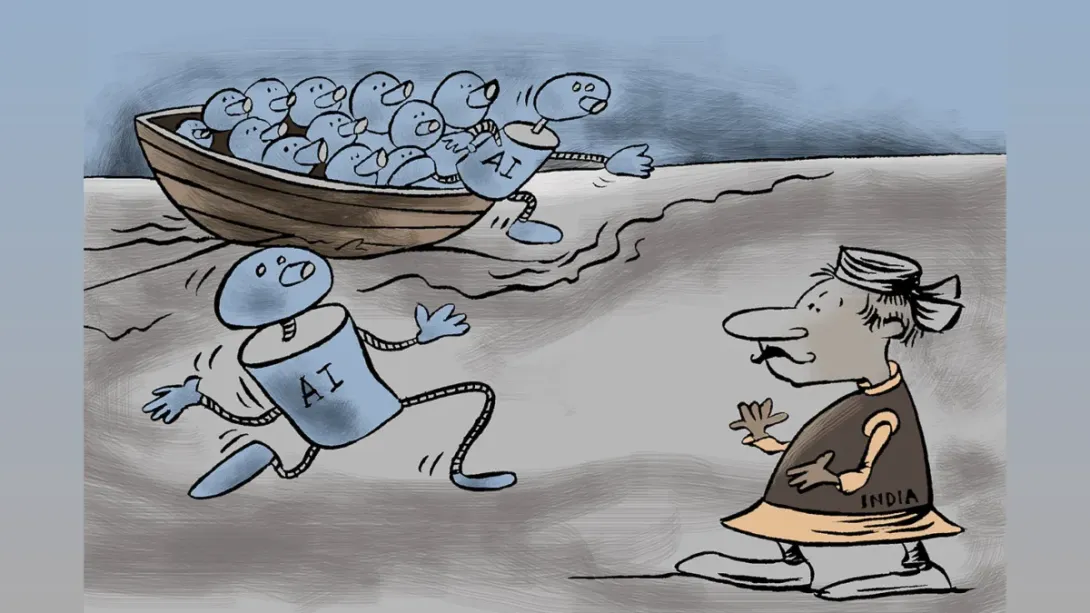
Artificial intelligence is poised to fundamentally reshape blue-collar employment, enhancing productivity and safety rather than eliminating jobs, according to industrialist Anand Mahindra. Speaking on the future of work, Mahindra emphasized that AI-driven tools will increasingly augment human capabilities in manufacturing, logistics and infrastructure, allowing workers to upskill and transition into higher-value roles. He argued that technology-led disruption, if managed responsibly, can create inclusive growth and improve job quality. As India accelerates its digital and industrial transformation, Mahindra’s remarks add a nuanced perspective to the global debate on automation, employment resilience and workforce readiness.
AI as an Enabler, Not a Threat
Anand Mahindra, chairman of the Mahindra Group, has pushed back against fears that artificial intelligence will render blue-collar workers obsolete. Instead, he views AI as a force multiplier that can improve efficiency, precision and workplace safety across labor-intensive sectors.
From factory floors to construction sites, AI-powered systems are already assisting workers by automating repetitive tasks, reducing error rates and minimizing physical strain.
Productivity Gains and Skill Evolution
Mahindra noted that AI adoption will inevitably change the nature of blue-collar work, shifting demand toward hybrid skill sets that combine technical know-how with hands-on expertise. Workers who adapt to operating and supervising intelligent machines are likely to see higher productivity and improved earnings potential.
This transition, he argued, mirrors earlier industrial revolutions where technology initially disrupted jobs but ultimately created new forms of employment and economic value.
Implications for Indian Industry
For India, where blue-collar employment forms the backbone of manufacturing and infrastructure development, AI-led transformation carries significant implications. Mahindra stressed that businesses must invest in training and reskilling to ensure workers are not left behind.
Targeted upskilling programs, supported by industry and government collaboration, could help align the workforce with emerging technological requirements.
Safety, Quality and Global Competitiveness
Beyond efficiency, AI offers tangible benefits in workplace safety and quality control. Predictive maintenance, real-time monitoring and data-driven decision-making can reduce accidents and downtime, particularly in heavy industries.
Mahindra believes such improvements will strengthen India’s global competitiveness by enabling companies to deliver higher-quality output at scale.
A Call for Responsible Adoption
While optimistic, Mahindra cautioned that AI deployment must be guided by ethical considerations and inclusive policies. Technology, he said, should serve as a tool for empowerment rather than displacement.
His remarks underscore a broader message: the future of blue-collar work will depend not just on technological advancement, but on how thoughtfully businesses integrate AI with human capital.
Looking Ahead
As AI adoption accelerates across sectors, Mahindra’s perspective highlights a pragmatic path forward—one where innovation and employment growth coexist. For policymakers and industry leaders alike, the challenge will be to translate this vision into action through sustained investment in skills, education and worker-centric innovation.
Comments