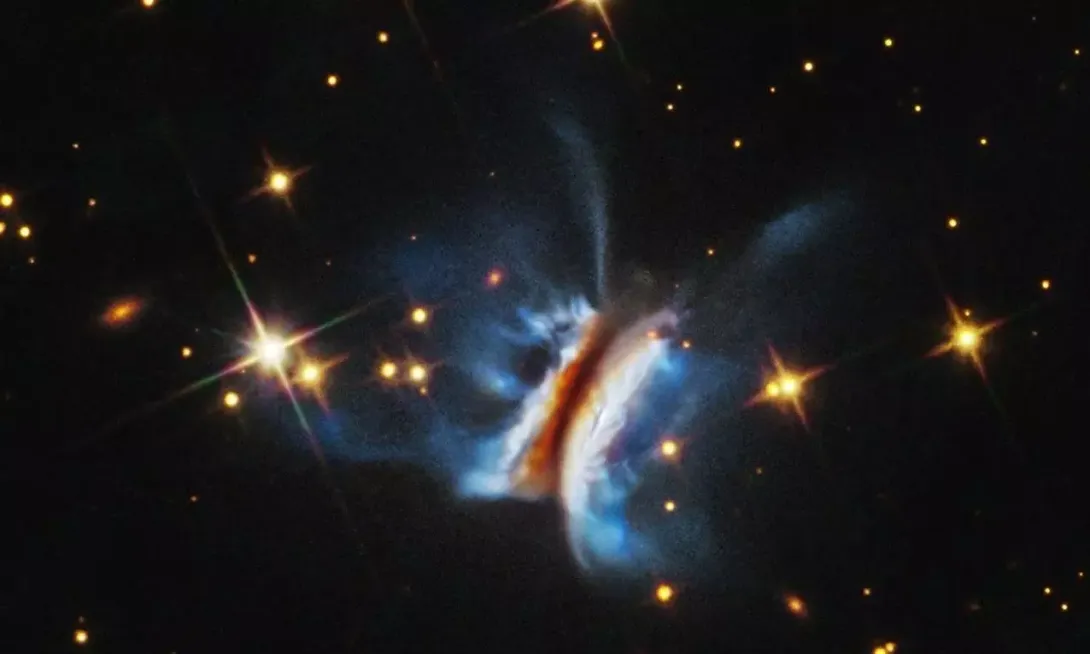
The Hubble Space Telescope has delivered its most detailed images yet of the largest known protoplanetary disk, offering fresh insight into the earliest stages of planet formation. The observations reveal a vast, swirling structure of gas and dust extending far beyond the scale of typical stellar disks, challenging existing models of how planetary systems evolve. Scientists say the discovery could reshape assumptions about the size, mass and longevity of planet-forming environments. Beyond its scientific value, the finding reinforces the continued relevance of space-based observatories in driving discoveries that inform both fundamental research and long-term space investment strategies.
A Rare Glimpse into Planetary Origins
Protoplanetary disks are the birthplaces of planets, formed from material left over after a star’s creation. The disk imaged by Hubble stands out for its extraordinary size and complexity, stretching across a region several times larger than our solar system. Researchers believe such an expansive structure may allow planets to form at much greater distances from their host star than previously thought.
What Makes This Disk Exceptional
Unlike smaller, more compact disks, this formation shows distinct rings and gaps, features often associated with early planet formation. Astronomers suggest these patterns could indicate multiple planets forming simultaneously, offering a natural laboratory to test theories of planetary growth and migration.
Implications for Planet Formation Models
The scale of the disk challenges conventional assumptions that planet-forming regions are relatively compact and short-lived. If massive disks are more common than believed, models of planetary system development may need revision, with implications for how scientists estimate the frequency of Earth-like worlds across the galaxy.
The Enduring Value of Hubble
Despite decades in orbit, Hubble continues to deliver high-impact science at a fraction of the cost of launching new missions. Analysts note that the telescope’s cumulative scientific output represents exceptional value in Rs. terms, far exceeding its original investment through ongoing discoveries.
Expanding the Cosmic Perspective
As astronomers integrate Hubble’s findings with data from newer observatories, the image of this colossal disk serves as a reminder that the universe still holds surprises. Each discovery deepens understanding of planetary origins and underscores the importance of sustained investment in space science.
Comments