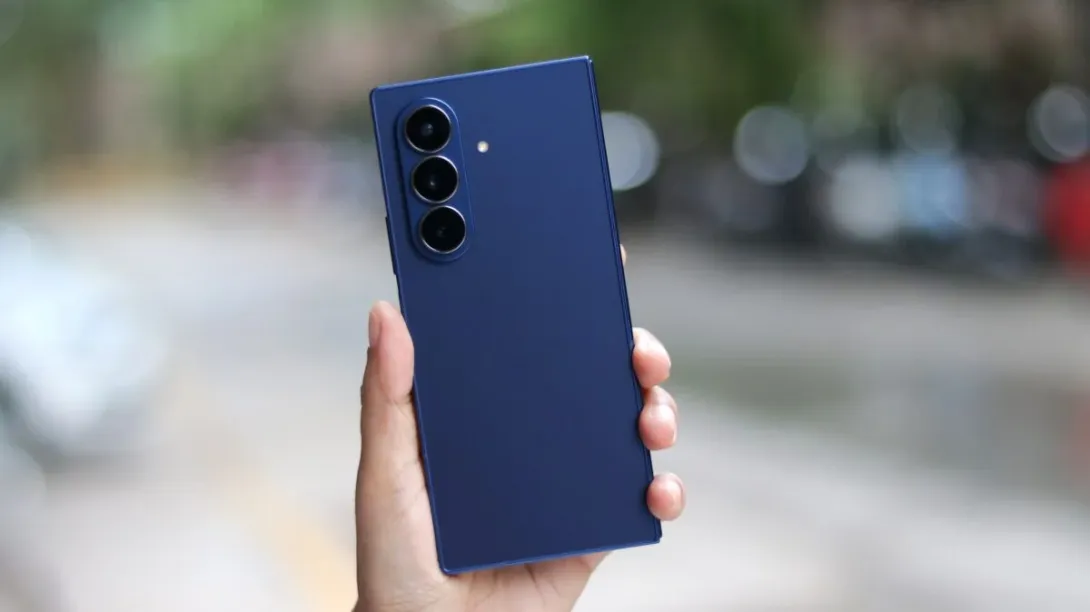
Samsung has officially introduced the Galaxy Z TriFold, a pioneering addition to its foldable lineup and the company’s most ambitious hardware innovation yet. Designed with a dual-hinge, tri-panel structure, the smartphone unfolds into a tablet-sized display, offering users a significantly larger canvas without compromising pocketability. The device brings together flagship specifications, including a Snapdragon-powered architecture, a 200-MP camera system, and a 5,600 mAh battery engineered to support its expansive screen. With a strong focus on multitasking, productivity and professional usability, the Galaxy Z TriFold signals Samsung’s attempt to reshape the premium smartphone market and strengthen its leadership in foldable technology.
A Tri-Panel Design Built for the Next Generation of Mobility
Samsung’s Galaxy Z TriFold represents a major leap forward in the evolution of foldable devices. The phone features two precision-engineered hinges that allow it to transition from a compact, pocket-sized device to a 10-inch Dynamic AMOLED 2X display. This large screen offers a near-tablet experience, enabling users to manage business workflows, creative tasks and entertainment with increased ease.
Samsung has positioned the TriFold as a hybrid device—neither a phone nor a tablet alone, but a fusion of both—reflecting broader trends in consumer demand for flexible productivity tools.
Flagship Performance with a Professional Focus
Under the hood, the Galaxy Z TriFold incorporates the Snapdragon 8 Elite chipset, supported by 16 GB RAM and storage tiers that extend up to 1 TB. These specifications place it firmly within the top end of the premium smartphone category.
Its camera system is equally robust, anchored by a 200 MP primary sensor, complemented by a 12 MP ultra-wide lens and a 10 MP telephoto lens with optical zoom. Dual selfie cameras on the cover and interior displays ensure that the camera experience remains consistent whether the device is folded or unfolded.
Power Capacity and Charging to Match its Ambition
The device is powered by a 5,600 mAh battery, Samsung’s largest battery capacity in a foldable to date. This is critical given the power requirements of its multi-panel OLED structure.
The TriFold supports 45W fast wired charging and 15W wireless charging, enabling users to restore battery levels quickly despite the demands of a larger display. Such enhancements signal Samsung’s intention to balance design experimentation with practical usability.
Enhanced Multitasking and Desktop-Like Functionality
One of the TriFold’s defining characteristics is its ability to run multiple applications simultaneously across the expanded screen. Samsung has optimized the interface to allow three apps to operate side by side, transforming the device into a portable workstation.
The smartphone also supports standalone Samsung DeX, enabling users to pair accessories and create a desktop-like environment even without an external monitor. This positions the TriFold as a compelling companion for business travellers, designers, corporate executives and digital creators who prioritize mobility without giving up functionality.
Pricing, Market Expectations and Competitive Placement
While Samsung has not confirmed official Indian pricing, industry estimates suggest that the device may launch at above Rs. 2,00,000, given its engineering complexity and cutting-edge specifications. Premium markets including South Korea, the United States, China and the UAE are expected to be among the first to receive shipments.
Samsung’s pricing strategy places the TriFold in the ultra-premium class, targeting early adopters and professionals who view their mobile devices as productivity investments rather than simple communication tools.
A Strategic Push to Reinforce Leadership in Foldables
The launch of the Galaxy Z TriFold is more than a product reveal—it represents Samsung’s strategic effort to maintain its dominance in the foldable segment amid increasing competition.
Although questions surrounding long-term durability, hinge resilience and repairability remain, the device underscores Samsung’s confidence in complex mechanical design. If successful in global markets, the TriFold could shape the trajectory of foldable innovation for years to come, prompting rivals to pursue similarly ambitious architectures.
Comments