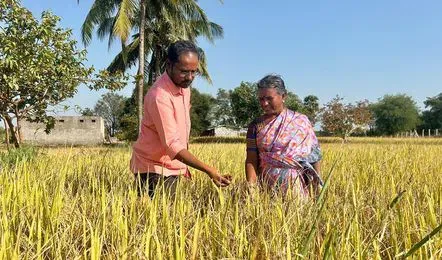
In the heart of Telangana, Siddipet district is pioneering a new era of precision agriculture through satellite-based monitoring and advanced digital tools. The region, long known for its agricultural productivity, is now emerging as a model for technology-driven farming in India. By integrating satellite imagery, remote sensing data, and smart irrigation systems, Siddipet’s farmers are enhancing crop management, conserving water, and improving yield efficiency. This shift represents not just a local innovation, but a broader movement toward sustainable, data-informed farming that could redefine India’s agricultural landscape.
---
A Technological Leap in Agriculture
Siddipet’s smart farming initiative marks a critical step in India’s journey toward modernizing its vast agricultural sector. The district’s government and agricultural departments have partnered with technological experts to implement satellite-based systems capable of providing real-time insights on soil health, moisture levels, and crop growth.
By analyzing this data, farmers can make informed decisions on when to irrigate, fertilize, or harvest, significantly reducing input waste and maximizing productivity. The technology also enables early detection of crop diseases and pest infestations, allowing timely interventions that prevent large-scale losses.
For small and marginal farmers, who form the backbone of rural India, this access to high-resolution data can be transformative. It empowers them to adopt scientific farming methods previously reserved for large-scale agribusinesses.
---
How Satellite Monitoring Works
At the core of the initiative is satellite-based remote sensing, which captures detailed imagery of agricultural land at regular intervals. These images are processed using advanced algorithms that assess vegetation health through parameters such as the Normalized Difference Vegetation Index (NDVI).
Farmers and agricultural officers receive this data through user-friendly dashboards and mobile apps, translating complex scientific metrics into actionable insights. For instance, the system can indicate which portions of a field require more water or nutrients, enabling precision farming rather than blanket application.
The integration of weather forecasting systems adds another layer of intelligence. Predictive analytics help farmers plan irrigation schedules and safeguard crops from adverse weather events, a crucial advantage in a country where erratic rainfall patterns often disrupt traditional farming cycles.
---
Boosting Productivity and Sustainability
Smart farming in Siddipet isn’t merely about increasing output; it’s also about ensuring sustainability. Satellite monitoring reduces water consumption by promoting micro-irrigation techniques and curbs fertilizer overuse, which has long-term ecological benefits.
Officials report that the initiative has already helped optimize resource use across several pilot regions. Crop yields have shown measurable improvement, while the cost of cultivation has declined due to precise input management. This sustainable model aligns with India’s broader goal of doubling farmers’ income while mitigating the environmental footprint of agriculture.
Beyond crop productivity, the data collected through this system contributes to long-term land and water management strategies. With historical records on soil moisture and crop performance, policymakers can better plan agricultural zoning and resource allocation.
---
Empowering Farmers with Data Literacy
A key component of the project’s success lies in farmer education. Local agricultural officers are conducting workshops to train farmers on how to interpret satellite data and apply it to their day-to-day practices.
The goal is to democratize access to technology—ensuring that even smallholders, often excluded from digital advancements, can harness the power of precision farming. By combining traditional knowledge with data-driven insights, Siddipet’s farmers are bridging the gap between experience and innovation.
Moreover, the initiative fosters community-based learning, where farmers share results and best practices, accelerating adoption across villages.
---
The Road Ahead for India’s Agri-Tech Ecosystem
Siddipet’s success story offers a blueprint for scaling similar programs nationwide. As India faces mounting challenges from climate change, soil degradation, and groundwater depletion, technology-led agriculture presents a sustainable path forward.
Experts believe that with the right infrastructure, satellite-based farming solutions could cover millions of hectares, transforming India into a global leader in agri-tech. The integration of artificial intelligence, Internet of Things (IoT) sensors, and real-time data analytics could further refine crop forecasting, supply chain management, and food security planning.
If expanded strategically, such initiatives could not only enhance productivity but also stabilize rural incomes, reduce waste, and strengthen India’s position in the global agricultural economy.
---
A Model for the Future
Siddipet’s experiment with satellite monitoring demonstrates that innovation in agriculture need not be confined to laboratories or tech hubs—it can thrive in the fields, among the farmers themselves. The fusion of tradition and technology is redefining the future of Indian farming, one pixel and one plot at a time.
As the satellite eyes orbit above, the farmers below stand at the center of a quiet revolution—one that promises prosperity, sustainability, and resilience for generations to come.
Comments