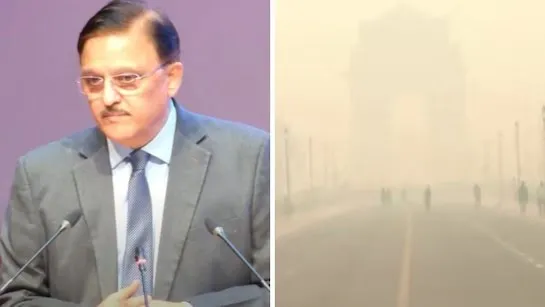
A former judge has emphasized that no religion condones actions causing harm to the environment, underscoring the need for a collective moral and civic responsibility in safeguarding ecological balance. His remarks, made in the context of public debates surrounding firecracker usage during festivals and the noise from Azaan on loudspeakers, call for a rational and lawful approach over emotional or religious rhetoric. Highlighting that environmental degradation affects all communities equally, the ex-judge urged citizens to view environmental protection as a shared duty rather than a matter of faith, aligning spiritual principles with constitutional values of coexistence and sustainability.
---
Religion and Responsibility: A Unified Call for Environmental Ethics
The former judge’s comments arrive at a time when the country continues to debate the intersection of religion, tradition, and environmental preservation. Drawing attention to recurring disputes over the use of firecrackers during celebrations and the amplification of religious calls like Azaan, he stated unequivocally that “no faith allows destruction of nature or disturbance of public peace.”
He asserted that every religious text, irrespective of denomination, emphasizes harmony with nature. According to him, pollution—whether through noise, air, or other means—represents a violation not only of environmental laws but also of the ethical foundations of all spiritual traditions.
---
Law, Faith, and Civic Duty
The former judge reminded citizens that India’s Constitution upholds both the freedom of religion and the right to a clean and healthy environment. These rights, he noted, must coexist harmoniously rather than clash. “Freedom of faith cannot override public welfare,” he remarked, urging religious leaders and communities to exercise self-regulation during festivities and congregations.
Legal experts have long highlighted that the Supreme Court’s directives on firecracker usage and the regulation of loudspeakers are not anti-religious measures but necessary steps to protect citizens’ health and public order. The former judge’s statement echoes this judicial sentiment, balancing spiritual freedom with civic responsibility.
---
Festivals and Ecological Balance
Every festival, he observed, carries a deeper message of joy, unity, and reverence for life — not of excess or harm. “Celebrations should illuminate hearts, not pollute the skies,” he said, referring to the widespread air pollution and respiratory illnesses that follow Diwali each year. Similarly, he emphasized that prayers and religious observances should be conducted in ways that respect both human health and the sanctity of shared spaces.
Environmental scientists have repeatedly warned of the cumulative effects of sound and air pollution, particularly on children and the elderly. The former judge’s remarks, therefore, serve as a reminder that cultural expression and ecological preservation need not be mutually exclusive.
---
The Legal Context: Balancing Rights and Restrictions
In India, environmental protection is enshrined under Article 48A and Article 51A(g) of the Constitution, which place a duty on both the state and citizens to protect and improve the natural environment. Simultaneously, Article 25 guarantees the right to freely profess and practice religion, but subject to considerations of public order, morality, and health.
The former judge noted that interpreting these rights harmoniously is crucial for social stability. He added that judicial interventions—whether restricting firecrackers, limiting noise levels, or enforcing environmental norms—should be viewed as constitutional imperatives rather than restrictions on faith.
---
Toward an Ethic of Shared Responsibility
In his concluding remarks, the ex-judge appealed to citizens to move beyond polarized debates and adopt a collective ethic of environmental stewardship. He emphasized that protecting nature transcends religion, politics, or ideology. “When the air becomes unbreathable or the earth turns toxic, it spares no one,” he said, stressing that environmental degradation ultimately undermines the very fabric of life that all faiths seek to uphold.
His words serve as both a legal and moral reminder: that sustainable living and responsible celebration are not compromises of faith but expressions of it.
---
Conclusion
The former judge’s statement bridges the gap between spiritual wisdom and constitutional duty, advocating for a balanced path where religious freedom and environmental consciousness can coexist. His perspective resonates in an era when ecological challenges are intensifying and social divisions risk deepening public discourse.
By reaffirming that no religion permits the destruction of nature, his message elevates the conversation from one of restriction to one of responsibility — calling upon every citizen to see environmental protection not as an obligation imposed by law, but as an act of faith, ethics, and humanity itself.
Comments