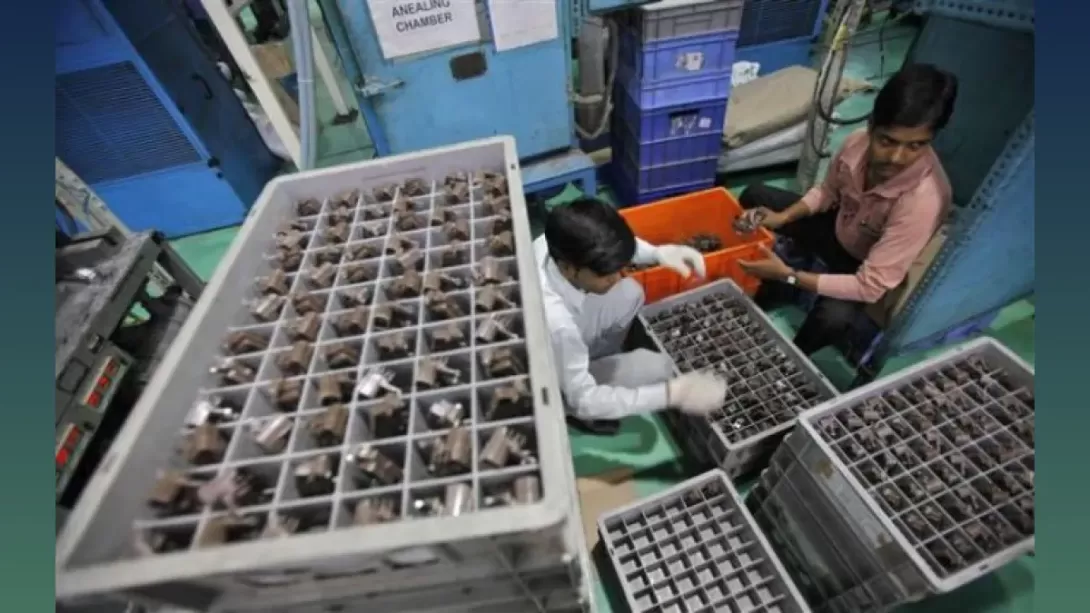
In a bid to position India as a key global player in the automotive sector, NITI Aayog has proposed fiscal incentives and strategic interventions to bolster the country's automotive components manufacturing. The report envisions India’s component production reaching USD 145 billion by 2030, with a significant increase in exports. It outlines recommendations for government support in scaling up manufacturing capabilities, enhancing infrastructure, and promoting skills development. The focus is also on strengthening global competitiveness through R&D, international branding, and improving business conditions.
Fiscal and Non-Fiscal Interventions to Strengthen India’s Automotive Sector
NITI Aayog has called on the Indian government to implement fiscal incentives to drive growth in the country’s automotive components manufacturing. The aim is to increase the sector’s competitiveness in the global market and establish India as a key player. According to the report titled “Automotive Industry: Powering India’s Participation in Global Value Chains,” the country’s automotive component production is expected to reach USD 145 billion by 2030, with exports growing from USD 20 billion to USD 60 billion. The suggested fiscal interventions include operational expenditure (Opex) support for scaling up manufacturing capabilities and capital expenditure (Capex) for infrastructure, tooling, and dyes. These efforts are seen as critical in improving the sector's efficiency and competitiveness.
Cluster Development and Collaboration
One of the key recommendations in the NITI Aayog report is the establishment of brownfield large-scale auto clusters. The development of these clusters would foster greater collaboration between automotive firms and help streamline the supply chain by offering shared facilities such as R&D and testing centers. This would significantly reduce the operational costs for smaller companies while encouraging innovation and enhancing the overall quality of the automotive components produced. The report emphasizes the importance of cluster development in enhancing global competitiveness by enabling knowledge sharing and improving production capabilities.
Skill Development and Innovation to Drive Growth
The NITI Aayog report also highlights the need for comprehensive skill development initiatives. It stresses that building a talent pipeline is crucial for sustaining long-term growth in the automotive sector. Alongside skills development, there is a call for providing incentives for research and development (R&D), which would lead to greater product differentiation and technological advancements. Moreover, the report suggests empowering MSMEs by facilitating intellectual property (IP) transfers, which would help smaller companies access advanced technologies and participate more effectively in the global value chain. Promoting international branding is also crucial for improving India’s global presence in the automotive components market.
Regulatory Reforms and Strategic Collaborations
NITI Aayog advocates for a series of non-fiscal interventions, including simplifying regulatory processes, enhancing worker hour flexibility, and improving supplier discovery and development. These changes would make it easier for firms to operate efficiently and encourage greater investment in the sector. Additionally, the report calls for the promotion of joint ventures (JVs), foreign collaborations, and free trade agreements (FTAs) to open up new avenues for global market access. The goal is to integrate India more effectively into global value chains (GVC), thereby expanding market reach for Indian manufacturers and improving their competitive positioning.
Leveraging Digital Technologies and Modern Manufacturing Standards
As part of its strategy for growth, NITI Aayog stresses the need for the integration of digital technologies and the adoption of enhanced manufacturing standards. The use of advanced digital tools could increase efficiency in the manufacturing process and facilitate data-driven decision-making in production. By aligning manufacturing processes with global standards, Indian firms would be better equipped to compete internationally.
India’s Current Position in the Global Automotive Market
India is currently the fourth-largest automobile producer globally, following China, the US, and Japan, with an annual production rate of nearly 6 million vehicles. However, despite its large production capacity, India’s share in the global automotive component trade remains relatively modest at just 3%, amounting to about USD 20 billion. A significant portion of global trade in automotive components involves high-precision items like engine components, drive transmission, and steering systems. Unfortunately, India’s share in these critical segments is low, ranging from 2-4%. The lack of competitiveness in these high-value areas has been attributed to several factors, including high operational costs, infrastructural gaps, and insufficient R&D expenditure.
Challenges Hindering Competitiveness
India’s automotive component industry faces several challenges that hinder its ability to integrate deeply into the global value chain. These challenges include high operational costs, limited research and development (R&D) investments, and the moderate integration into global value chains. To overcome these barriers, NITI Aayog’s recommendations emphasize the importance of collaborative initiatives, technology adoption, and policy reforms to help Indian manufacturers become more competitive on the global stage.
Conclusion: A Path Towards Global Leadership
NITI Aayog’s proposed strategies aim to strengthen India’s position as a key player in the global automotive components market. By offering fiscal incentives, fostering collaborative clusters, and prioritizing skill development and innovation, India could significantly increase its share in the global automotive supply chain. The government's support in addressing operational challenges and encouraging strategic partnerships with international players would be pivotal in unlocking new growth opportunities and positioning India as a global leader in automotive manufacturing. These recommendations mark a comprehensive approach to improving India’s standing in an increasingly competitive global market, ensuring that the nation not only continues to produce vehicles but also becomes a dominant force in the automotive components sector by 2030.
Comments