Physicists at the National Institute of Standards and Technology (NIST) have achieved a groundbreaking measurement of time differences between planets, leveraging cutting-edge atomic clock technology. By calculating how gravitational forces and orbital dynamics affect the passage of time across celestial bodies, the research offers unprecedented insights into relativistic physics and the influence of planetary masses on spacetime. These precise measurements refine our understanding of Einstein’s general relativity in practical planetary contexts, with potential applications in space navigation, satellite technology, and fundamental physics experiments. NIST’s findings mark a significant step in the quest for ultra-accurate timekeeping in the solar system.
Measuring Planetary Time
- Atomic Clock Precision: NIST scientists employed ultra-stable atomic clocks capable of detecting sub-nanosecond differences in time passage influenced by planetary gravitational fields.
- Gravitational Time Dilation: The study quantified time dilation effects predicted by general relativity, confirming that heavier planets cause measurable differences in the flow of time relative to lighter celestial bodies.
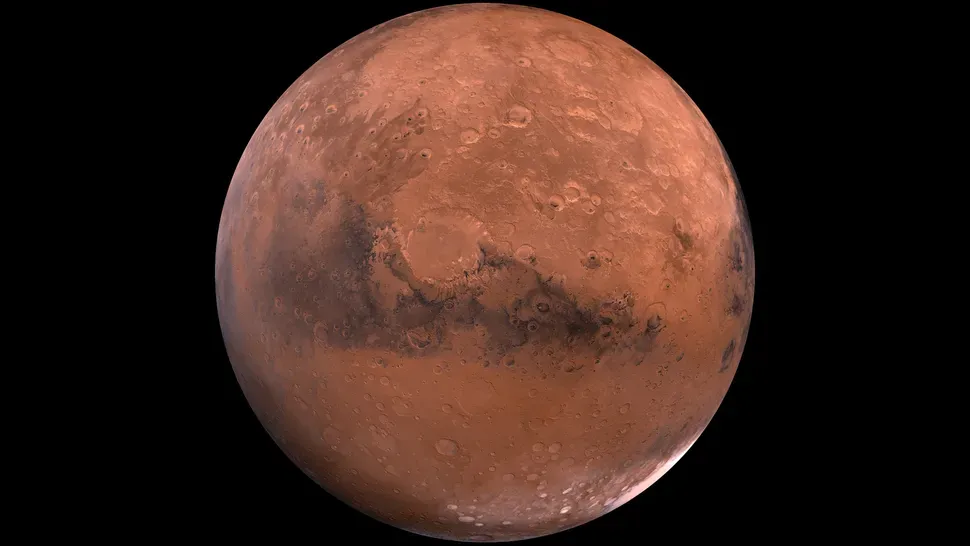
- Comparative Analysis: By comparing time intervals between Earth, Mars, and other planets, researchers have established a reliable framework for interplanetary temporal synchronization.
Implications for Science and Technology
- Space Navigation: Accurate measurement of planetary time differences could enhance deep-space navigation systems and mission planning for interplanetary travel.
- Satellite Precision: Satellite networks may benefit from improved clock synchronization, reducing errors in global positioning and communication systems.
- Fundamental Physics: These observations provide a real-world laboratory for testing relativistic effects and probing the limits of general relativity in varying gravitational environments.
Expert Perspectives
- Dr. Elena Vargas, NIST Researcher: “Our work demonstrates that time is not absolute across planets. These measurements allow us to quantify relativistic effects with remarkable accuracy, bringing theory closer to practical applications.”
- Broader Significance: The research has implications for future planetary colonization, long-duration space missions, and understanding time-dependent phenomena in the solar system.
Future Directions
- Expanding the Scope: NIST plans to include outer planets and moons in subsequent measurements, potentially revealing more nuanced time variations across the solar system.
- Interdisciplinary Collaboration: Collaboration with astronomers, aerospace engineers, and physicists will translate these findings into actionable strategies for space exploration and high-precision timing systems.
NIST’s pioneering measurement of planetary time differences not only confirms theoretical predictions of relativistic physics but also lays the groundwork for precision space technologies. By bridging fundamental science and practical applications, this research strengthens humanity’s ability to navigate, communicate, and explore the cosmos with unparalleled accuracy.
Comments