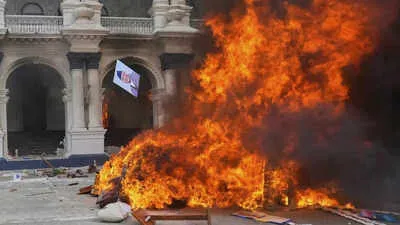
In a shocking escalation of political unrest in Nepal, protesters set fire to the prime minister’s residence, resulting in the tragic death of his wife. The violent incident underscores the deepening frustration across the country, where anger over corruption, inequality, and political dysfunction has erupted into widespread demonstrations. The attack has shaken the nation, revealing the extent of public disillusionment with the political establishment and raising urgent questions about governance, accountability, and security. As the tragedy reverberates across Nepal, it highlights the fragile balance between state authority and growing public demands for justice, transparency, and meaningful reform.
A Nation in Shock
The fatal attack on the prime minister’s residence has left Nepal reeling. Eyewitnesses reported that a group of demonstrators, angered by the government’s handling of persistent economic and political challenges, stormed the property and set it ablaze. The prime minister’s wife, who was inside at the time, could not escape the flames. Security forces were deployed to restore order, but the incident has already become one of the most severe outbreaks of violence in Nepal’s recent political history.
Roots of Discontent
The arson reflects broader frustrations that have been brewing for years. Widespread disillusionment with political elitism, corruption scandals, and the lack of meaningful job creation has fueled anger among citizens. Many young Nepalis, facing unemployment and limited opportunities at home, have become especially vocal in their criticism of the government. Protesters argue that promises of reform have gone unfulfilled, while governance remains plagued by nepotism and inefficiency.
Political Fallout and Security Concerns
The tragedy is expected to intensify political instability. Opposition leaders have condemned the attack while simultaneously holding the government accountable for fostering conditions that led to such violence. Lawmakers and civil society groups are demanding urgent reforms to restore trust in institutions and prevent further unrest.
The security apparatus, already stretched by weeks of demonstrations, now faces greater scrutiny for failing to protect the prime minister’s residence. The government has vowed to conduct a full investigation, but critics argue that unless systemic grievances are addressed, violence may continue to escalate.
Calls for Reform and National Healing
Beyond the immediate political consequences, the tragedy has sparked urgent calls for reform. Activists and human rights organizations insist that the cycle of corruption and nepotism must end, and that policies should focus on job creation, education, and equitable economic growth. Many also stress the importance of dialogue between the state and its citizens to avoid further alienation.
The prime minister, visibly shaken, urged for calm while pledging reforms. Yet whether these commitments will translate into substantive action remains uncertain. For ordinary Nepalis, the attack is both a symbol of their frustration and a grim reminder of how fragile their democracy remains.
The Road Ahead
The death of the prime minister’s wife in such a brutal manner will likely be remembered as a turning point in Nepal’s modern political journey. It illustrates the dangers of ignoring deep-seated public grievances and the high cost of systemic neglect. Moving forward, Nepal’s leadership faces the dual challenge of addressing immediate security needs while laying the foundation for transparent, inclusive, and accountable governance.
If the tragedy prompts real reforms, it may ultimately serve as a catalyst for change. Otherwise, it risks deepening the cycle of anger, instability, and violence that threatens the nation’s fragile democratic fabric.
Comments