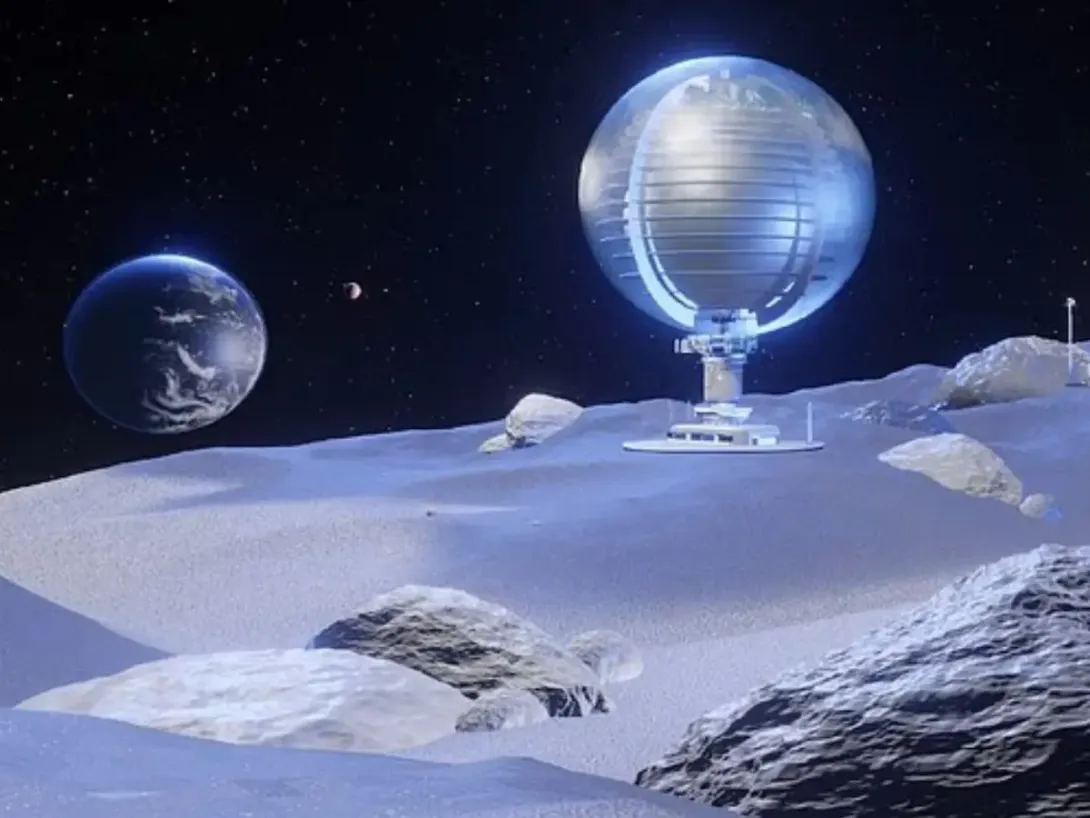
NASA has revealed a visionary concept to construct glass-based lunar habitats, aiming to revolutionize living conditions for astronauts on the Moon. These transparent structures would maximize natural sunlight, offer panoramic views of the lunar surface, and integrate advanced materials to withstand radiation, micrometeorite impacts, and extreme temperatures. Beyond architectural innovation, the initiative underscores NASA’s focus on long-term sustainability, energy efficiency, and human well-being in extraterrestrial environments. If successfully implemented, these habitats could transform lunar exploration, enabling extended missions, scientific research, and potentially commercial activities while providing a blueprint for future off-world living spaces.
Concept and Design
NASA’s lunar habitat project envisions the use of specialized glass and composite materials capable of withstanding the Moon’s harsh conditions. Transparent walls would allow astronauts to observe their surroundings while benefiting from natural illumination, reducing reliance on artificial lighting. Structural reinforcements and radiation-resistant coatings are integral to ensuring safety against solar flares, cosmic rays, and micrometeorite strikes. The design also incorporates thermal regulation systems to cope with the Moon’s extreme day-night temperature fluctuations.
Scientific and Operational Objectives
These habitats aim to serve multiple scientific and operational purposes:
- Extended Human Presence: Supporting longer missions with improved comfort and mental well-being for astronauts.
- Research Platforms: Providing controlled environments for experiments in biology, physics, and materials science.
- Energy Efficiency: Maximizing sunlight for natural illumination and potential integration with solar energy systems.
Experts emphasize that sustainable design is critical for establishing permanent or semi-permanent lunar bases, reducing dependence on frequent Earth resupplies.
Challenges and Technological Innovations
Building glass-based structures on the Moon poses significant engineering challenges, including transportation logistics, material resilience, and assembly in low-gravity conditions. NASA is exploring in-situ resource utilization (ISRU), 3D printing with lunar regolith, and modular design approaches to mitigate these constraints. Advances in adaptive materials, radiation shielding, and autonomous construction robotics are expected to play pivotal roles in the realization of these habitats.
Broader Implications
If successful, NASA’s glass lunar habitats could redefine extraterrestrial architecture, offering insights applicable to Martian colonies and deep-space stations. The project also highlights the intersection of aerospace engineering, materials science, and human-centered design, signaling a new era of innovation in space exploration. Additionally, the initiative may spur commercial interest, scientific collaboration, and educational engagement in space technologies.
Conclusion
NASA’s transparent lunar habitats represent a bold step toward sustainable and human-centric space exploration. By merging advanced materials, innovative engineering, and operational foresight, the project underscores humanity’s growing capacity to adapt to and thrive in extraterrestrial environments, paving the way for extended lunar missions and beyond.
Comments