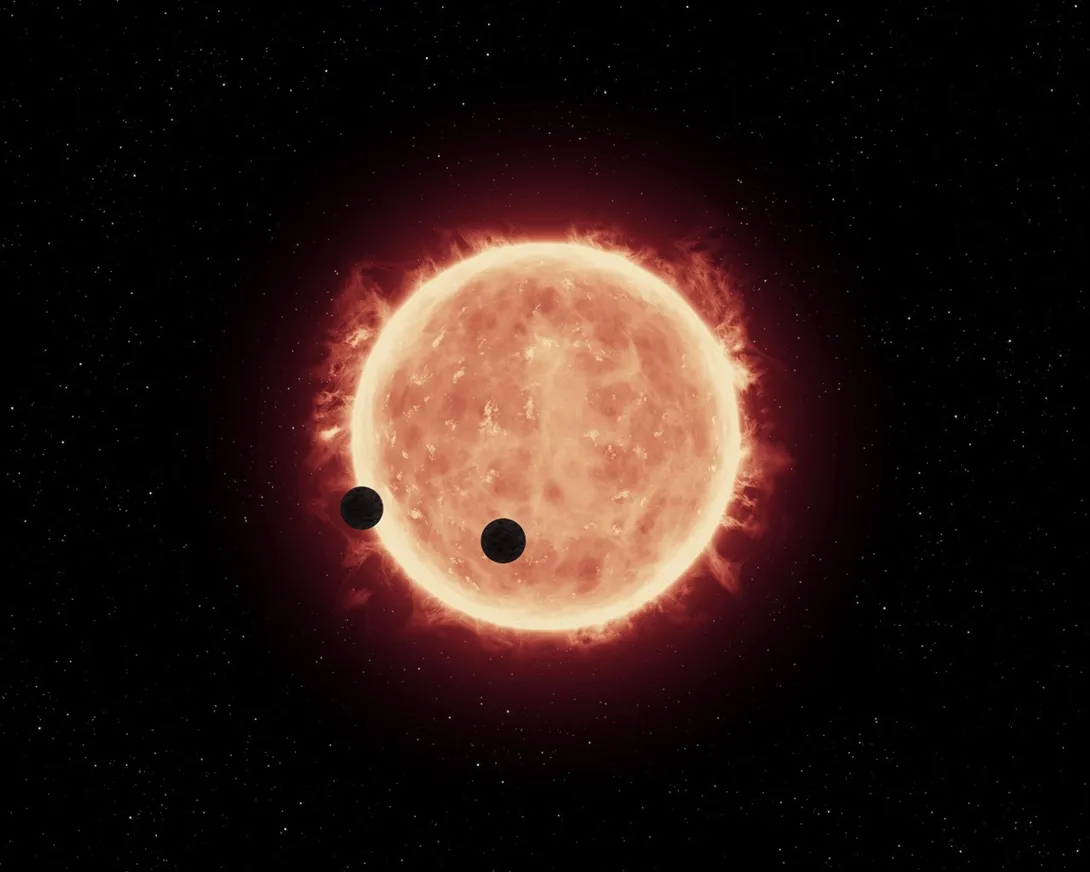
NASA has unveiled ExoMiner++, an advanced artificial intelligence system designed to accelerate and refine the discovery of planets beyond the solar system. Building on earlier machine-learning models, the upgraded platform enhances accuracy in identifying exoplanet signals buried within vast datasets collected by space telescopes. The development reflects NASA’s growing reliance on AI to manage data complexity and extract scientific value at scale. Beyond astronomy, ExoMiner++ demonstrates how intelligent automation is reshaping space research, improving efficiency, and enabling faster breakthroughs. The initiative highlights the strategic role of AI in modern science, where data volume increasingly outpaces traditional analytical methods.
ExoMiner++: The Next Evolution in Planet Detection
ExoMiner++ represents a significant upgrade over previous AI-based exoplanet detection tools. Engineered to analyze subtle light fluctuations from distant stars, the system distinguishes genuine planetary transits from background noise with greater precision.
NASA scientists note that the enhanced model reduces false positives while improving confidence in detections, addressing one of the long-standing challenges in exoplanet research.
Why AI Is Central to Modern Astronomy
Space telescopes generate enormous volumes of data, far exceeding what human-led analysis can process efficiently. ExoMiner++ uses deep learning techniques to rapidly sift through years of observations, identifying patterns that may signal the presence of planets orbiting distant stars.
From a productivity standpoint, the AI allows researchers to focus on interpretation and theory rather than initial data filtering, compressing discovery timelines from years to months.
Scientific and Strategic Impact
The refined detection capabilities of ExoMiner++ are expected to expand the catalog of confirmed exoplanets, including those potentially located in habitable zones. Each validated discovery contributes to a broader understanding of planetary formation and the prevalence of Earth-like worlds.
Strategically, the system strengthens NASA’s position at the intersection of space science and artificial intelligence, reinforcing the agency’s long-term investment in data-driven exploration.
Broader Implications Beyond Space Research
ExoMiner++ also serves as a proof of concept for AI deployment in other data-intensive scientific domains. Techniques refined through space exploration often migrate into sectors such as climate modeling, medical imaging, and geospatial analytics.
For policymakers and research institutions, the project illustrates how AI investment yields cross-disciplinary returns, extending value well beyond its original mission scope.
Looking Ahead
As future missions generate even larger datasets, tools like ExoMiner++ will become indispensable. NASA plans to continue refining AI models alongside next-generation telescopes, ensuring that discovery keeps pace with data growth.
In an era where information abundance defines scientific progress, ExoMiner++ underscores a clear message: the search for new worlds increasingly depends on intelligent machines working alongside human curiosity.
Comments