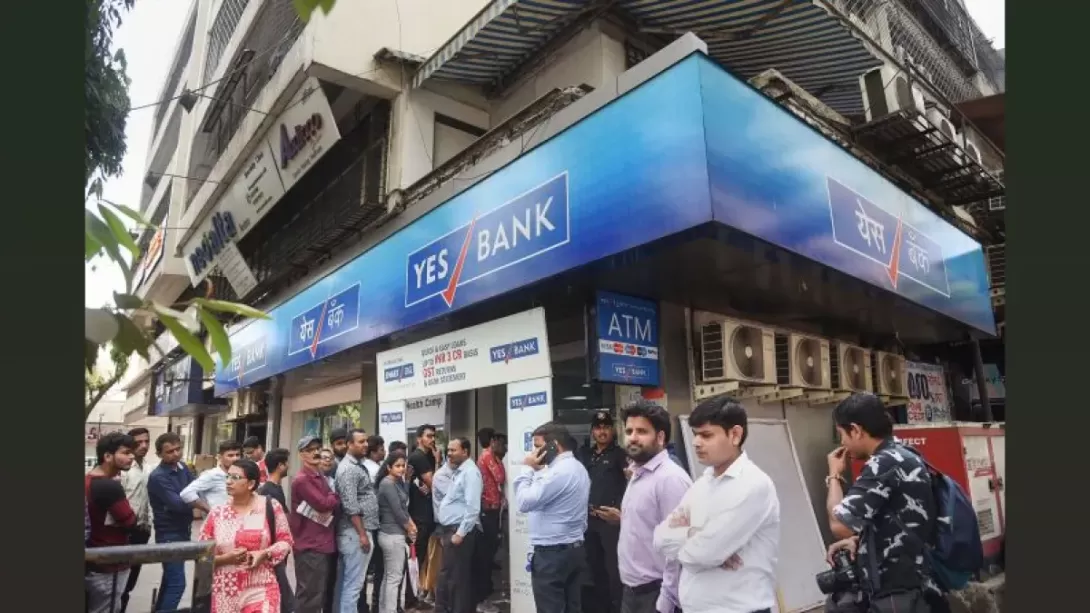
Yes Bank received a significant confidence boost from Moody’s Ratings on Friday, as the global credit agency upgraded its long-term foreign and local currency bank deposit ratings from Ba3 to Ba2. The move reflects a steady enhancement in the bank’s credit fundamentals, including improved capital buffers, higher loan loss reserves, and better asset quality metrics. The bank’s gross non-performing loan ratio dropped sharply to 1.6% by March 2025, while its provision coverage rose to 80%. However, Moody’s warned that the bank’s growing exposure to retail and SME segments poses unseasoned credit risks, underscoring the need for prudent lending controls.
Moody’s Signals Confidence in Yes Bank’s Recovery
Yes Bank has taken another stride toward regaining financial stability with Moody’s Ratings upgrading its long-term foreign currency and local currency bank deposit ratings to Ba2 from Ba3. The upgrade also includes an improvement in its Baseline Credit Assessment (BCA) from b1 to ba3—a critical measure of standalone creditworthiness.
The rationale behind this upgrade is rooted in the bank’s gradual but tangible improvements across several key financial parameters. Moody’s cited enhanced capital adequacy, improved provision buffers, and a more stable funding profile as indicators that Yes Bank’s balance sheet is better positioned to absorb potential credit shocks.
Asset Quality and Loan Book Improvement
One of the standout factors contributing to the ratings upgrade is the marked reduction in Yes Bank’s gross non-performing loan (NPL) ratio. As of March 2025, the NPL ratio fell to 1.6%, down dramatically from 13.9% recorded in March 2022—a turnaround that reflects tighter credit discipline and improved recovery mechanisms.
Furthermore, the bank’s provision coverage ratio—representing the share of bad loans provisioned for—increased to 80%, up from 71% over the same period. This indicates stronger financial cushions to mitigate potential defaults and underscores improved risk management practices.
Capital and Government Support Considerations
Moody’s also highlighted the improvement in Yes Bank’s capital position and its growing loan loss reserves, which enhance the bank’s resilience against asset quality pressures. These internal buffers are increasingly crucial as the bank aggressively expands into retail and small-to-medium enterprise (SME) lending, sectors that typically carry higher credit risk—especially in a volatile macroeconomic environment.
Additionally, the ratings agency assigned one notch above the bank’s BCA due to the “moderate likelihood” of government support in a crisis. The Government of India’s sovereign rating of Baa3 (stable) plays a role in elevating the bank’s final deposit rating to Ba2, reflecting broader systemic importance.
Risks Linger in Rapid Expansion Strategy
While the bank’s financial health is improving, Moody’s expressed caution about unseasoned asset risks. The relatively new expansion into high-risk retail and SME lending, coupled with a growing reliance on third-party channels for credit origination, could expose the bank to underwriting inconsistencies or adverse credit cycles.
Such risks are often latent, materializing only after a full credit cycle plays out. Thus, while the bank’s current metrics are encouraging, continued vigilance and strengthened internal controls will be essential to sustaining credit quality and safeguarding profitability.
Strategic Outlook and Market Positioning
Yes Bank’s upgraded credit ratings could provide a strategic tailwind in attracting lower-cost funding and enhancing investor confidence, particularly in the capital markets. The bank is now better positioned to leverage its improved credit standing for broader financial intermediation while navigating regulatory and competitive headwinds.
The shift in ratings may also signal to institutional investors and depositors that the bank’s transformation plan—post its 2020 restructuring—is on a credible trajectory. However, the challenge remains to translate these credit improvements into long-term earnings stability without overexposure to fragile market segments.
Conclusion
Moody’s decision to upgrade Yes Bank’s credit ratings represents a significant vote of confidence in its recovery narrative. Strengthened capital buffers, enhanced asset quality, and improved provisioning indicate that the bank has made meaningful progress in rebuilding its financial base. However, as it ventures deeper into high-growth lending verticals, maintaining robust credit governance and operational integrity will be critical to sustaining this upward momentum. The road ahead holds promise—but it is not without pitfalls.
Comments