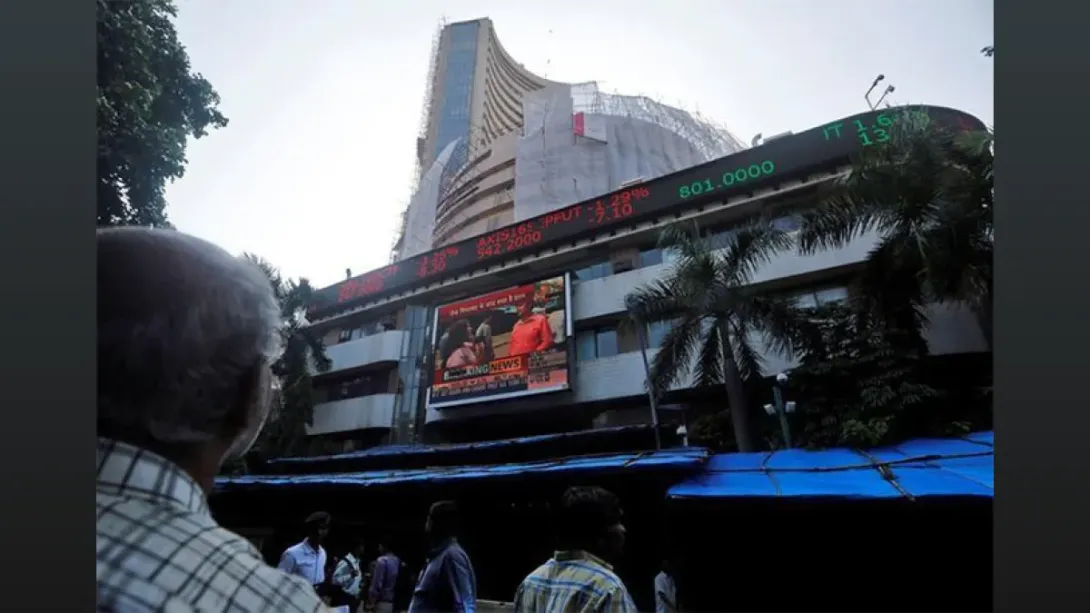
Indian equity benchmarks declined sharply as sustained foreign institutional investor (FII) outflows combined with rising geopolitical uncertainty to unsettle market sentiment. The Sensex and the Nifty ended lower amid broad-based selling across sectors, reflecting heightened risk aversion among global investors. Concerns over prolonged geopolitical tensions, volatile commodity prices, and a cautious outlook on global interest rates prompted foreign investors to pare exposure to emerging markets, including India. While domestic fundamentals remain relatively resilient, near-term market direction is being driven by global cues, capital flows, and macroeconomic uncertainty rather than company-specific developments.
Benchmark Indices Under Pressure
The Sensex and the Nifty witnessed a steep decline during the trading session as selling pressure intensified in heavyweight stocks. Banking, information technology, and metal stocks led the downturn, dragging the broader market lower. Mid-cap and small-cap shares also came under pressure, indicating a risk-off mood across investor segments.
Market participants attributed the weakness largely to external factors, with limited domestic triggers to offset global headwinds.
FII Outflows Accelerate
Foreign institutional investors continued to trim their holdings in Indian equities, extending a trend that has persisted amid shifting global risk perceptions. Rising U.S. bond yields and expectations of a prolonged tight monetary stance in advanced economies have reduced the relative attractiveness of emerging market assets.
Data from market participants indicated sustained net selling by FIIs, exerting downward pressure on benchmark indices and the rupee. In contrast, domestic institutional investors offered limited support, insufficient to fully counterbalance foreign selling.
Geopolitical Risks Cloud Outlook
Escalating geopolitical tensions across key regions have added to market volatility, prompting investors to seek safer assets. Uncertainty surrounding global trade routes, energy supplies, and diplomatic developments has heightened concerns over inflation and growth prospects worldwide.
Such conditions tend to disproportionately affect emerging markets, where capital flows are more sensitive to global risk sentiment.
Sectoral Impact and Investor Caution
Export-oriented sectors, particularly information technology, were impacted by concerns over slowing global demand. Metal and energy stocks also faced pressure amid fluctuations in global commodity prices. Financial stocks, which carry significant weight in the indices, declined on fears that prolonged volatility could dampen credit growth and investment activity.
Analysts noted that investors are increasingly prioritizing capital preservation over aggressive positioning in the current environment.
Outlook: Volatility Likely to Persist
While India’s macroeconomic fundamentals remain comparatively strong, equity markets are likely to remain volatile in the near term. Global developments—particularly geopolitical trends and central bank signals—will continue to influence capital flows and market direction.
Comments