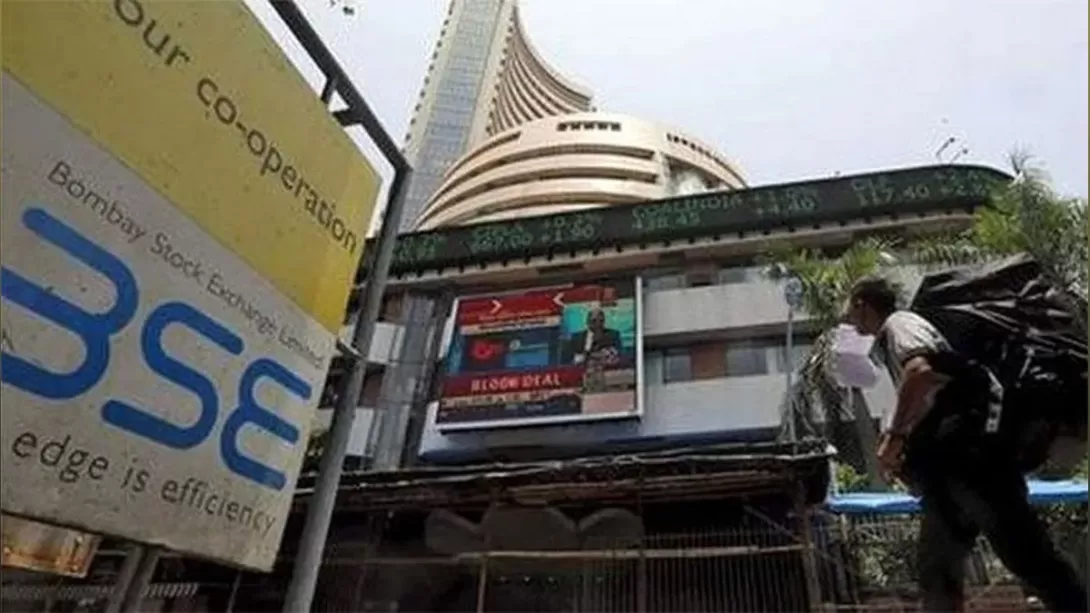
Equity markets in India witnessed a sharp downturn on Friday, with benchmark indices Sensex and Nifty plunging over 1% in early trading. The sudden dip was primarily driven by renewed geopolitical tensions following a terrorist attack in Jammu & Kashmir and disappointing corporate earnings from Axis Bank. Despite recent foreign inflows and supportive global cues, investor sentiment was severely dampened. Key sectors including banking, power, and infrastructure bore the brunt, even as IT giants like Infosys and TCS offered limited support. As markets navigate tailwinds and headwinds, caution remains the prevailing sentiment among market participants.
Geopolitical Tensions Spark Sell-Off in Domestic Equities
Indian equity markets opened with optimism on Friday but quickly succumbed to a sharp sell-off amid escalating geopolitical concerns. The recent terror attack in Pahalgam, Jammu & Kashmir, has rattled investor confidence, introducing an element of political uncertainty that markets are notoriously sensitive to.
The BSE Sensex nosedived 1,004.04 points to settle at 78,797.39 by late morning, erasing all early gains. Similarly, the NSE Nifty dropped 338.10 points, closing in at 23,908.60. Market analysts attribute this volatility to a combination of geopolitical anxiety and weak corporate earnings, which together formed a potent catalyst for the decline.
Axis Bank Earnings Disappoint, Dragging Financial Stocks Lower
Among the worst-hit was Axis Bank, which fell 4.5% after reporting a marginal decline in net profit for the March quarter. The bank posted a net profit of Rs. 7,117 crore, slightly lower than Rs. 7,130 crore a year earlier. While the dip appears minor, investor expectations had been elevated, and the earnings miss triggered widespread selling across the banking sector.
Other major laggards included Adani Ports, Bajaj Finserv, State Bank of India, Power Grid Corporation, Bajaj Finance, NTPC, Tata Motors, Mahindra & Mahindra, and Tata Steel—signaling a broad-based retreat across cyclical and infrastructure-heavy sectors.
Tailwinds From Global Markets and FII Inflows Offer Some Relief
Despite domestic concerns, external macroeconomic indicators painted a more encouraging picture. U.S. markets closed significantly higher on Thursday, with the Nasdaq surging 2.74%, the S&P 500 climbing 2.03%, and the Dow Jones advancing 1.23%. Asian markets largely followed suit, with gains reported in the Kospi, Nikkei 225, SSE Composite, and Hang Seng.
On the domestic front, sustained foreign institutional investor (FII) activity continues to inject liquidity into the market. FIIs purchased equities worth Rs. 8,250.53 crore on Thursday alone, contributing to a seven-day cumulative inflow of Rs. 29,513 crore—providing a much-needed cushion to offset localized volatility.
Bilateral Trade Prospects with U.S. Could Offer Strategic Upside
Adding a glimmer of optimism, U.S. Treasury Secretary Scot Bessent recently indicated that India is on track to secure its first bilateral trade agreement with the United States. If realized, this would mark a milestone in Indo-U.S. economic relations and could trigger a re-rating of Indian equity markets, especially in sectors aligned with export growth and global supply chains.
VK Vijayakumar, Chief Investment Strategist at Geojit Financial Services, notes that while the foreign fund inflow and trade optimism are significant tailwinds, the uncertainty surrounding India’s strategic response to the recent terror incident could cast a long shadow.
Oil Prices and Global Commodities in Focus
Brent crude futures climbed 0.65% to USD 66.98 per barrel, reflecting steady demand and moderate supply-side constraints. Stable oil prices, while higher than recent lows, are not yet at levels that would severely impact India’s import bills or inflation trajectory. Nonetheless, energy prices remain a wildcard in the broader macroeconomic context.
Conclusion: Markets on a Razor's Edge
Friday’s market performance underscores the fragility of investor sentiment in the face of sudden geopolitical shocks. While there are positive macroeconomic indicators and foreign investment inflows, the interplay of domestic risks and global dynamics makes for an unpredictable short-term outlook. For now, market participants are advised to tread cautiously, remain sector-selective, and keep a close eye on evolving political developments that could have material economic repercussions.
Comments