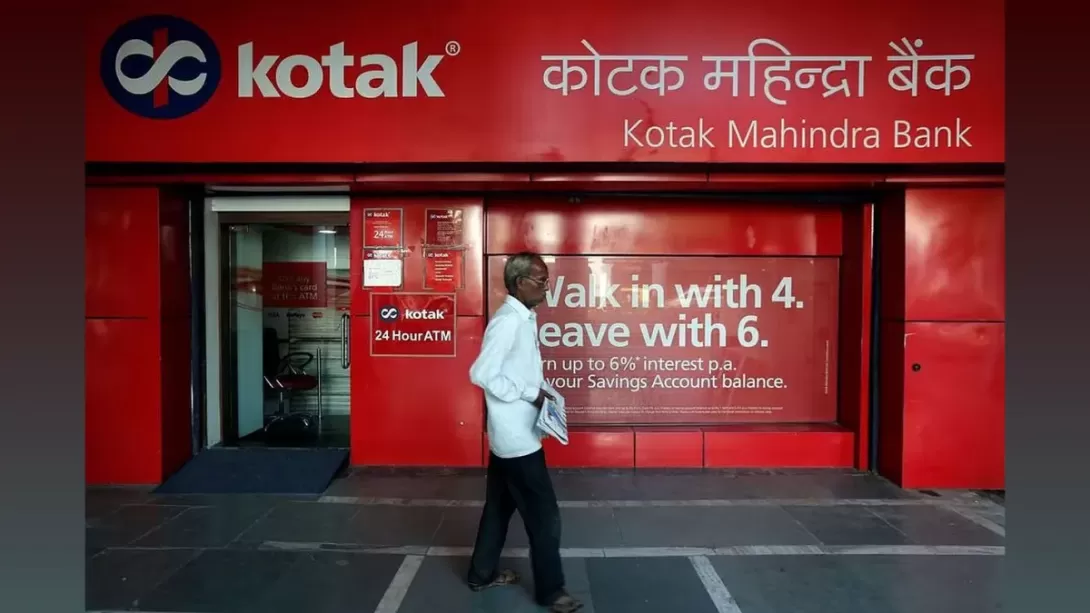
Kotak Mahindra Bank faced sharp selling pressure on the bourses after posting a weaker-than-expected financial performance for the March quarter of FY 2024–25. Shares of the private sector lender plummeted nearly 6% on both the BSE and NSE following a 7.57% year-on-year decline in consolidated net profit to Rs. 4,933 crore. The drop was driven by stress in the microfinance lending segment and a contraction in net interest margin. With asset quality showing minor deterioration and investor sentiment wavering, Kotak emerged as the biggest underperformer among benchmark indices during Monday’s trading session.
Stock Performance Reacts Sharply to Earnings Miss
Kotak Mahindra Bank witnessed a significant correction in its stock price, tumbling 5.79% to close at Rs. 2,058.35 on the Bombay Stock Exchange (BSE), and slipping 5.82% to Rs. 2,058 on the National Stock Exchange (NSE). The market reaction followed the release of its Q4 earnings over the weekend, positioning the bank as the day’s worst performer among the Nifty and Sensex constituents. The swift selloff underscored market apprehension over the bank’s near-term profitability outlook and lending challenges.
Earnings Breakdown: Profit Slips on Lending Stress
The bank reported a consolidated net profit of Rs. 4,933 crore in the March quarter, representing a 7.57% decline from the same period last year. On a standalone basis, net profit fell even more sharply—by 14%—to Rs. 3,552 crore, down from Rs. 4,133 crore in the year-ago quarter.
The primary drag on performance stemmed from increased stress in its microfinance institution (MFI) portfolio, which saw its size slashed to Rs. 4,500 crore over the past 12 months. This contraction, coupled with challenges in loan collections, weighed heavily on overall earnings and raised concerns over asset diversification and credit risk management.
Revenue Metrics: Growth Amid Margin Compression
While profit declined, the bank’s core interest-earning business continued to grow. Net interest income (NII) rose by 5% year-on-year to Rs. 7,284 crore, and non-interest income climbed 7% to Rs. 3,182 crore. However, these gains were overshadowed by a sharp narrowing of the net interest margin (NIM), which fell to 4.97% from 5.28% a year earlier.
The decline in NIM reflects not only structural shifts in the bank’s lending portfolio but also the broader impact of interest rate normalization in the financial system. The reduced contribution from high-yielding microloans and increased competition in the credit market are also believed to have compressed spreads.
Asset Quality and Balance Sheet Trends
On the asset quality front, the bank reported a slight increase in gross non-performing assets (NPAs), which rose to 1.42% of total advances, compared to 1.39% at the end of the previous fiscal. Though the uptick remains contained, it suggests underlying stress in select borrower segments.
Meanwhile, customer assets grew by 13%, highlighting continued traction in lending and deposit mobilization despite the headwinds. However, the sustainability of this growth trajectory will likely hinge on the bank’s ability to restore profitability and stabilize its margins.
Investor Sentiment and Outlook
The bank’s earnings disappointment and margin pressure have clearly unsettled investors, especially at a time when markets are closely watching the financial sector for signs of post-pandemic stabilization and credit cycle evolution. With Kotak’s stock sharply underperforming its peers, there is an urgent need for the bank to reassure stakeholders about its risk controls, capital deployment strategy, and margin recovery plan.
Given its strong franchise and historically prudent governance, Kotak Mahindra Bank is still seen as a fundamentally sound institution. However, management will need to provide greater clarity on future asset mix, interest rate sensitivity, and risk-weighted growth to restore market confidence.
Conclusion: A Course Correction Needed
The latest quarterly results mark a moment of reckoning for Kotak Mahindra Bank. While the institution remains a stalwart in India's private banking sector, the earnings slump and market backlash underline the fragility of margins in a changing interest rate environment. How the bank navigates its microfinance exposure, repositions its lending strategy, and addresses investor concerns will determine its trajectory in the quarters ahead.
Comments