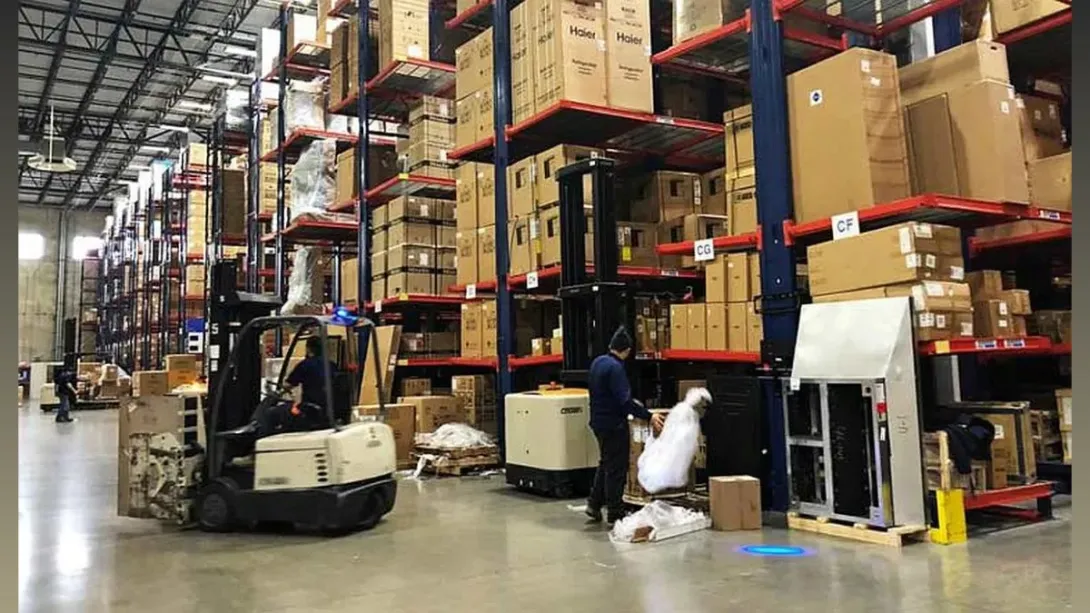
India’s industrial and warehousing sector has witnessed a sharp 63% year-on-year jump in demand, reflecting the country’s evolving logistics ecosystem, rising consumption, and strategic infrastructure investments. The surge has been particularly prominent in key urban peripheries and emerging logistics corridors, driven by growth in e-commerce, manufacturing, and third-party logistics (3PL). As companies prioritize agility and resilience in their supply chains, developers are responding with larger, technology-enabled warehousing facilities. This unprecedented growth underscores the sector’s shift from a traditionally underdeveloped asset class to a critical pillar of India’s economic and digital transformation.
Demand Accelerates Amid Supply Chain Transformation
The 63% year-on-year rise in warehousing and industrial real estate demand is being fueled by a structural overhaul in India’s logistics landscape. Businesses across industries are recalibrating their supply chains for greater speed, scalability, and reach. This transformation is particularly evident in e-commerce, FMCG, electronics, and automotive sectors, all of which are driving demand for strategically located, high-capacity storage and distribution hubs.
What was once viewed as a back-end cost center is now central to business continuity and customer satisfaction. Companies are adopting hub-and-spoke models, enabling faster delivery cycles and reducing last-mile inefficiencies, which in turn has pushed up the need for well-connected warehousing infrastructure.
Tier 1 and Emerging Cities Attract Major Investments
The warehousing boom is not limited to India’s traditional metros. While regions like the National Capital Region (NCR), Mumbai Metropolitan Region (MMR), and Bengaluru continue to lead in total leasing volumes, cities such as Lucknow, Guwahati, Jaipur, Coimbatore, and Bhubaneswar are rapidly gaining traction. These emerging logistics hubs are benefiting from better road and rail connectivity, industrial corridor projects, and state-led incentives for infrastructure development.
Land availability, lower costs, and proximity to consumption centers have made these regions ideal for warehousing expansion. As a result, both domestic and global developers are actively scouting for greenfield and brownfield opportunities across these high-potential micro-markets.
Grade-A Facilities and Automation See Uptick
Occupiers are increasingly opting for Grade-A warehouses, characterized by modern design, safety standards, and advanced automation. Built-to-suit (BTS) facilities, equipped with robotics, racking systems, and IoT-based monitoring tools, are in high demand—especially from multinationals and large-scale distributors looking to standardize operations across multiple geographies.
Developers, in response, are focusing on tech-enabled solutions that reduce operational costs, enhance space utilization, and support sustainability goals. Green warehousing—comprising solar panels, energy-efficient lighting, and water recycling—is also emerging as a priority for occupiers conscious of ESG benchmarks.
Policy Support and Infrastructure Boost
Government policies have played a pivotal role in catalyzing warehousing growth. The continued rollout of the PM Gati Shakti initiative, coupled with the expansion of industrial corridors and logistics parks, has enhanced multi-modal connectivity across states. The implementation of GST has also eliminated inter-state logistical bottlenecks, incentivizing consolidation of warehousing operations into fewer, larger facilities.
Moreover, the rise of National Logistics Policy (NLP) and warehousing-specific reforms have provided clarity on zoning, land use, and tax treatment, encouraging long-term institutional investment in the sector.
Comments