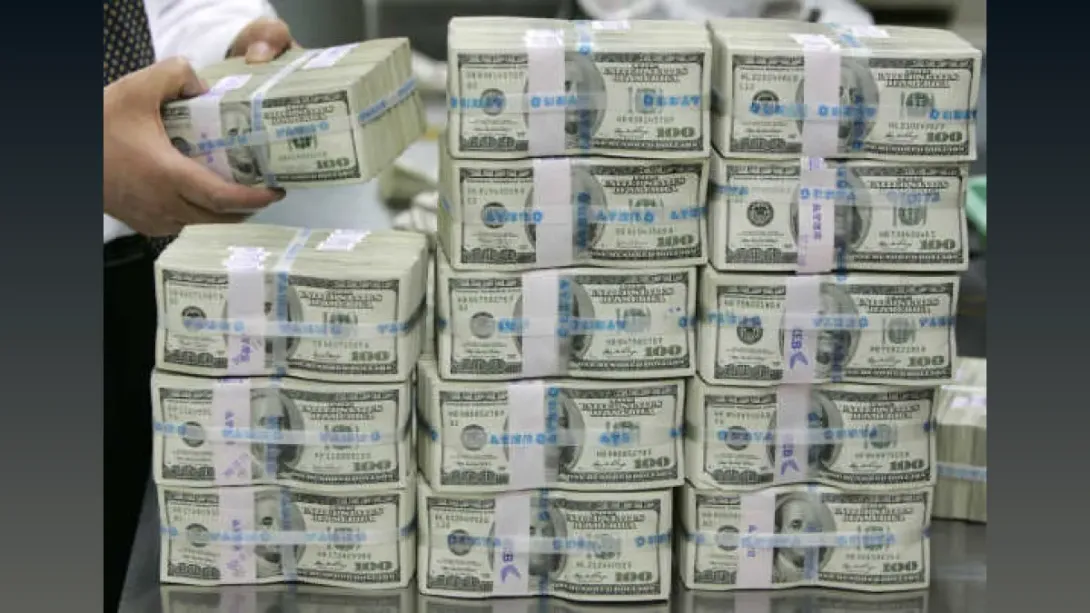
India’s foreign exchange reserves registered a notable drop of $1.183 billion (approximately Rs. 9,862 crore) in the latest reporting week, reflecting the impact of global financial market movements and dollar strength. The decline, which comes after several weeks of reserve accumulation, underscores the Reserve Bank of India's (RBI) ongoing interventions to stabilize the rupee amid external headwinds. Fluctuations in foreign currency assets, gold holdings, and IMF-related positions contributed to the contraction. As external uncertainties persist, the reserves remain a critical buffer for managing trade imbalances, exchange rate volatility, and broader macroeconomic stability.
Weekly Dip Reflects Shifting Currency Dynamics
According to the latest data from the Reserve Bank of India, the country’s total foreign exchange reserves fell by $1.183 billion during the week ended July 19. This decrease marks a reversal from the trend of steady accumulation witnessed over the past few weeks.
The fall in reserves is largely attributed to valuation losses in foreign currency assets (FCA) and potential intervention by the central bank to manage exchange rate volatility. With the US dollar regaining strength amid shifting expectations around interest rate trajectories, emerging market currencies—including the Indian rupee—have come under pressure.
Breakdown of the Reserves: Currency and Gold Movements
Foreign currency assets, the largest component of the forex reserves, dropped by $1.456 billion to $573.529 billion. These assets include investments in sovereign bonds, central bank deposits, and other foreign-denominated securities. The drop reflects both depreciation in the value of non-dollar currencies against the greenback and RBI’s possible dollar sales to cushion the rupee.
Meanwhile, India’s gold reserves saw a modest increase of $346 million, taking the total value to $56.322 billion. Gold remains a key diversification element in India’s reserve portfolio, often providing a hedge during currency volatility.
Special Drawing Rights (SDRs) with the International Monetary Fund (IMF) fell slightly by $48 million to $18.187 billion. The country’s reserve position with the IMF also declined marginally by $25 million, now standing at $4.356 billion.
RBI's Role in Managing External Pressures
The Reserve Bank of India continues to play a critical role in ensuring orderly movement in the foreign exchange market. With the rupee trading in a narrow range despite global volatility, analysts suggest that the RBI has been actively intervening to smoothen excessive fluctuations, even at the cost of depleting reserves in the short term.
Such interventions aim to prevent imported inflation, support macroeconomic stability, and maintain investor confidence. However, the RBI’s approach remains calibrated, balancing reserve adequacy with tactical responses to global developments, including changes in oil prices, US interest rates, and geopolitical risks.
Global Context: Strong Dollar, Uncertain Flows
The latest dip in reserves mirrors a broader trend seen across emerging economies, many of which are contending with capital outflows and stronger US dollar dynamics. Persistent inflation concerns in the United States have led to speculation around the timing of future interest rate cuts, causing volatility in global bond and currency markets.
Foreign institutional investors (FIIs), often reactive to US rate signals, have moderated inflows into Indian markets over the past fortnight. While India continues to attract long-term capital owing to its stable growth outlook, short-term flows remain vulnerable to global sentiment shifts.
Reserve Adequacy Still Strong Despite Weekly Decline
Despite the recent drop, India’s total foreign exchange reserves remain robust, hovering above the $638 billion mark. These reserves are sufficient to cover approximately 10 months of imports and provide a strong buffer against sudden external shocks.
Economists stress that short-term fluctuations in reserve levels are neither unusual nor alarming, provided they occur within the context of active monetary management. India’s diversified reserve composition, low external debt-to-GDP ratio, and sustained current account management continue to support overall economic resilience.
Outlook: Vigilance Required as Global Conditions Evolve
While India’s macroeconomic fundamentals remain strong, external uncertainties warrant continued vigilance. The RBI is expected to remain proactive in balancing reserve usage with market stability, particularly as global rate differentials, crude oil prices, and geopolitical tensions continue to influence capital flows.
With India preparing for increased external commercial borrowings and international bond issuances in the coming quarters, foreign exchange reserve management will remain central to policy coordination between the central bank and the finance ministry.
Comments