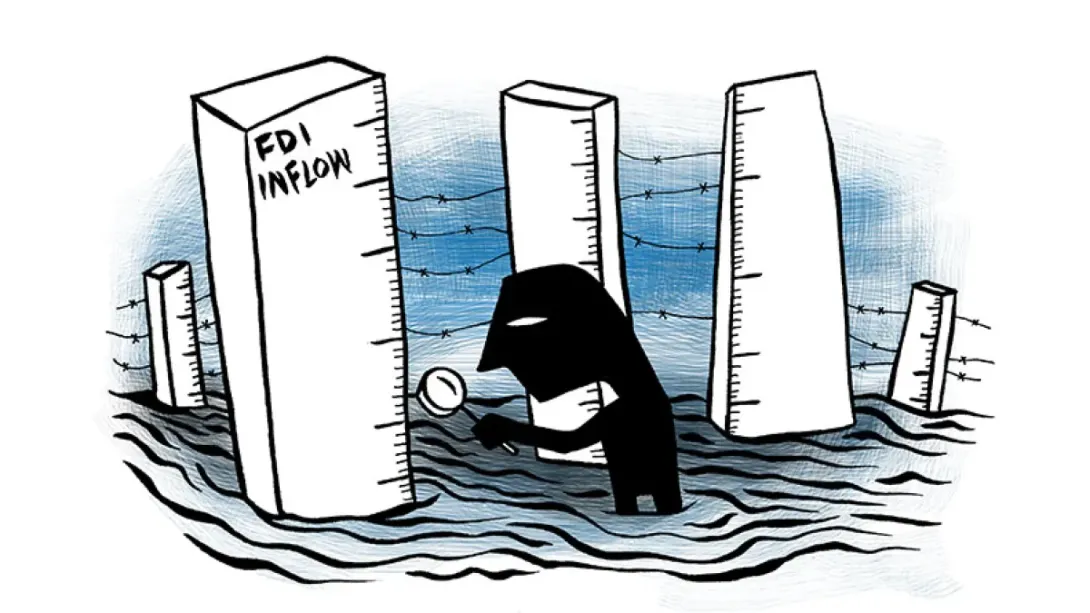
India is poised for a marked acceleration in foreign direct investment (FDI) in 2026, driven by macroeconomic stability, policy continuity and a broadening reform agenda. Global investors are increasingly viewing India as a long-term manufacturing base, a fast-growing consumer market and a strategic alternative in reconfigured supply chains. From infrastructure and renewable energy to digital services and advanced manufacturing, capital inflows are expected to diversify both in scale and sectoral depth. While global uncertainties persist, India’s regulatory predictability, demographic advantage and expanding domestic demand position it as a leading destination for sustained foreign investment.
A Rebound Built on Structural Strength
India’s expected FDI surge in 2026 is not a cyclical rebound but the outcome of structural shifts underway for nearly a decade. Reforms aimed at simplifying regulations, liberalizing sectoral caps and improving ease of doing business have steadily reduced entry barriers for overseas investors. Unlike short-term portfolio flows, foreign direct investment reflects confidence in long-term growth, and India’s economic fundamentals continue to support that conviction.
A resilient banking system, controlled inflation and steady GDP expansion have further reinforced India’s appeal at a time when many emerging markets face fiscal and political volatility.
Manufacturing and Supply Chain Realignment
One of the strongest catalysts for FDI growth is India’s expanding role in global manufacturing. Multinational corporations are actively diversifying supply chains to reduce overreliance on single geographies. India’s competitive labor costs, improving logistics and policy support for domestic production have made it a natural beneficiary of this realignment.
Electronics, automobiles, semiconductors and defense manufacturing are drawing sustained interest, supported by incentive-based frameworks and long-term industrial planning.
Digital Economy and Services Attract Global Capital
India’s digital ecosystem remains a magnet for foreign investors. With one of the world’s largest internet user bases and a mature fintech and software services industry, capital inflows into technology-enabled businesses are expected to remain robust through 2026.
Global funds are increasingly targeting platforms that integrate financial services, e-commerce, health technology and enterprise software, recognizing India’s ability to scale innovation rapidly while serving both domestic and global markets.
Infrastructure, Energy and Climate Investments
Foreign capital is also flowing into India’s infrastructure and clean energy transition. Large-scale investments in roads, ports, railways and urban development are opening long-term opportunities for global investors seeking stable, asset-backed returns.
Renewable energy projects, green hydrogen and energy storage are emerging as priority areas, aligning climate commitments with commercial viability. Long-duration investments denominated in Rs. assets are gaining traction as policy clarity improves.
Policy Stability and Investor Confidence
Perhaps the most decisive factor behind the projected FDI surge is policy continuity. Investors value predictability as much as incentives, and India’s consistent reform trajectory has reduced regulatory risk premiums. Streamlined approval processes, transparent taxation frameworks and improved dispute resolution mechanisms have strengthened institutional credibility.
As global capital becomes more selective, India’s ability to combine growth potential with policy stability sets it apart.
Outlook for 2026 and Beyond
India’s FDI outlook for 2026 reflects a broader rebalancing of global capital toward economies offering scale, resilience and reform momentum. While external shocks and geopolitical risks remain, India’s investment story is increasingly anchored in fundamentals rather than sentiment.
If current trends persist, foreign direct investment will not only rise in volume but also deepen in quality, supporting productivity, employment and long-term economic transformation.
Comments