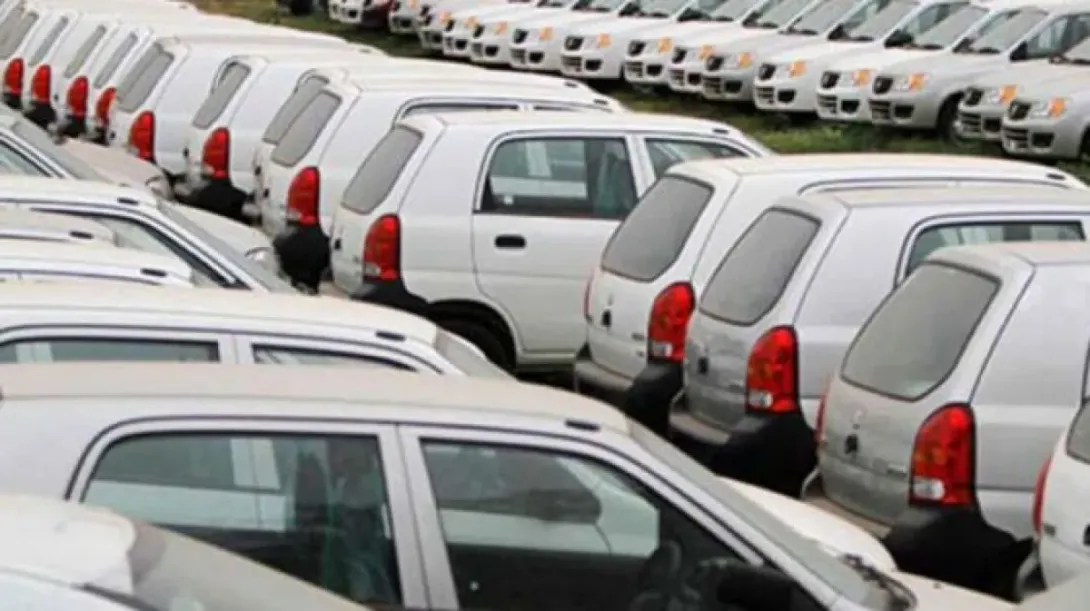
India’s automotive sector displayed a patchwork of performances in June, reflecting broader economic and consumer sentiment shifts. Leading manufacturers like Maruti Suzuki and Hyundai Motor India registered double-digit declines in vehicle dispatches, signaling weakened demand, particularly in the small car segment. In contrast, Mahindra & Mahindra and Toyota Kirloskar posted growth, driven by strong utility vehicle sales. The divergence underscores a structural transformation in consumer preferences, with affordability challenges impacting entry-level segments, while premium and SUV categories continue to gain momentum. Meanwhile, two-wheeler makers experienced varied outcomes, shaped by macroeconomic variables and evolving market dynamics.
Passenger Vehicle Segment: Growth Polarization Emerging
India’s passenger vehicle market is showing clear signs of fragmentation, with demand skewing heavily towards larger, more premium models. Maruti Suzuki, the country’s largest automaker, reported a 13% year-on-year drop in domestic dispatches, falling to 1,18,906 units in June from 1,37,160 units in the same period last year. The decline was particularly acute in the mini and compact car segments.
Sales of entry-level models like Alto and S-Presso dipped to 6,414 units, compared to 9,395 units a year earlier—a contraction of nearly 32%. Similarly, compact models such as the Baleno, Swift, and Dzire posted a 15% decline, totaling 54,177 units versus 64,049 units in June 2024.
Maruti’s Senior Executive Officer, Rahul Bharti, attributed this slump to affordability issues, emphasizing that the traditionally mass-market small car segment is no longer contributing to industry growth. “Even with a GDP growth rate of 6.5%, passenger vehicle demand remains stagnant,” he remarked, underscoring the disconnect between macroeconomic indicators and automotive sales.
Hyundai and Tata Motors Feel the Pressure
Hyundai Motor India also experienced a 12% drop in domestic dispatches, sliding to 44,024 units in June, down from 50,103 units a year prior. Tarun Garg, Whole-time Director and COO, pointed to global geopolitical instability as a dampening factor on consumer sentiment. However, he noted that the company remains “cautiously optimistic,” citing expected improvements in liquidity and upcoming production at the Talegaon plant as potential catalysts for recovery.
Tata Motors saw domestic sales, including electric vehicles, decline 15% year-on-year, reaching 37,083 units compared to 43,524 units in June 2024. Despite this downturn, the company remains focused on leveraging new launches to capture growth in hatchbacks, SUVs, and EVs. Managing Director Shailesh Chandra expressed confidence in Tata’s product pipeline and ability to navigate market headwinds.
Mahindra & Mahindra Leads with Utility Vehicles
Defying the trend, Mahindra & Mahindra recorded an 18% increase in utility vehicle sales, with domestic dispatches rising to 47,306 units in June, up from 40,022 units the previous year. CEO Nalinikanth Gollagunta highlighted that the company had achieved its highest-ever quarterly SUV sales, underscoring strong demand for its portfolio, which includes popular models like the Scorpio-N, XUV700, and Thar.
This success reflects the growing consumer preference for SUVs, a segment perceived as aspirational and more value-packed compared to compact sedans or hatchbacks. Mahindra's consistent innovation and strategic pricing have further cemented its stronghold in this space.
Toyota and JSW MG Register Steady Gains
Toyota Kirloskar Motor also reported a modest 5% year-on-year growth, with June dispatches rising to 28,869 units from 27,474 units in June 2024. Meanwhile, JSW MG Motor India posted robust growth of 21%, delivering 5,829 units for the month. MG’s momentum likely stems from its focus on tech-oriented models and an expanding EV portfolio.
These performances illustrate that brands positioned in the premium or innovation-led segments are better equipped to weather slowdowns affecting budget-conscious consumers.
Two-Wheelers: A Tale of Contrasts
In the two-wheeler category, Bajaj Auto experienced a 13% decline, selling 1,88,460 units in June compared to 2,16,451 units a year earlier. This includes both motorcycles and commercial vehicles, indicating a broad-based slump potentially linked to rural distress or weak consumer sentiment in lower-income demographics.
Conversely, Royal Enfield saw a 16% uptick in domestic sales, delivering 76,957 units, up from 66,117 units last year. The company continues to benefit from its niche appeal and brand loyalty among premium motorcycle buyers.
TVS Motor Company also posted a 10% year-on-year growth, with two-wheeler sales reaching 2,81,012 units in June. The brand’s wide product range, strong rural penetration, and EV innovation appear to be paying dividends.
Key Takeaways: Navigating an Uneven Recovery
The Indian automotive market is in the midst of a complex transition. While overall sales figures point to a mixed bag, the underlying message is clear: consumer preferences are evolving, and affordability remains a pressing challenge for the entry-level segment. Automakers that have diversified their offerings into SUVs, EVs, or tech-savvy models are capturing the bulk of the momentum.
This bifurcation presents both a challenge and an opportunity. The slowdown in smaller vehicle sales suggests a need for policy interventions, such as tax rationalization or credit facilitation, to revive demand in that critical segment. Simultaneously, automakers must recalibrate their product strategies, focusing on innovation, localization, and value creation to remain competitive.
As global headwinds and domestic constraints continue to weigh on the industry, resilience will depend on how swiftly companies adapt to shifting demand dynamics—where the race will be won not by scale alone, but by agility and insight.
Comments