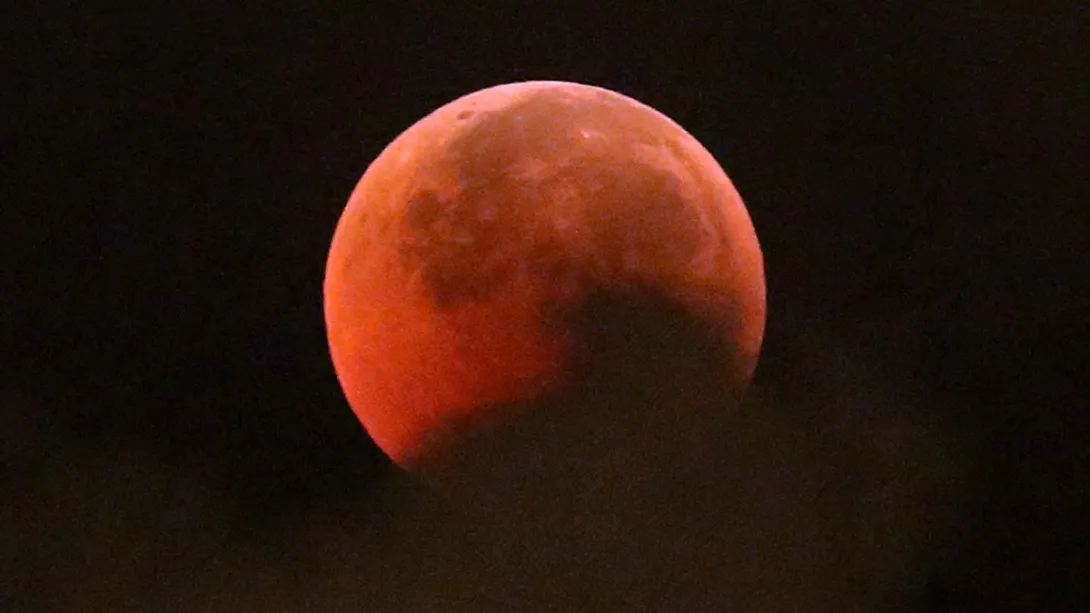
Skywatchers across India were treated to a visually striking lunar eclipse, an astronomical event that combined scientific significance with deep cultural resonance. The eclipse, visible across large parts of the subcontinent, drew attention from astronomers, educators, and the general public alike. While scientists emphasized the event’s value for public engagement with space science, authorities also highlighted the importance of separating astronomical facts from long-held myths. The widespread visibility of the eclipse reinforced India’s growing interest in astronomy, supported by expanding research institutions and increased public outreach around celestial phenomena.
A Celestial Event Across the Subcontinent
The lunar eclipse unfolded as Earth moved directly between the Sun and the Moon, casting a shadow that gradually darkened the lunar surface. In several regions, clear skies allowed uninterrupted viewing, prompting gatherings at observatories, universities, and public spaces.
Astronomy clubs and science centers organized live viewing sessions, using the opportunity to explain orbital mechanics and the predictable nature of eclipses.
Scientific Perspective and Public Awareness
Experts noted that lunar eclipses pose no threat to human health, countering widespread misconceptions that often resurface during such events. Scientists emphasized that eclipses are valuable tools for public science education, offering a visible demonstration of gravitational alignment and planetary motion.
In recent years, India’s scientific community has increasingly used such moments to promote evidence-based understanding, aligning with broader national efforts to strengthen scientific literacy.
Cultural Traditions and Modern Interpretation
Despite scientific clarity, lunar eclipses continue to carry cultural and religious significance in many Indian households. Traditions surrounding food preparation, rituals, and temple practices were observed alongside modern interpretations that encourage informed choice rather than fear.
Sociologists note that this coexistence of tradition and science reflects India’s evolving relationship with knowledge systems.
Looking Ahead to Future Sky Events
Astronomers have already outlined upcoming eclipses and planetary alignments expected to be visible from India over the next few years. With growing access to digital platforms and affordable telescopes, public participation in astronomy is expected to rise.
The latest lunar eclipse served as a reminder that even familiar celestial events can inspire curiosity, dialogue, and a renewed appreciation for science in everyday life.
Comments