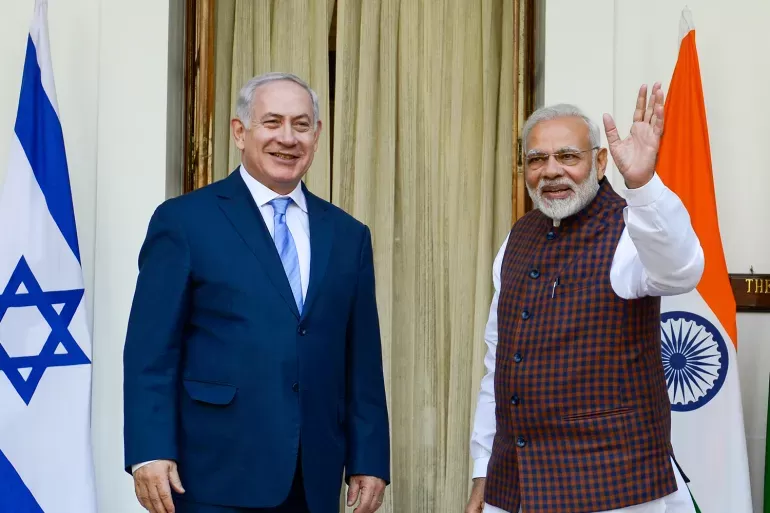
India has chosen to distance itself from the Shanghai Cooperation Organisation’s (SCO) collective condemnation of Israel’s ongoing military offensive against Iran, reflecting its strategic neutrality amid a volatile geopolitical crisis. The recent escalation between Israel and Iran—marked by strikes on nuclear and military sites, civilian casualties, and reciprocal missile attacks—has alarmed global leaders. While the SCO, which includes key regional powers, denounced Israel’s actions, India abstained from endorsing the statement. This decision underscores New Delhi’s complex balancing act in safeguarding strategic interests with both Western allies and long-standing regional partners in West Asia.
India’s Diplomatic Dilemma at the SCO Table
India’s refusal to back the SCO’s joint statement condemning Israel’s recent airstrikes on Iran has brought to light the country’s increasingly nuanced and independent foreign policy posture. The Shanghai Cooperation Organisation, an influential Eurasian bloc comprising China, Russia, Iran, and Central Asian nations, issued a strong rebuke of Israel’s operations. However, India—despite being a full member—opted to remain neutral, refraining from aligning itself with the bloc’s stance.
This move signals New Delhi’s desire to avoid taking sides in a conflict that risks wider destabilization in the Middle East, while preserving its bilateral relationships with both Israel and Iran.
Escalation Between Israel and Iran: A Regional Crisis Unfolds
The most recent round of hostilities began with Israeli air raids on April 11 targeting military and nuclear infrastructure across Iran, including facilities in Tehran and other major cities. These attacks reportedly killed over 80 people, encompassing both civilians and military personnel, including senior commanders of the Islamic Revolutionary Guard Corps (IRGC) and several Iranian nuclear scientists.
In response, Tehran launched a large-scale retaliatory offensive comprising hundreds of drones and ballistic missiles aimed at Tel Aviv and Haifa. The counterattack led to at least 13 Israeli casualties and numerous injuries. As tensions continue to spiral, Iran has also suspended nuclear negotiations with the United States, adding a new layer of uncertainty to global non-proliferation efforts.
What Is at Stake for India?
India’s strategic interests in the region are manifold. Israel has become a vital partner in defense, cybersecurity, and technology. At the same time, Iran is central to India’s energy security and connectivity ambitions—especially through projects like the Chabahar Port, which links India to Afghanistan and Central Asia while bypassing Pakistan.
Taking a firm stand in favor of either side could jeopardize key bilateral ties. India’s non-participation in the SCO’s criticism reflects an effort to retain diplomatic flexibility. It also serves as a signal to global powers that India will act based on its own national interests rather than be drawn into ideological or bloc-driven alignments.
A Broader Geopolitical Balancing Act
India’s position is consistent with its broader foreign policy trajectory—one that emphasizes strategic autonomy. In recent years, New Delhi has deepened its engagement with the United States and Israel, while maintaining historic ties with Iran and balancing partnerships with Russia and the Gulf states.
By not endorsing the SCO statement, India may also be implicitly asserting its discomfort with the bloc’s increasing ideological leanings, particularly under the growing influence of China and Russia. This measured disengagement allows India to preserve room for maneuver in a multipolar world, even as it continues to play an active role in global governance forums.
Conclusion: Navigating the Fault Lines of a Fractured World
India’s decision to distance itself from the SCO’s censure of Israel is not necessarily an endorsement of the military campaign, but rather an exercise in calculated restraint. In an international order fraught with instability, India’s approach seeks to balance principles with pragmatism, ensuring that its voice remains independent and strategically credible.
As conflicts grow more complex and alliances more transactional, such decisions will increasingly define India’s role as a pivotal power—one that engages globally, but acts autonomously.
Comments