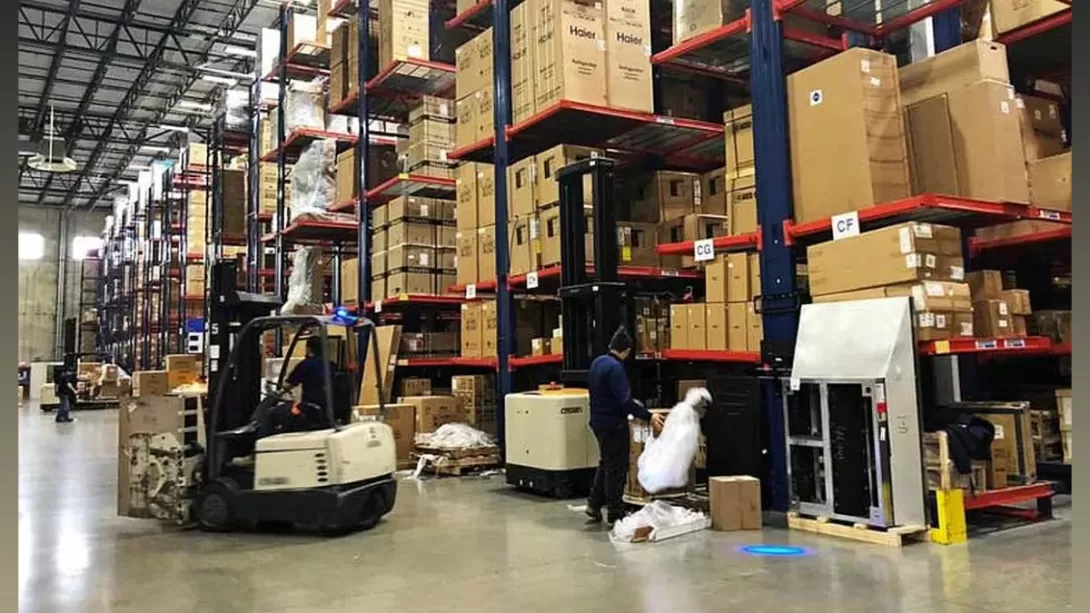
In a significant stride toward enhancing bilateral trade between the UAE and India, DP World has launched its new Free Trade Warehousing Zone (FTWZ) at the Nhava Sheva Business Park (NSBP) near Mumbai. This facility, inaugurated by UAE Deputy Prime Minister Sheikh Hamdan bin Mohammed bin Rashid Al Maktoum during his official visit to India in April 2025, forms part of DP World’s broader investment exceeding USD 200 million in India’s logistics infrastructure. Designed to streamline cross-border trade, the NSBP aims to capitalize on the Comprehensive Economic Partnership Agreement (CEPA) between the two nations, positioning itself as a cornerstone of regional supply chain optimization.
Strategic Importance of the Nhava Sheva Business Park
DP World’s investment in the Nhava Sheva Business Park (NSBP) is a calculated move rooted in geo-economic foresight. Situated near the country’s largest container port, Jawaharlal Nehru Port Trust (JNPT), the NSBP is strategically placed to serve as a critical link in India’s international trade.
- The facility currently offers 1 million square feet of state-of-the-art warehousing, with plans to double that capacity in subsequent development phases.
- It includes specialized and temperature-controlled storage solutions, accommodating industries such as pharmaceuticals, perishables, and precision electronics.
- The infrastructure promotes efficient customs clearance, reduced turnaround times, and significant cost savings for exporters and importers.
UAE-India Economic Partnership: A Catalyst for Growth
The inauguration of NSBP aligns seamlessly with the ambitions of the Comprehensive Economic Partnership Agreement (CEPA) signed between the UAE and India. This trade pact aims to reduce tariffs, remove barriers, and foster deeper economic collaboration across various sectors.
- According to DP World Chairman Sultan Ahmed bin Sulayem, CEPA is already showing measurable impact in accelerating bilateral trade volumes, and the FTWZs will amplify this effect by enhancing operational scalability.
- UAE’s Deputy Prime Minister emphasized the shared vision of innovation, sustainability, and inclusive economic growth that underpins this partnership.
This development isn’t just a diplomatic milestone—it is a strategic blueprint for resilient, future-proofed logistics networks in the Global South.
DP World’s Broader Investment Footprint in India
With an investment exceeding Rs. 1,600 crore (USD 200 million), DP World has built three cutting-edge FTWZs across India. These are designed to support India’s growing export economy while offering global businesses seamless access to South Asian markets.
- These zones offer regulatory flexibility under India’s Special Economic Zones (SEZ) policy, enabling businesses to operate with minimal bureaucratic friction.
- They act as multi-functional logistics hubs, supporting packaging, labeling, kitting, and even minor assembly—vital components for global e-commerce and manufacturing companies.
This level of infrastructure not only reduces supply chain bottlenecks but also reinforces India’s position as a rising global manufacturing and logistics power.
Market Implications and Investor Sentiment
The strategic expansion by DP World is generating positive sentiment across financial markets, especially within sectors linked to infrastructure, logistics, and trade facilitation. The move is seen as a long-term bullish indicator for:
- Indian infrastructure stocks, particularly those involved in port development, logistics services, and SEZ operations.
- Companies integrated into cold chain logistics, pharmaceutical warehousing, and e-commerce fulfillment networks.
Given the scale of DP World’s investment and the geopolitical support from both nations, market analysts are optimistic about a multiplier effect on trade efficiency and revenue growth across the sector.
Conclusion: A Vision Realized Through Infrastructure
DP World’s inauguration of the Nhava Sheva Business Park is more than a ribbon-cutting—it’s a declaration of intent. With India emerging as a critical node in the global supply chain and the UAE positioning itself as a trade superhub, this development epitomizes strategic bilateralism. The project sets a new benchmark in international logistics infrastructure and stands as a model for sustainable, technology-driven, and diplomatically supported economic cooperation. Investors, policymakers, and industry leaders alike should view this milestone not merely as a headline, but as a signal of where global trade is headed—and who is leading the way.
Comments