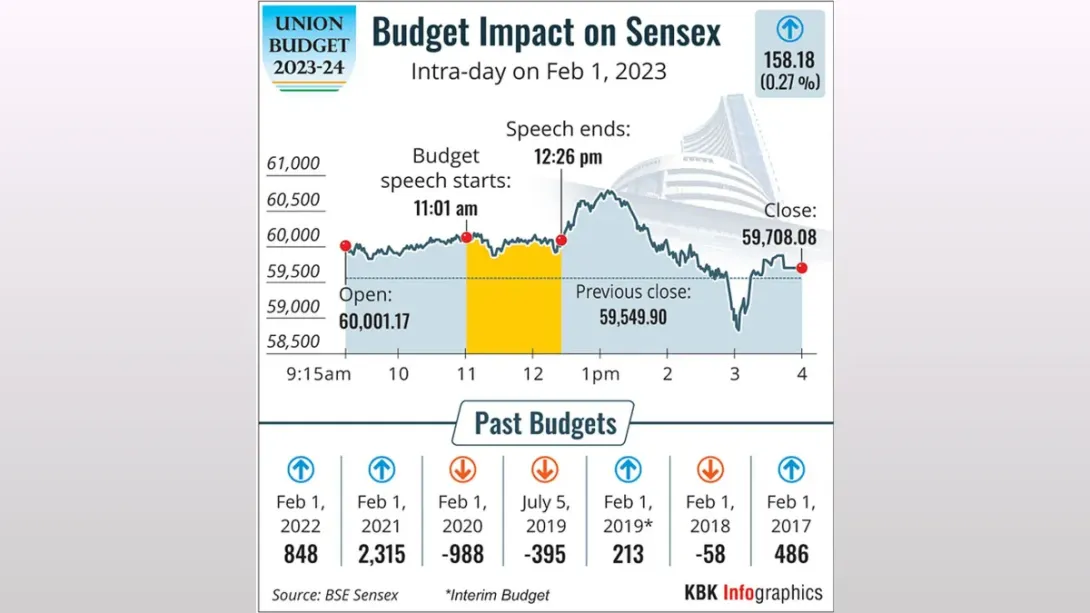
Indian equity markets turned volatile in the days leading up to the Union Budget 2026-27, as investors adopted a cautious stance amid policy uncertainty and mixed global signals. Benchmark indices fluctuated sharply, reflecting concerns over fiscal consolidation, taxation policy, and the scale of government spending in the coming year. With the budget expected to outline the government’s economic priorities, market participants limited risk exposure while selectively positioning for potential sectoral gains. Global factors, including interest rate expectations and commodity price movements, added to the uncertainty, reinforcing a wait-and-watch approach across equities and other asset classes.
Budget Anticipation Weighs on Market Sentiment
As Budget Day approaches, Indian stock markets have entered a phase of heightened volatility. Traders and institutional investors alike are refraining from aggressive bets, aware that budget announcements can swiftly alter earnings assumptions and sector valuations. Intraday movements in key indices underscored the lack of clear direction, with gains often offset by profit booking.
Historically, such pre-budget nervousness is not unusual, as markets attempt to price in policy outcomes with limited concrete information.
Global Developments Add to Choppiness
External factors have compounded domestic uncertainty. Fluctuating crude oil prices, concerns over global economic growth, and evolving interest rate expectations in major economies have influenced investor sentiment. For emerging markets such as India, global liquidity conditions and foreign capital flows remain critical drivers of near-term market performance.
As a result, foreign portfolio investors have adopted a selective approach, contributing to uneven trading patterns.
Sectoral Trends Reflect Policy Expectations
Sector-wise movements offered insight into investor thinking. Infrastructure, capital goods, and construction stocks attracted intermittent buying on expectations of continued public investment. Meanwhile, banking and financial services stocks traded cautiously amid uncertainty over credit growth and regulatory cues.
Consumption-oriented sectors also saw mixed action, with investors awaiting clarity on possible tax measures that could influence disposable incomes.
Policy Signals in Focus
Market participants are closely tracking several key elements expected in the Union Budget 2026-27. These include the fiscal deficit target, the government’s capital expenditure plans, and any changes to personal or corporate tax structures. Announcements related to disinvestment, subsidy rationalization, or structural reforms could further shape market expectations.
The bond market is equally alert, with government borrowing plans likely to influence yields and broader liquidity conditions.
Near-Term Volatility, Long-Term Perspective
Analysts caution that pre-budget volatility often fades once policy details are known. While short-term market movements may remain erratic until the budget is presented, long-term investors tend to refocus on fundamentals such as earnings growth, macroeconomic stability, and policy consistency.
As anticipation builds for the Union Budget 2026-27, markets remain poised between caution and opportunity, awaiting definitive signals on the government’s economic roadmap.
Comments