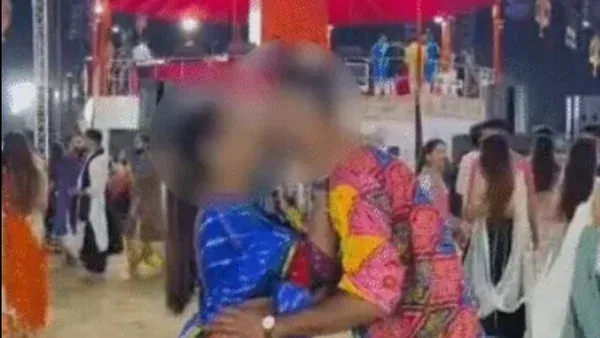
A viral video showing a Non-Resident Indian (NRI) couple sharing a kiss during a Garba event has sparked widespread debate, culminating in the couple issuing a public apology and leaving India. The incident, which occurred at a cultural festival celebrating traditional Gujarati dance, drew criticism from conservative sections of society while igniting discussions on personal freedoms, cultural norms, and social media accountability. The couple’s swift departure reflects the intense social scrutiny individuals can face when private actions intersect with public events in culturally sensitive contexts.
Public Reaction and Social Media Amplification
The video circulated rapidly on social media platforms, generating significant engagement and polarized opinions. Many viewers criticized the act as inappropriate in a traditional setting, while others defended the couple’s right to personal expression. Analysts note that viral content often amplifies societal judgments, creating reputational pressure and influencing behavior in real-time.
The incident underscores how digital platforms serve as both catalysts for debate and instruments of public accountability, with personal actions quickly becoming subjects of nationwide attention.
Cultural Sensitivities and Event Protocols
Garba, a festive dance form performed during Navratri, carries deep cultural and religious significance in Gujarat and among the global Indian diaspora. Public displays of affection are often considered inappropriate in such traditional contexts. Experts suggest that organizers of cultural events may need to reinforce codes of conduct and awareness campaigns to prevent incidents that could unintentionally offend participants or observers.
This episode highlights the delicate balance between cultural preservation and modern expressions of personal freedom, raising questions about social norms in evolving cultural landscapes.
Implications for Tourism and Diaspora Engagement
The involvement of NRIs in the controversy draws attention to the interactions between diaspora communities and local cultural practices. Events attracting international visitors must navigate the intersection of cultural expectation, hospitality, and social media influence. Misunderstandings or conflicts, such as this viral incident, can have reputational consequences for both organizers and participants, potentially affecting future diaspora engagement and cultural tourism.
Lessons for Public Behavior and Social Media
The Garba incident serves as a case study in the rapid escalation of minor actions into major social controversies through digital amplification. Public figures, tourists, and attendees of cultural events are increasingly required to consider the potential public impact of private actions, especially in settings with heightened cultural sensitivity.
Experts recommend balancing personal freedoms with awareness of local customs to maintain respect while participating in traditional events.
Conclusion
The NRI couple’s apology and departure following the Garba incident illustrate the complex interplay between cultural norms, social media dynamics, and personal behavior. While the act sparked debate over personal freedoms, it also emphasized the enduring influence of tradition and societal expectations at public festivals. The episode serves as a reminder for both locals and visitors of the importance of cultural sensitivity, while highlighting the transformative role of digital platforms in shaping public discourse and accountability.
Comments