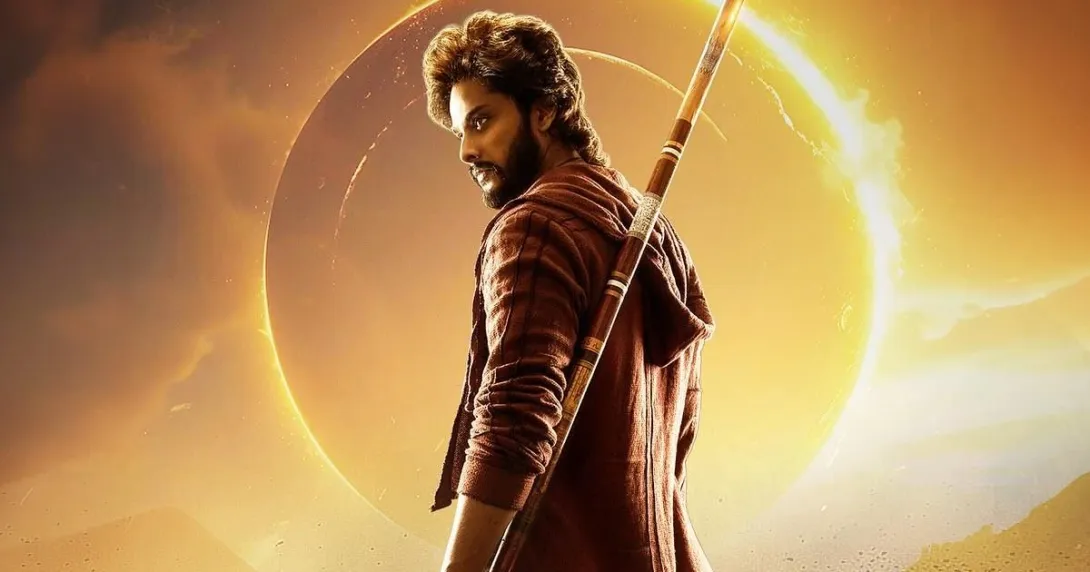
Teja Sajja’s latest outing, Mirai, ambitiously attempts to place Telugu cinema firmly in the global superhero narrative. With state-of-the-art visuals and high-octane action sequences, the film pushes the boundaries of technical finesse in Indian filmmaking. However, beneath its glossy surface, the story struggles to strike an emotional chord, leaving audiences impressed by its scale but less invested in its characters. While Mirai signals a bold step for the industry in terms of visual storytelling, it falls short of marrying spectacle with soul, making it a cinematic experience that dazzles the eye but doesn’t linger in the heart.
A Bold Leap for Telugu Cinema
Superhero films in India often face the challenge of competing with Hollywood’s polished franchises while staying rooted in local sensibilities. Mirai stands out for its sheer technical ambition—slick choreography, cutting-edge CGI, and immersive production design. Teja Sajja shoulders the role with physical conviction, embodying a protagonist whose powers are meant to symbolize resilience and hope. Yet, despite the grandeur, the narrative feels mechanical, revealing a gap between ambition and execution.
Technical Brilliance and World-Building
One of the film’s strongest assets is its visual world-building. The cinematography and special effects showcase the evolution of South Indian cinema in harnessing technology to create immersive universes. Action set pieces are choreographed with precision, offering audiences a visual spectacle rarely seen in regional cinema. The background score amplifies the scale, ensuring the superhero’s journey feels larger than life. These elements prove that Mirai succeeds in raising the bar for technical standards.
The Missing Emotional Core
While the spectacle is undeniable, the film falters in its storytelling depth. The emotional beats often feel underdeveloped, with supporting characters reduced to archetypes rather than fully realized individuals. Teja Sajja’s performance, though earnest, is undermined by a screenplay that prioritizes visual grandeur over narrative intimacy. As a result, audiences may find themselves admiring the craft but not deeply empathizing with the character’s struggles.
The Future of Indian Superhero Cinema
Mirai represents both progress and a learning curve. It proves that Indian cinema can produce superhero films that rival international benchmarks in terms of scale and execution. However, it also highlights the necessity of blending technical prowess with nuanced writing and emotional storytelling. For the superhero genre to thrive in India, future ventures must not only dazzle but also resonate on a human level.
Comments