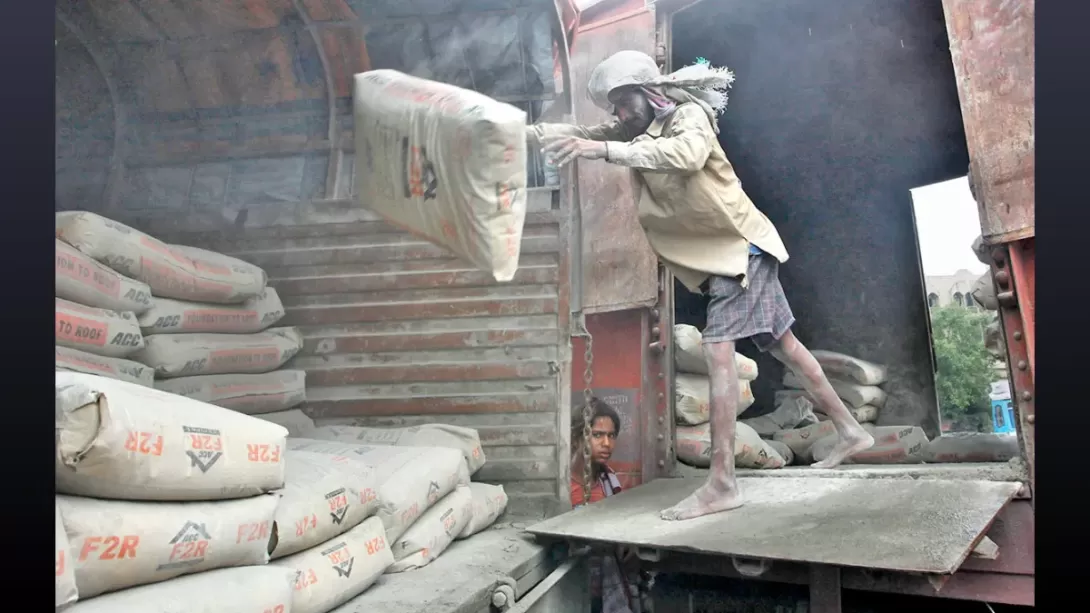
India’s cement industry is on the brink of a transformative phase, driven by a sharp rise in infrastructure development and housing demand. According to Moody’s Ratings, the sector is witnessing rapid consolidation, with large players acquiring smaller firms to boost capacity and improve efficiency. The top 10 producers have acquired 140 million metric tonnes per annum (MMTPA) in the last five years, worth approximately Rs. 890 billion. With consumption expected to grow at a compound annual rate of 6–7% through the decade, capacity is projected to rise by nearly a third, setting the stage for sustained growth—despite looming cost pressures from volatile raw material prices.
Surging Demand Sparks Industry Consolidation
India’s cement sector, long characterized by a fragmented network of regional producers, is undergoing a rapid consolidation wave. The top 10 cement manufacturers have already acquired around 140 MMTPA of capacity in the past five years, representing transactions valued at approximately Rs. 890 billion (USD 10.5 billion). This wave of mergers and acquisitions is a strategic response to increasing demand, particularly from government-led infrastructure initiatives and a rising need for affordable housing.
Leading national players such as UltraTech Cement and Ambuja Cement have emerged as the dominant consolidators, leveraging their pan-India operations to absorb smaller competitors suffering from sub-optimal capacity utilization and narrower profit margins. Moody’s notes that these acquisitions are not only strengthening supply chains but also helping the industry maintain stable capacity utilization rates amid expanding production targets.
South India: A Hotbed of Acquisition Activity
With over 70 smaller producers and an installed capacity exceeding 200 MMTPA, South India remains the most fertile ground for consolidation. The region—which includes the states of Telangana, Tamil Nadu, Kerala, Karnataka, and Andhra Pradesh—surpasses even the traditionally industrialized North and East, each with capacities around 150 MMTPA.
The high concentration of smaller, less efficient producers makes the South particularly attractive for larger firms seeking inorganic growth. The move also aligns with broader strategic objectives to create seamless supply networks and reduce regional disparities in cement availability.
Growth Trajectory: Capacity Expansion on the Horizon
Cement demand in India is forecast to climb steeply, with consumption expected to increase from 445 MMTPA in FY 2023–24 to approximately 670 MMTPA by 2030. To meet this rising need, the industry is projected to add about 200 MMTPA in capacity by the end of the decade—equivalent to a 30% increase.
Moody’s report reveals that 170 MMTPA of this additional capacity will be operational by FY 2027–28. The top 10 cement producers, who command roughly 75% of market share, are spearheading this build-out. UltraTech and Ambuja Cement alone are anticipated to contribute 30% of the upcoming capacity, underscoring their market leadership.
Meanwhile, Shree Cement and Dalmia Bharat—the third- and fourth-largest players, respectively—are expected to add a combined 50 MMTPA, or 25% of the new capacity. Interestingly, a cadre of ambitious mid-sized firms, including JK Cement, JSW Cement, and JK Lakshmi Cement, plan to nearly double their current production, accounting for another 35% of the announced expansions.
Structural Growth: Low Per Capita Consumption Signals Potential
India’s cement consumption remains notably underdeveloped on a per capita basis. At 260 kilograms per person, domestic consumption is less than half the global average of 540 kilograms. This disparity signals untapped potential as the Indian economy matures and urbanization accelerates.
The dual engines of housing and infrastructure—which collectively account for 85–90% of cement consumption—are expected to drive growth. The housing sector alone constitutes 55–60% of total demand, while infrastructure contributes 28–30%. As government policies increasingly favor real estate development and capital expenditure on public works, cement usage is poised to climb substantially.
Challenges Ahead: Margin Pressures from Input Volatility
Despite a promising growth outlook, the industry faces notable risks, particularly from the volatility in raw material prices. Limestone, a fundamental input in cement production, has become a regulatory flashpoint. The Tamil Nadu government’s imposition of a Rs. 160 per tonne mining tax earlier this year exemplifies how policy shifts can pressure margins.
Given the average industry profitability of Rs. 800–900 per tonne, such levies—if implemented nationwide—could slash earnings by up to 20%, Moody’s cautions. Additionally, the sector remains heavily reliant on imported coal and petroleum coke (petcoke) due to limited domestic supply, making it vulnerable to global commodity price swings and supply chain disruptions.
Conclusion: A Pivotal Decade for Indian Cement
India’s cement industry is standing at a pivotal juncture. On one hand, a confluence of favorable demographic trends, policy tailwinds, and infrastructural push is powering an unprecedented expansion. On the other, cost pressures and regulatory unpredictability present challenges that could temper profitability.
The next five years will be decisive. Consolidation will continue to redefine competitive dynamics, while the ability to manage input costs and regulatory shifts will separate the resilient from the vulnerable. For investors, policymakers, and industry stakeholders, the cement sector offers both a significant opportunity and a compelling case study in navigating growth amid complexity.
Comments