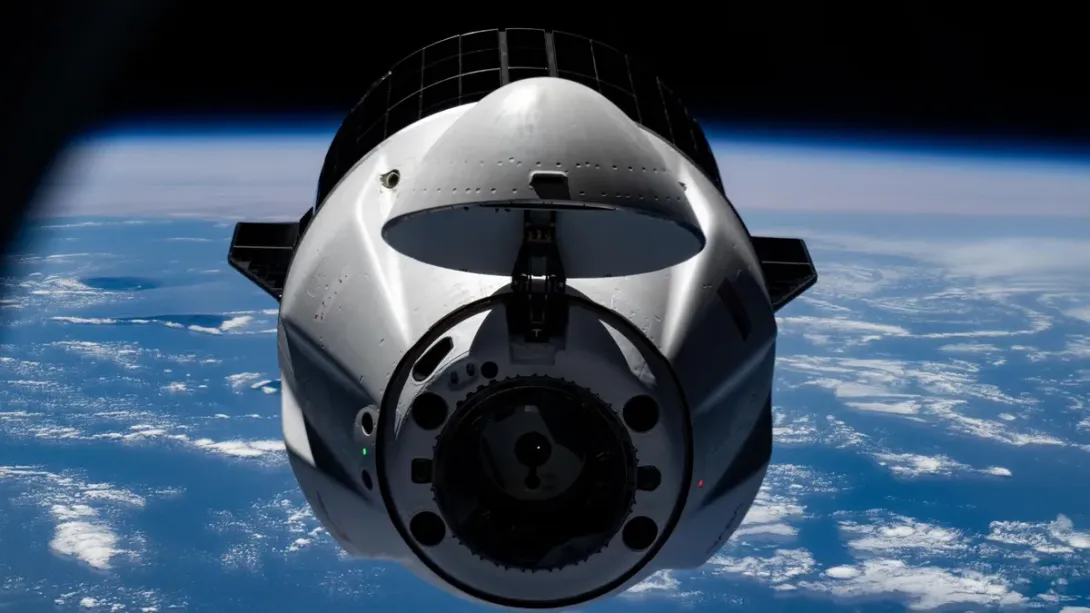
A Dragon spacecraft operated by SpaceX has successfully departed from orbit, underscoring the growing reliability of privately operated human spaceflight missions. The departure, conducted after the completion of scheduled orbital objectives, reflects the maturation of commercial space operations and their seamless coordination with international partners. Analysts view the event as another affirmation of SpaceX’s role in reshaping the global space economy, where reusable spacecraft and routine missions are steadily replacing bespoke, high-cost launches. The mission’s conclusion highlights how spaceflight is transitioning from experimental exploration to repeatable, operational logistics.
A Controlled and Timely Departure
The Dragon spacecraft undocked following a carefully sequenced set of procedures designed to ensure crew safety and orbital integrity. Such departures have become increasingly routine, reflecting advances in autonomous navigation, real-time telemetry and mission planning.
Reliability as a Strategic Asset
For SpaceX, consistency is now as critical as innovation. Each successful departure and return strengthens confidence among government agencies and commercial clients that private-sector platforms can deliver dependable access to space at scale.
Commercial Spaceflight in a Broader Context
The Dragon program sits at the center of a rapidly expanding space economy, where transport missions support scientific research, technology testing and international collaboration. Reduced costs and reusable systems are lowering barriers to participation, reshaping long-term economics.
Technological Maturity on Display
Observers note that the smooth execution of departures demonstrates the technological maturity of modern spacecraft systems. Automated docking and undocking, once considered high-risk maneuvers, are now standard operational capabilities.
Looking Ahead
As Dragon continues to log missions with regularity, each departure reinforces a larger narrative: spaceflight is no longer an occasional spectacle but an evolving infrastructure—one increasingly defined by efficiency, predictability and commercial viability.
Comments