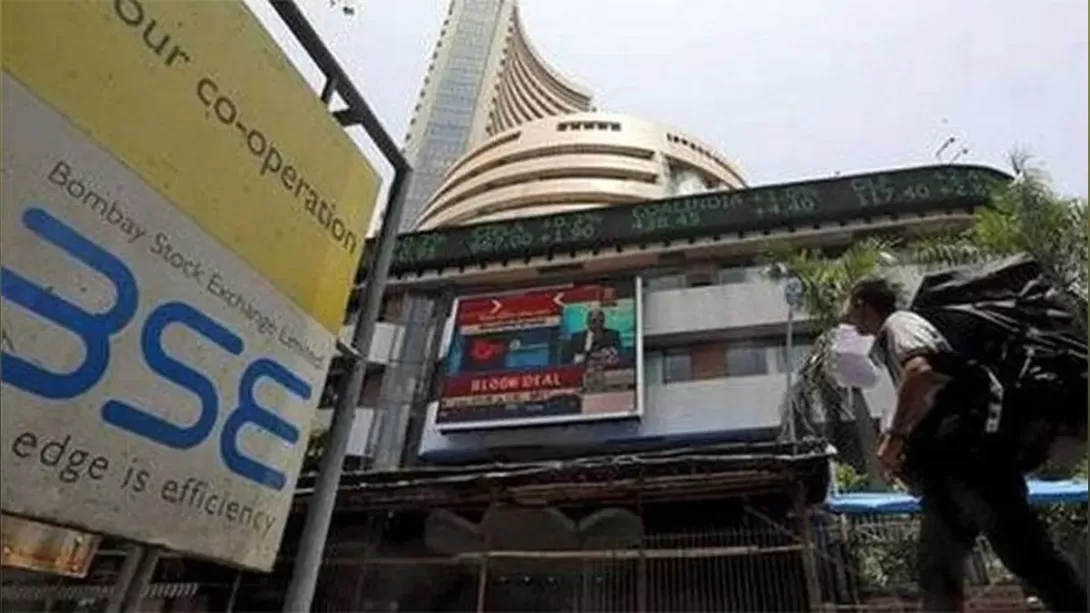
Indian equities tumbled on Thursday as heightened geopolitical tensions between India and Pakistan cast a shadow over investor sentiment. The benchmark Sensex fell by 412 points, while the Nifty lost over 140 points, reversing early gains in a volatile trading session. Escalating cross-border hostilities, marked by drone and missile exchanges and military strikes, triggered profit-booking in key sectors like banking, FMCG, and automobiles. Although foreign institutional investors (FIIs) maintained a net buying stance, domestic sentiment weakened. Broader markets underperformed, with mid- and small-cap indices slipping further. Despite global cues remaining supportive, domestic volatility appears tethered to the unfolding security situation.
Geopolitical Flashpoint Sparks Market Retreat
Indian equities succumbed to intense selling pressure on Thursday, following a spike in tensions between New Delhi and Islamabad. After opening on a firm note, the 30-share BSE Sensex peaked at 80,927.99 in the morning session, before shedding 411.97 points—or 0.51%—to close at 80,334.81. The NSE Nifty mirrored the trend, closing 140.60 points lower at 24,273.80, after dropping as much as 264 points intraday.
Market participants reacted sharply to reports that Indian armed forces thwarted Pakistani attempts to target strategic installations across northern and western India using drones and missiles. India’s response, which involved targeting Pakistani air defense systems including those in Lahore, marked a significant escalation.
The Ministry of Defence confirmed a retaliatory strike on nine terror-linked sites in Pakistan and Pakistan-occupied Kashmir (PoK), following the Pahalgam massacre earlier this week. The measured yet forceful response unnerved investors, prompting them to trim equity exposure in risk-sensitive sectors.
Sectoral Performance: Banking and FMCG Stocks Bear the Brunt
The sell-off was concentrated in consumer staples, automotive stocks, and frontline lenders. Among the top laggards were Eternal, Mahindra & Mahindra, Maruti Suzuki, Bajaj Finance, Asian Paints, and State Bank of India. These sectors, often sensitive to geopolitical instability due to their reliance on domestic consumption and credit demand, witnessed accelerated outflows during the afternoon session.
On the flip side, a few blue-chip counters remained resilient. Notably, Kotak Mahindra Bank, Axis Bank, Infosys, TCS, and Titan managed to close in the green, suggesting selective investor interest in stocks with robust fundamentals and defensive characteristics.
The broader market, however, underperformed. The BSE Midcap index slumped 1.90%, while the Smallcap index slipped 1.05%, signaling risk aversion among retail and institutional participants alike.
Global Cues Offer Limited Respite
While geopolitical anxieties overshadowed the session domestically, global markets continued to trade on firmer ground. European equities opened in the green, and major Asian indices such as Nikkei 225, Hang Seng, and Kospi ended positively. On Wall Street, U.S. indices closed higher on Wednesday, buoyed by expectations of progress in trade negotiations with the United Kingdom and China.
However, the recent Federal Open Market Committee (FOMC) meeting provided little clarity. U.S. Federal Reserve officials raised concerns about aggressive tariffs potentially inflating consumer prices and hampering job creation. These mixed signals contributed to underlying caution in emerging markets like India.
Crude prices also edged up, with Brent crude gaining 1% to settle at USD 61.75 per barrel. Rising oil prices typically pose inflationary risks for India, a net importer of crude, potentially complicating the macroeconomic landscape further if tensions persist.
Foreign Investment Flows Remain Resilient
Despite the geopolitical backdrop, Foreign Institutional Investors (FIIs) remained net buyers, injecting Rs. 2,585.86 crore into Indian equities on Wednesday. This suggests continued global appetite for Indian growth, though this confidence may be tested if the border conflict escalates or triggers retaliatory sanctions and economic uncertainty.
The previous session on Wednesday had ended on a more optimistic note, with the Sensex adding 105.71 points to close at 80,746.78 and the Nifty advancing by 34.80 points to 24,414.40. That optimism was short-lived, however, as headlines from the Line of Control sent markets back into a defensive crouch.
Outlook: Volatility Ahead as Geopolitical Uncertainty Lingers
The short-term outlook for Indian equities remains clouded by geopolitical risks. Investors will likely continue monitoring developments at the border closely, with further military escalations likely to drive additional volatility. Meanwhile, market fundamentals remain relatively sound, supported by foreign capital inflows and stable global conditions.
In the absence of a diplomatic breakthrough, however, traders and long-term investors alike should brace for choppier sessions ahead. For now, prudence, diversification, and a close watch on defense and energy stocks may serve as wise strategies in navigating this period of heightened uncertainty.
Comments